


American Psycho review


Rupert Goold’s swansong is a wildly entertaining musical take on the notorious novel, but lacks killer instinct


He’s a horror born of the 1980s, but you might say that Patrick Bateman, Bret Easton Ellis’ spectacularly nasty, vain, neurotic fictional creation, has truly come of age. Ellis’ novel, actually published in 1991 – in which this MTV-era Wolf of Wall Street stalked the New York streets in the wake of that other notorious, well-heeled monster, cinema’s reptilian Gordon “greed is good” Gekko – conjures a world of ruthless economic buccaneering and fragile egos, where appearance and status are everything and ethics are a commodity bought and sold cheap. That Bateman is a Donald Trump fanboy who treats The Art of the Deal like a religious tract is an irony as disturbing as it is delicious. And Ellis’ subtext, which toys with the chasm between real and fake, and the collision of delusion and aspiration, feels impishly pertinent in our permanently online world, with its digital underbelly of incel ideology and exploitation.
But as well as the satirical embodiment of a morally bankrupt consumer culture, Bateman is, of course, a serial killer – in his own warped imagination, at least (depending on how you interpret Ellis’ narrative). So extreme is the novel’s prose that it’s frankly something of a relief that this musical, first seen at the Almeida in 2013, doesn’t attempt to put its most perverse episodes onstage. Still, this staging – which, like the premiere, is directed by Rupert Goold, his swansong for the theatre before he departs to run the Old Vic – doesn’t have quite sharp enough teeth. With a book by Roberto Aguirre-Sacasa that features much of the novel’s pitch-black humour, and music and lyrics by Duncan Sheik that draw heavily on 1980s electropop, it’s slick and enormously entertaining. But it doesn’t deal that killer blow, that sickening, visceral stab of utter, unhinged revulsion that gives Ellis’ story its lethal edge.
Continues...
Read More

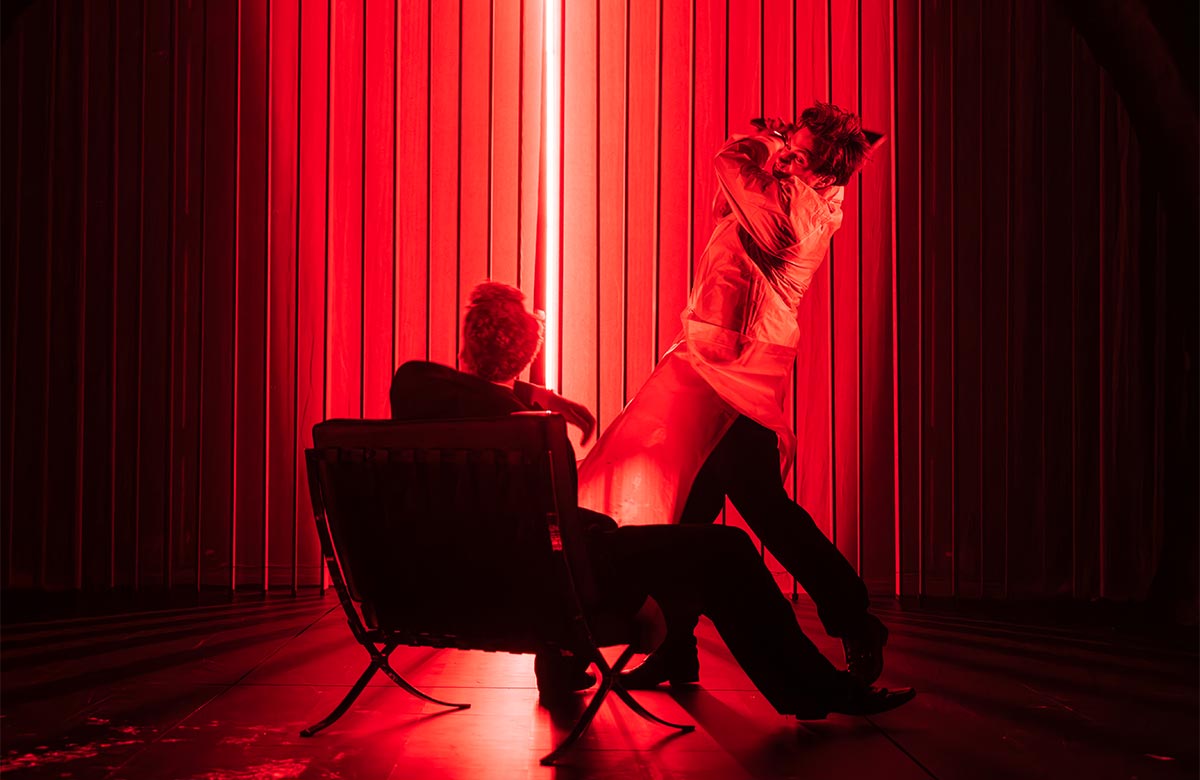
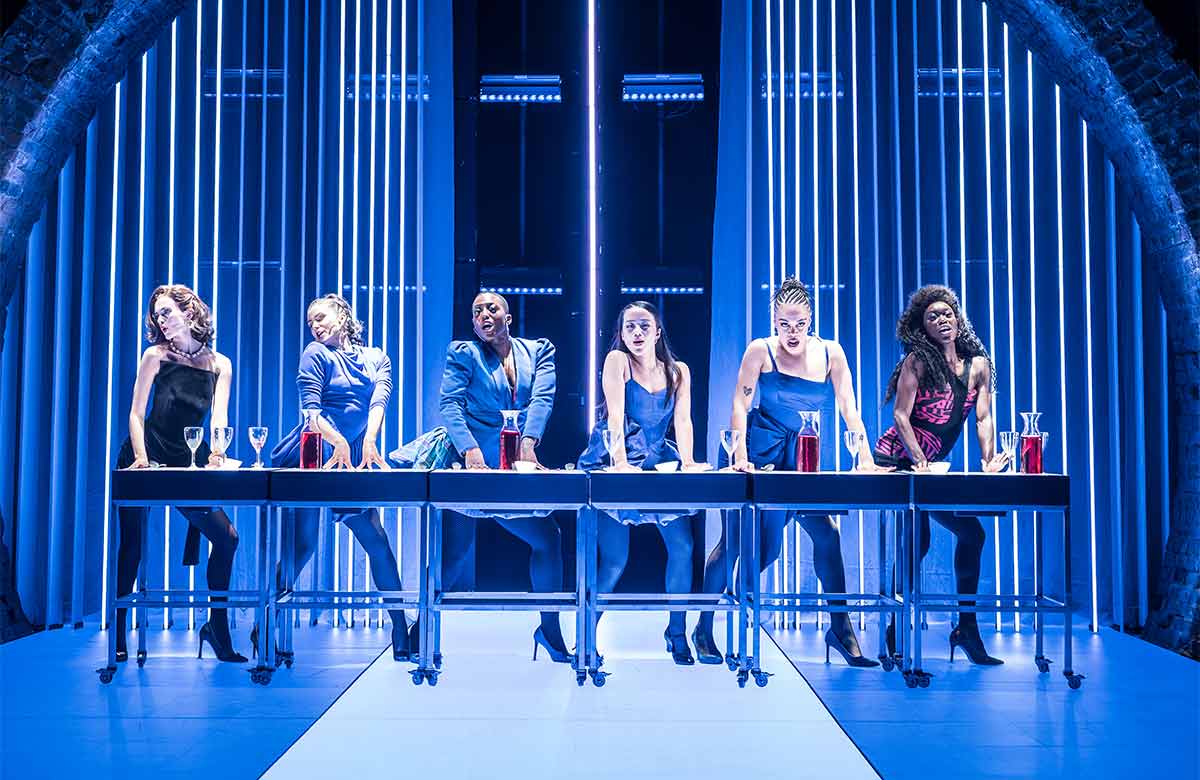
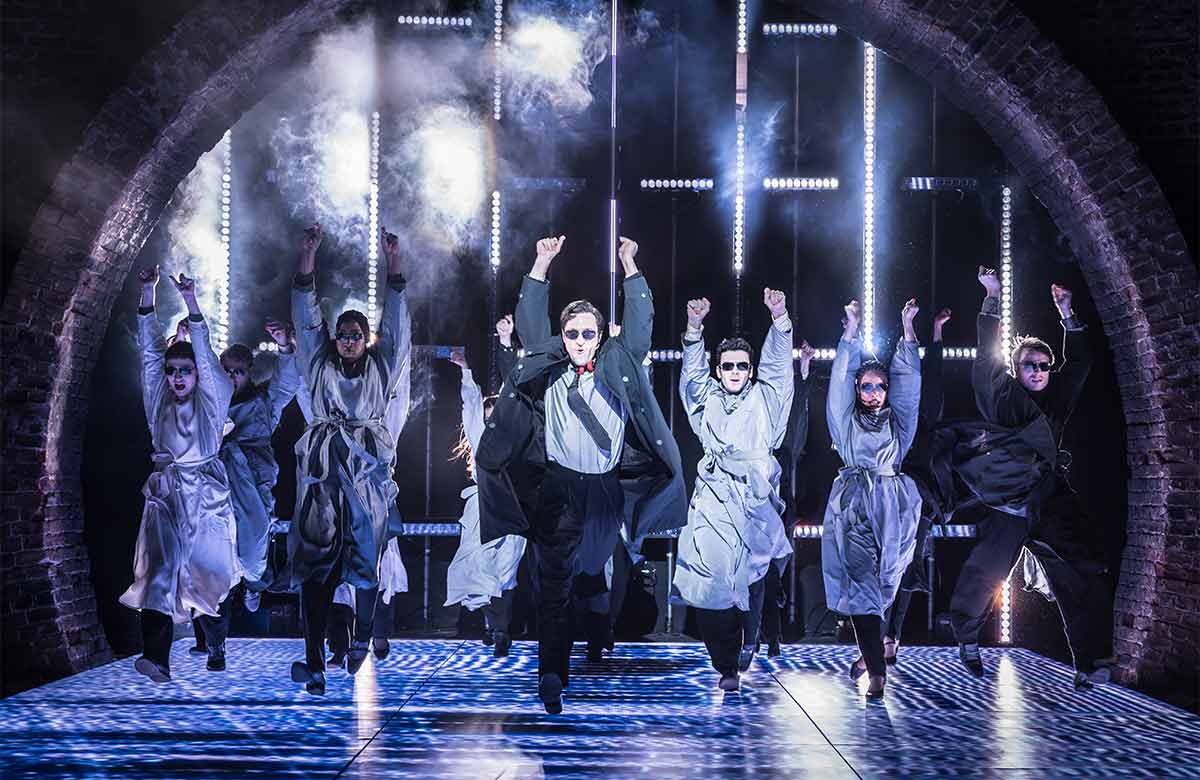
The production looks as lustrous as Bateman could wish, with geometric sets from Es Devlin sliced with white neon (lighting by Jon Clark) and splashed with hectic video (Finn Ross); spot-on costumes – which range from 1980s tailoring and preppy loafers to high-legged lycra workout gear, bubble skirts and sky-high heels, and parachute-silk raincoats accessorised with dark glasses – are by Katrina Lindsay. Sheik’s score not only exemplifies the sound of the decade, but pilfers from it, with Phil Collins, Huey Lewis, the Human League and New Order rubbing padded shoulders with his original numbers. Some of Sheik’s lyrics and rhymes are clunky and facile, but such is the deliberate air of artificiality here that it doesn’t matter too much.
As Bateman, Arty Froushan is an apt mix of arrogant swagger, terrified insecurity and sweaty panic that tips over into simmering rage whenever he’s thwarted – it’s clear that his psychopathy springs from a fear of not measuring up, in an environment that he himself has helped make savagely shallow. His posse of yuppie finance bros – especially Oli Higginson as his loathsome best pal – are hilariously ghastly; one of the best songs sees them singing a bump’n’grind slow jam to a sexily designed business card. Also grotesquely funny is Emily Barber as Bateman’s girlfriend Evelyn Williams: designer-label fixated, brittle, perma-smiling, and determined to win a dream wedding to a trophy husband at any price. Lynne Page’s choreography, which embraces pumping, Flashdance-style high energy and vogueing, has a music-video sheen and angularity – sometimes, dancers judder and glitch in slo-mo like malfunctioning robots. The whole spectacle has the kind of glossy, arresting, audacious theatricality for which Goold has such a well-established flair.
Yet there’s something deeply conventional in the material’s approach to its cult-hit literary source that undercuts its potency. The ardent crush of Jean (Anastasia Martin), Bateman’s devoted secretary, on her boss steers us towards romcom territory with insufficient irony to make that shift pay off. And there’s an enigmatic quality to Ellis’ unreliable narrator that struggles to survive the transition to the stage. We see straight through Froushan’s Bateman and his pretensions, recognising him for the pathetic fool that he is – but he should also be dangerous; here, he’s easy to laugh at, almost impossible to fear.
What remains, then, is a highly enjoyable satirical romp – but one that, despite some vivid gory splatters, is essentially bloodless. It’s smart and horribly pertinent. But it probably won’t give you nightmares.
For all the latest theatre reviews, sign up to The Stage’s weekly reviews newsletter

Most Read
Across The Stage this weekYour subscription helps ensure our journalism can continue
Invest in The Stage today with a subscription starting at just £7.99

© Copyright The Stage Media Company Limited 2026


