Students have called out racism at the UK’s top drama schools, sharing details of the abuse they suffered during their studies. The racism is widespread and systemic. The Stage has listened to their stories and shares them here
Many of the UK’s drama schools have been called out by current and former black students for systemic and institutionalised racism, prompting calls for urgent action to address the abuse suffered by minority ethnic pupils.
Their complaints have also led to demands for an overhaul of leadership in the sector.
RADA, the Oxford School of Drama, the Royal Central School of Speech and Drama, ALRA and Liverpool Institute for Performing Arts are among many drama schools that have been highlighted on social media for failing their black students, who have shared stories of the racism they have experienced while studying. The complaints are made against both staff and fellow students.
The accusations came to light after the drama schools posted messages of support in solidarity with the Black Lives Matter movement following the killing of George Floyd in Minneapolis. Their statements were met with a fierce backlash from students who called out their hypocrisy in professing support for the movement while at the same time failing those who have studied at their schools.
The Stage has spoken to six students about their experiences of racism. Read their full stories and the responses from the drama schools below.
Students identified experiences including:
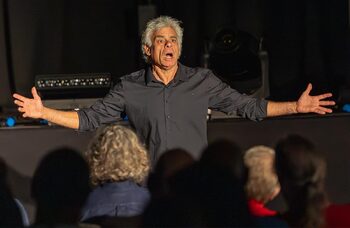
Dipo Ola shared his experiences of racism while studying at the Oxford School of Drama, including being asked if he was “playing a slave” by another student, when he was appearing as Egeon in The Comedy of Errors.
He described the racism in drama schools as “systemic”.
“I have heard from students who said the coronavirus pandemic has given them such a respite from the abuse they get at school, and that is a terrible statement to hear,” he told The Stage.
He added: “I am 25 years old and I have had people my whole life saying sorry, and hoping and trying to change, but I know that doesn’t work. So we have to force it, we have to write articles, we have to be in those rooms and make them listen to us.”
One of the schools drawing the most criticism was Central, which has already been the subject of intense scrutiny following comments made by principal Gavin Henderson in 2018. At the time, Henderson said he felt quotas to address the imbalance of black and minority ethnic students studying at the school would dilute the quality of students.
His comments were met with anger by students and the situation led to the foundation of the Diversity School Initiative, to address the lack of diversity in drama schools.
An independent inquiry later found only half of students, staff and alumni surveyed felt the school exhibited zero tolerance to discriminatory behaviours.
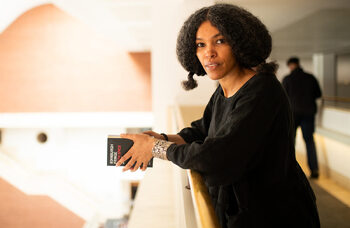
Shaniqua Okwok graduated from Central in 2018. She told The Stage she had never experienced racism until she started studying at the drama school, and after three weeks was subjected to a slavery reference from a fellow student during a drama activity.
Okwok said the teacher told her: “You will play a slave and you have to come to terms with that – it’s inherent in your trauma.”
Okwok went on to tell The Stage that she had been subjected to comments about her appearance and that attempts to raise it with the school had never been fully addressed.
“What they do is silence and ignore… They pretended they would do stuff,” she said.
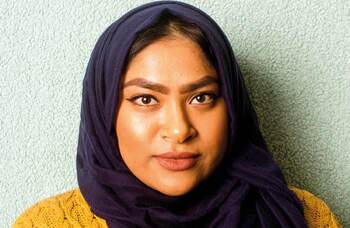
ALRA student Lamin Touray revealed he too had been subject to racism, after a fellow student said she did not want to work with him and his friend because of the colour of their skin.
The school investigated the incident after he lodged a formal complaint, but deemed it not to be racist.
Touray told The Stage he had suffered six months of depression, and described the rest of his time at the school as a “prison sentence”.
“We did not go to graduation. We were done with the school – on the last day we handed in our final work. That was it. It was a massive relief and freedom but the anger festered,” he said.
Meanwhile, ex-RADA student Aurora Burghart, who graduated in 2018, said there were “innate biases” within the management at the school.
She highlighted how RADA was guilty of a “constant erasure of black students in the space of their training”, and highlighted a “white is right” unconscious bias in the school.
Earlier this year, the Diversity School Initiative parted ways with RADA, after the school was accused of failing to address a number of issues, including those related to race.
The Stage has also spoken to students at LIPA, aggrieved by a statement initially put out by principal Mark Featherstone-Witty in response to Floyd’s death, which stated “every life matters”, rather than Black Lives Matter.
The statement was subsequently withdrawn, but a petition has since been created calling on him to resign.
Nahren Neno is about to graduate from the applied theatre course. Backing the petition, she said: “The school can be a great place… but it is in need of a fresh start with someone new in senior management who can take this school to its full potential.”
Read the students’ full stories and the responses from the drama schools below:
Ola graduated from Oxford School of Drama in 2018. He said he had experienced racism from his very first day at the school. Writing in a statement on Twitter, he highlighted the lack of people of colour either working at the school or directing productions for it.
“If you say the industry is mine for the taking, where are these people you want me to be and why don’t you employ them?” he said.
He said he often felt uninspired by the plays that were chosen by the school, and said during his three years only one writer of colour was used.
During his second year, he was asked by a student in the year below if he was “playing a slave” in The Comedy of Errors. When he approached management at the time, he was told ‘You’ll get worse than that”.
Ola also said senior management at that time belittled his and another black student’s success following a showcase by questioning whether it was talent or the colour of his skin that had got them there. He told The Stage his experience at drama school was “demoralising”.
“You feel anything you suggest or you want to do is a burden or causes a groan and that you could never suggest something and people will say that is a great idea,” he said, adding: “It just makes you be quiet for the most part. I had been shutdown by fellow students and staff for suggesting we bring in pieces of our own casting; an opportunity for me to actually work from a text I saw myself in.”
He added: “One thing that happens with black students is that, before we physically leave drama school, we mentally leave and teachers pick up on that and give us a hard time. It happens so much to black students they just can’t wait to go.”
Addressing the lack of plays by black writers studied, he said: “I would like it on record that is not necessarily a bad thing but if you’re saying we have a future in this industry then there are other works we can study. I am about to be in touch with the school and one of my first questions will be: do you actually want students who aren’t white in your school? If you don’t, if that is the case, we can save a lot of pain.”
Oxford School of Drama responds:
In a statement, the Oxford School of Drama said all its staff “stand firmly against racism in all forms”.
“We fully acknowledge that we need to do better as an institution and take clear steps to safeguard our community of students. This will demand scrutiny and a commitment to finding meaningful solutions,” it said.
It thanked students who had spoken out, including Ola, and added that it would begin “meaningful conversations with the sole aim of bringing about this much needed change”.
OSD said it was in the process of planning sessions with members of the student body, staff, new principal and the trustees to discuss “actions that will become our strategy for change”. New principal Edward Hicks said it was inviting graduates affected by racism to contact the school.
“The governance of the school fully acknowledges that we need to do better as an institution and take clear steps to safeguard our community of students,” he said, adding: “We are deeply saddened to hear about these experiences and apologise to those affected.”
The school said it would use the experiences of students as a “catalyst to support our new principal in bringing about this much needed change,” adding: “As an institution we will not tolerate racism.”
Okwok graduated from Central in 2018. She said she had never experienced racism until she went to the school and in her third week was taking part in a movement exercise called ‘the walk’.
Students were encouraged to tap into their subconscious and to shout out fictional movie titles based on her walk, with one saying “chain gang”. She said the teacher in the class encouraged discussion of that pupil’s response, saying it was because Okwok’s ankles were heavy and her feet “were dragging”.
“You will play a slave and you have to come to terms with that, it’s inherent in your trauma,” the teacher told her. Okwok said she went on social media to raise it at the time, but was shut down as soon as the school found out, because of non-disclosure agreements pupils have to sign.
“It instilled so much fear in everyone,” she said. Okwok said the same teacher made comments about her hair being “distracting” and “crazy”.
Later, in the third year, another black student was told her hair was distracting for being in braids. When that student got upset, she was told it was fake with the teacher saying “it’s not your hair, is it?”. Okwok tried to intervene but found the school unwilling to take serious action.
Okwok also raised concerns about period plays staged in students’ third year of study, which is funded by donors to the school known as the Pivot Club. Okwok said these plays tended to stick to traditional casting, which often excluded black actors from taking major roles. Okwok also said she wanted to perform a piece by Debbie Tucker Green in her second year, but was told: “You are beyond that now, this is too urban for you.”
“I kept thinking, what does ‘beyond that’ mean?” she told The Stage.
She levels her complaints at principal Gavin Henderson, who she said had “failed to understand times change”.
“You have to keep up with racial politics, and gender politics, but he has not done that,” she said.
Central responds:
Central said it had been “heartbreaking to read” the posts on social media and admitted it had been, and remains, “complicit in ongoing systemic and institutional racism”, for which it said was “deeply sorry”.
“Over the past few years, students have spoken out and shone a light on these systemic issues. Following our external Race Equality Review, which was published in 2019, we have implemented a number of actions and have plans in place for future work and initiatives,” it said, adding: “We recognise that although work is being undertaken, we still have a long way to go. We will continue to work together with our student and staff community and to learn from their experiences in order to effect lasting institutional change.”
The school said it was in the process of reaching out to all those who have shared experiences so that it can offer support and investigate, and encouraged members of its community to “hold us to account when we get things wrong, by getting in touch” and that “they will never be subjected to adverse circumstances for doing so”.
“Central has a well-established complaints procedure overseen by a network of support advisers who have received specialist training and can provide independent help and support,” it said.
While not commenting on Okwok’s case specifically, it said Central’s funders do not have input in the selection of plays staged or of casting procedures. The statement said plays were chosen based on the casting needs of each cohort.
Anyone who has experienced racism at Central is encouraged to email the school on central@cssd.ac.uk
Burghart left RADA in 2018 and said some management there suffered from “innate biases”, highlighting unconscious bias that makes it feel like “white is right”.
“RADA is like Dorian Gray,” she said, adding: “Its public side is about being beautiful, but the rusty picture in the attic is the reality of what students are living though.”
She said initially there was resistance to teaching students about the work by black and or writers of colour, with one staff member saying: “There are no black playwrights, we can’t teach you that, they don’t exist.”
Although acknowledging that attitude has shifted, and that an archive of black playwrights has been created along with the introduction of the Beyond the Canon initiative, she described it as “very hard when you are in a vulnerable position to be told you can’t have any access in classes to material you identify with”.
“The entire training is based on being able to express different experiences, some that are aligned to yours and some that aren’t, all of which you are meant to learn to be representative of, but students are just not allowed to do that,” she told The Stage, adding: “The structure of the course is set up so you feel alienated from doing that from the very beginning. You are meant to work from yourself, but sometimes you can feel invisible and unseen.”
Burghart described it as a “constant erasure of black students in the space of their training” and said some tutors did not educate themselves on the works that could be studied. “I feel strongly that when you work in an education environment your task is to continue to educate yourself and that just hasn’t happened.”
She also said the school did not take her up on offer of a hairdresser who specialised in black hair after a meeting with fellow students about the hair and make-up department.
In addition, Burghart highlighted that fellow students at theatre festivals abroad suffered “horrendous racism” which “messed everyone up”. After one trip, she told RADA, in the hope that more measures would be put in place to tackle similar issues in the future. But she said the institution did not “step up” and condemn it, adding the impact on mental health was “incredibly negative”. It took two trips during which students suffered racist abuse before safeguarding measures were put in place.
Burghart said that people don’t go to drama school to become an activist. “You go to become an actor but you end up becoming an activist,” she said.
She recognised RADA has made efforts to review internal structures in the school, but said it has a long way to go.
RADA responds:
RADA said it was “committed to supporting all black students” but acknowledged “there is work we must do”.
“As an institution we recognise that focused change is needed and we are accelerating the development of our action plan for equality, diversity and inclusion as a priority, focusing on supporting students and their representation throughout the academy, improving channels of communication and dialogue, our recruitment and training strategies for all staff, and a review of all training and materials on all courses,” it said.
It said there had been “ongoing diversification of texts used in the acting curriculum” and that BAME graduates had been invited to make suggestions of scenes and plays to add to the dramaturgy library, following student feedback. It highlighted that four of its 13 productions this year were written and/or directed by BAME artists and said, since 2015, at least 30% of its writers for its short films had been BAME writers.
“Since 2016, we have worked with Beyond the Canon and Artistic Directors of the Future, representing BAME writers, students and graduates, including workshops, performances, panels and Q&As with BAME practitioners,” it added.
The school also said it was made aware of an incident at a European festival and wrote a letter of complaint to the festival. “We declined an invitation from the same festival the following year and have not returned to it,” it said.
RADA said it had responded to all concerns raised.“In addition to our formal channels there are many other ways students can raise concerns. In 2016, we established a BAME student group with a staff facilitator. Our Student Wellbeing Service, which includes counsellors from a wide range of backgrounds, provides immediate access to pastoral care and referral to free counselling,” it said.
Regarding hair, it said it had sought to expand its specialist training for technical staff. “This is an area we are aware we must improve, and we are seeking temporary freelance staff as appropriate for our productions, as well as creating a specialist staff training programme,” it added.
Touray graduated from ALRA in 2017.
In his second year, a fellow student said she was not happy to work with him and his friend, another black man [Keenan Hylton], because of their skin colour. Staff defended the student by saying she was not racist, and had “just had a bad experience with an ex-boyfriend, who happened to be black”.
Touray said she was made the victim and filed a formal complaint, with the principal eventually concluding that the student had not appeared to “fulfil the criteria needed for achieving racist status”.
He told The Stage: “I was forced to stay in a class with the girl and made to perform in front of school with her. And everyone knew about the situation, so I had all that inner turmoil.”
He added that he had almost left at the end of the second year, but leaving would have allowed them “to win”. When he returned, however, he described it as “living hell”, during which he suffered six months of depression.
“You would think ALRA would be a safe haven with lots of liberal arts people but it was really hard,” he said, adding: “I had friends in the year below who suffered 10 times worse than what I suffered, Chay February in particular. We all banded together and gritted our teeth and got through it.”
On leaving, Touray signed with an agent and began working, but did not go to the graduation. “Our families did not get to see us graduate. We were done with the school – on the last day we handed in our final work and that was it. It was a massive relief and freedom but the anger festered.”
Touray questioned how some teaching staff were in their positions. “There are staff members that should not be there and can’t possibly be teaching a next generation of actors going into an industry that already has issues anyway,” he said, adding that problems across the entire industry begin with drama schools. He said a number of concerns about ALRA had been raised on social media. “We have to attack those institutions that have racism to move forward,” he said.
ALRA responds:
Principal Adrian Hall said the school could not comment on individual cases, but said: “ALRA has clearly and demonstrably failed some of the students we have trained. This is not good enough and we have taken immediate steps to ensure that the future will be different. An action plan is being agreed with our Global Majority Working Group that will make us accountable for all our actions to provide a safe, non-judgemental and harassment free place of study. These will be implemented immediately.
“Let no one be in any doubt that we are deeply sorry and troubled that students have this level of pain and we accept being part of the problem. Now we are working to be part of the solution with key stakeholders. No student, of any heritage, religion, sexuality or gender should have been exposed to unacceptable behaviour and we will do everything in our power to ensure no student from this point forward ever will.”
Neno and Dubique (pictured) are both students finishing at LIPA this year. Neno said she was the only person of colour on the applied theatre course, which has 25 students, and said she had experienced fellow students saying racist things to her.
“Some of the comments made by students to me are not acceptable and I think that reflects senior management,” she said. “If you don't have anyone higher than you telling you how they stand it can reflect in those comments.”
Neno also questioned whether enough was done by the school to encourage more students from diverse backgrounds. “Not a lot of BAME students are applying, that is what LIPA seems to say, but I question are they doing enough to go into communities to say this is something you can do from a younger age,” she said.
Speaking about principal Mark Featherstone-Witty’s initial statement, which said “every life matters”, she said: “I was not shocked or surprised, which is telling. It’s inappropriate in the situation as there are people out there whose lives don't matter to people and that should be the focus.”
Dubique, meanwhile, is on the sound technology course, and said she was once thanked by a member of staff for being on it.
“I was being thanked as a black woman being on sound technology,” she said. “There is a severe lack of women in the industry and women of colour. He should not be thanking me, he should be going out of his way to involve BAME communities and there should be no thanking.”
She also said she had experienced racial slurs and said management did not do enough.
“It’s constantly feeling uncomfortable and it’s because of the senior management, which is not good enough,” she said. “They can’t stay silent and they need to be actively anti-racist.”
LIPA responds:
In an email to students, principal Mark Featherstone-Witty said he was “sorry for my poor choice of words in my first statement on the Black Lives Matter movement”.
He said: “When I used the sentence ‘every life matters’ in my original statement, I used it in its broadest sense. I was unaware that this had been used by some groups to undermine and diminish the fight against racism and prejudice. If I had, I would never have used it. I deeply regret any offence it has caused. I am grateful to the students, graduates and staff who have reached out to educate me,” he said.
Featherstone-Witty said racism and prejudice went beyond politics. “It is an issue of human rights and everyone has a responsibility to speak out. As an institution we must do better, we can do better. We will look at our policy of commenting on world events so we can more readily represent the feelings of our students and staff,” he said.
LIPA said it was working with the Diversity School Initiative to ensure this happens.
Invest in The Stage today with a subscription starting at just £7.99