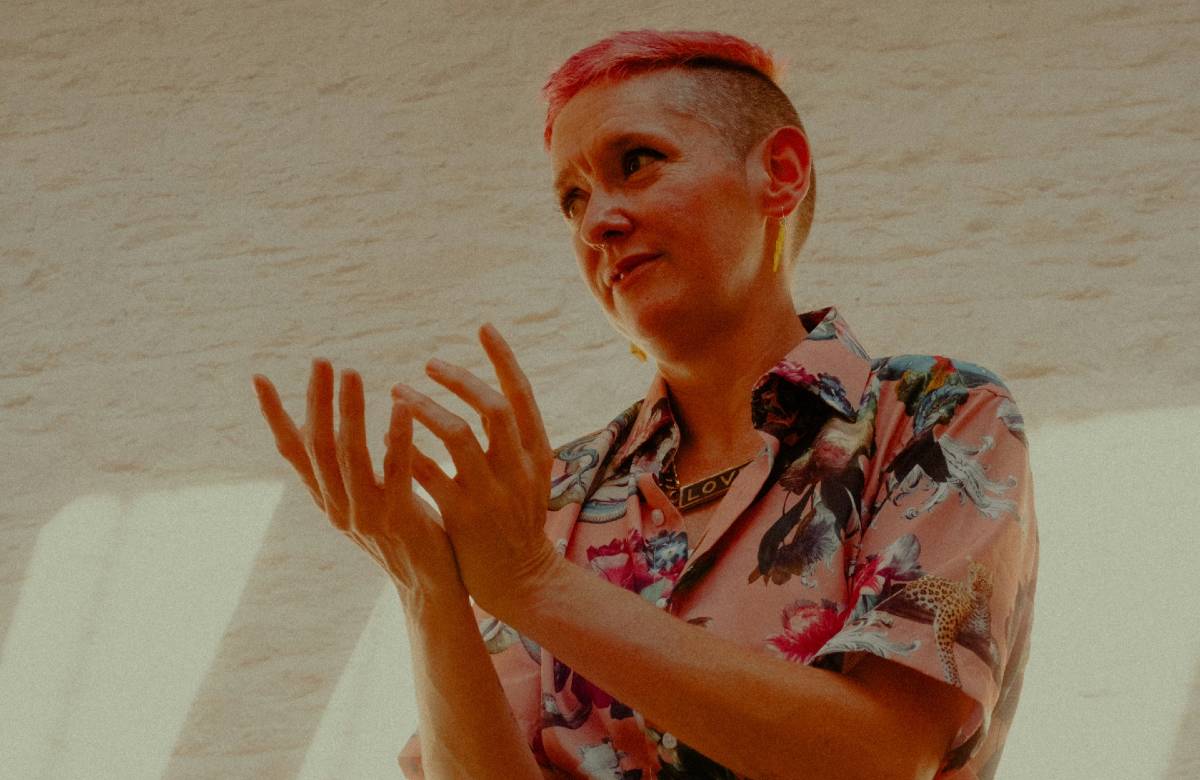
Writer and director P Burton-Morgan is performing again for the first time in 17 years, having stopped due to stage fright. They share how they conquered their anxiety through a variety of techniques focused on both mind and body
For 20 years, I’ve been known as a writer and director. But I used to perform until I developed debilitating stage fright. Fast forward and my successful writing/directing career has somewhat stalled due to the decimation of theatre post-pandemic. It’s a strange time to return to performing, but instead of raising £500,000 and attempting to negotiate £35,000 in weekly guarantees from regional theatres (themselves ravaged by funding cuts, rising costs and audiences who just haven’t returned), small-scale solo shows appear to be the only viable touring model left. Time to create a solo poetry show.
My only stumbling block: the anxiety. But as they say, feel the fear and do it anyway. Better yet, heal the fear. So, that’s what I spent this spring doing in preparation for a 12-venue tour of my solo show. Cue the Rocky montage of eye movement desensitisation and reprocessing therapy, cross-country running, yoga, wild swimming and hours sweating off adrenaline in my local community sauna.
When faced with the prospect of performing, many (maybe all?) bodies produce adrenaline. This is probably helpful in some situations. And maybe some of us just have a hypersensitive response to the cortisol flooding our nervous system. Some people amp themselves up before a show. I amp myself down. Performance anxiety, like any form of anxiety, is not one-size-fits-all, so what worked for me won’t work for everyone, but my most effective techniques can be loosely grouped into psychological and physiological.
Continues...
In the psychological camp, EMDR therapy literally reprogrammes your brain, and if your anxiety stems from childhood trauma (as mine did), it is a game-changer. It’s £70 an hour, but worth it. The idea is that bilateral movement helps you access and process trauma stuck in your brain. I found it life-changing. Cognitive behavioural therapy also helped – basically reasoning your way out of unhelpful thinking styles.
If you ever succumb to catastrophising or overthinking, it helps you to notice those mental stories and create new, healthier ones. One of my worries about performing was forgetting my lines. Remembering the reality that it was actually not the end of the world to forget my lines was very helpful.
Then there are mantras – yes, I am that ‘woowoo’ Somerset hippy. It was actually my NHS CBT therapist who suggested it. I still have one stuck inside my car – something about being enough and how if I forget my lines, I can still get back on track. Plot twist: I do forget my lines on stage, frequently. I always get back on track. Also, in a solo poetry/comedy show, nobody can tell anyway. I’m over it.
Performance anxiety, like any form of anxiety, is not one-size-fits-all, so what worked for me won’t work for everyone
Now on to the more psychological techniques. Exposure therapy is just gradually increasing your exposure to the thing in incremental stages. I also successfully conquered my travel anxiety and parallel parking phobia this way. With performing, I did this by increasing the duration of my poetry performance slots from a five-minute open mic slot to 10, 20, 25 minutes, and then the full hour. Simultaneously, I did the same with performing in a very safe environment to a few people (friends, or not always friends if that feels more pressurising) to larger groups.
In theory, I’m also a fan of well-being consultants – more something for producers on larger projects with ACE funding. Let’s be real: no commercial producer will budget for this without subsidy. But they can be great at offering grounding exercises with breathing, mindfulness, mantras and even, in some instances, one-to-one counselling sessions.
I am autistic, and being around people, especially if they are anxious or just a bit manic, can be massively overstimulating, so I am getting better at enforced solitude before performances. On the flip side, if solitude is liable to lead you down a rabbit hole of increased mental distress or catastrophising, then don’t sit alone in your dressing room. Sometimes I really enjoy bantering with that chatty technician right up until beginners.
Continues...

On the physiological front, there are so many therapies that help regulate a dysregulated nervous system. Massage helps remove adrenaline and cortisol from your body. Sauna – ditto. I could sauna every day. I now work in a sauna as a side hustle so I can get free saunas. Running is more bilateral movement. That’s why people often feel like they’ve moved through emotional blockages while walking or running. They literally have. Also, you’re running off some of that adrenaline. Yoga puts your body in balance. I do yoga seven days a week and always before a show.
Knitting, crocheting and fidget toys – even neurotypical people find it calming to do things with their hands. I wrote this into my show and then extended the knitting section so I knit and chat to the audience as they enter. It’s so calming. Plus, as I joke in the show, if you’re the kind of neurospicy who finds eye contact anxiety-inducing, then knitting is great for not having to look anyone in the eye.
Finally, there are breathing exercises – infinite options. When we’re anxious, we often breathe high and fast, so anything that counters this can help. Square breathing (in for four, hold four, out four, hold four), longer exhales than inhales or just three deep, slow, conscious breaths – find what works for you.
I wrote breathing exercises into the opening of my show so the audience does them with me. Audiences love it. And it’s a great place to start on the anxiety-conquering journey because, as I say in the show, just a little bit of peace is always available to us.
I can’t say I’ve banished all nerves before performing, but I have, through the combined efforts of these techniques, successfully expanded my ‘window of tolerance’ (to use another therapy term) and found a way to stay grounded so I’m not immediately, or at all, propelled into the fight, flight, flop, freeze of adrenaline overwhelm. More importantly, I’ve rekindled my love of performing. It’s taken a lot of effort, and a substantial financial investment in EMDR and massage, but it’s been profoundly transformative.
Invest in The Stage today with a subscription starting at just £7.99