There was much rejoicing in online theatre circles – and even a big fat Guardian editorial – when Channel 5 recently announced its plans to bring back Play for Today, the iconic BBC series of television plays that ran for 14 seasons and more than 300 episodes in the 1970s and 1980s (more if you count its 1960s incarnation as The Wednesday Play).
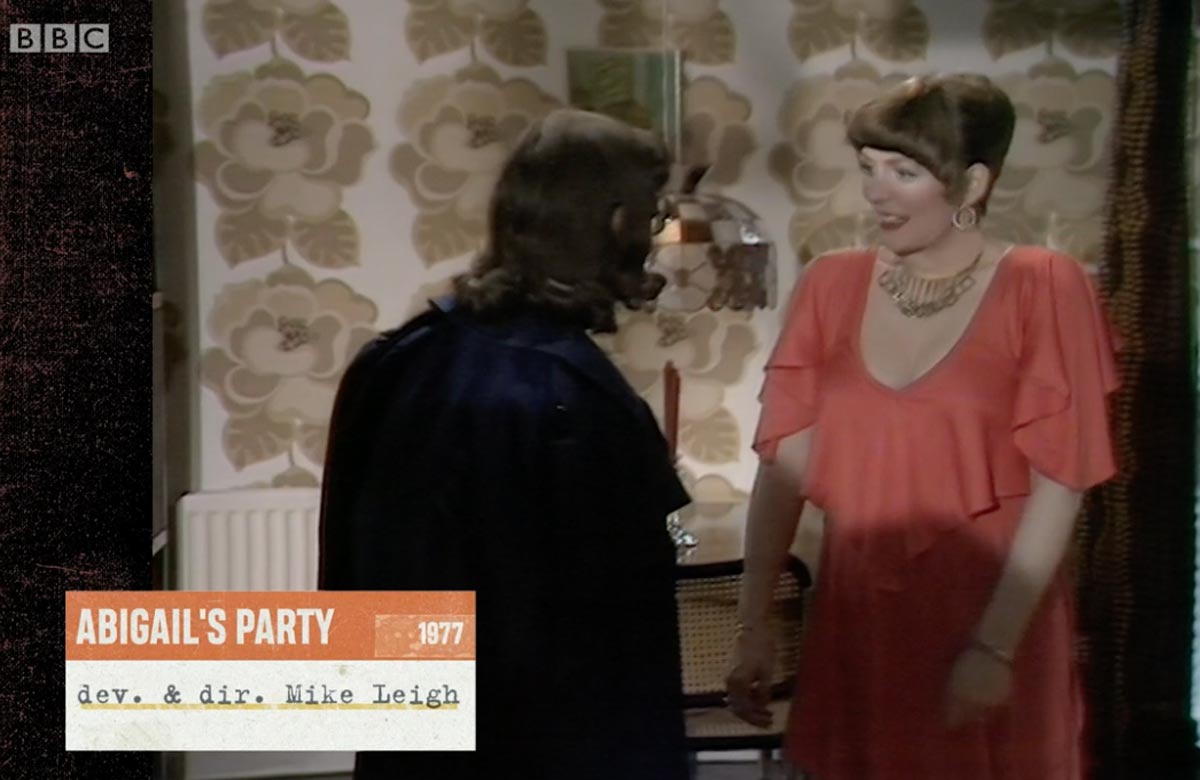
And on the face of it, why not? Aside from the fact that the series threw up multiple classic episodes that still resonate to this day – Abigail’s Party, Scum and Brimstone and Treacle, to name but a few – it also provided an explicit channel between British new theatre writing and mainstream television.
I don’t want to get bogged down in prejudging a show nobody has seen yet, but there are reasons to doubt that the new Play for Today – which is expected to arrive later this year – could possibly serve as a like-for-like replacement. For starters, only four episodes have been commissioned, when previous series had closer to 30. There’s no mention of who the writers are, and the publicity material makes little hay out of any theatrical connection.
Continues...
And that’s the thing: the show was wound up 40 years ago for a reason. Back then, you could fire out an episode every week because, on the whole, it was acceptable to have low production values. I’m not a TV producer, but I’m pretty sure that if you did that now, people would think it looked terrible.
The promotional material for the nouveaux Play for Today has emphasised it will create opportunities for creatives from lower-income backgrounds, which is laudable, but I don’t think that was ever a sell of the original. So, it’ll be different. It may well be very good. But it probably won’t be the exact thing for which people are nostalgic.
Still, any opportunity for playwrights to get seen on television is a good opportunity, right? Well, yes (accepting we don’t know who the writers are and there is no guarantee they are playwrights).
‘Play for Today was always television – just television for which the writers were playwrights’
However, another way in which the British television landscape has changed vastly in the past half century is that playwrights are, frankly, everywhere. With the gargantuan transatlantic success of Adolescence, Jack Thorne sealed his name as quite possibly the most successful screenwriter of our era. Virtually any prestige television vaguely British-in-origin has playwrights all over it: Normal People, Succession, Rivals, Industry. Fleabag and Baby Reindeer are straight-up adaptations of plays.
Is that the same as putting plays on TV? No, but that was never really the deal with Play for Today – the actual number of regularly performed plays to come out of it can be counted on one hand. It was always television – just television for which the writers were playwrights. For Mike Leigh, Stephen Poliakoff, Alan Bleasdale and Dennis Potter, the profile boost offered by Play for Today was their ticket away from the stage.
We should remain open-minded about the new Play for Today, but make peace with the fact that it’s not going to be how it was 50 years ago – and remember that playwrights have not vanished from our screens; quite the opposite.
Invest in The Stage today with a subscription starting at just £7.99