


Women in tech: what’s blocking the path to equality?
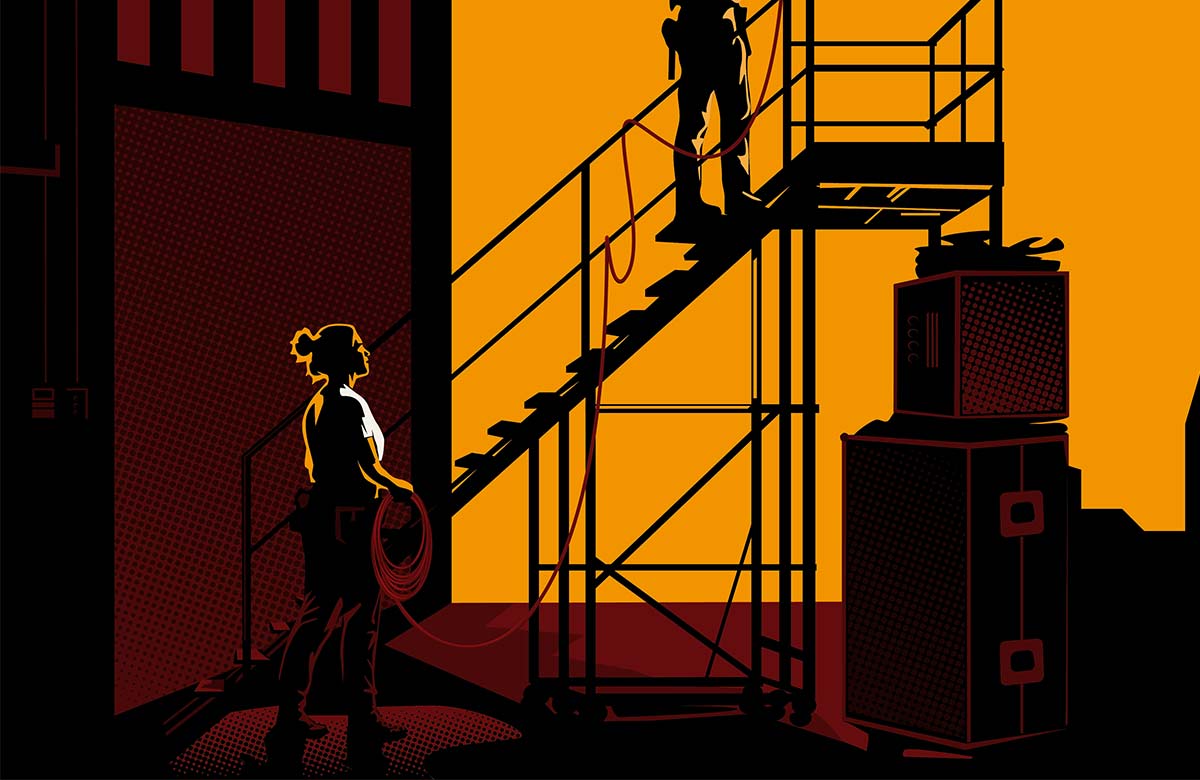
The gender imbalance backstage is improving, but is a long way from fixed. Women who have successfully confronted ‘boys’ club’ attitudes and smashed the glass ceiling of career progression tell Holly O’Mahony that, while it has been a battle, they are optimistic for the sector’s future


From one-woman monologues pouring out of fringe festivals to feminist retellings of historical events lighting up the West End, female-led theatre is happily in strong supply these days. According to a report from the British Theatre Consortium, the number of new plays written by women rose to 41.7% in 2023 – a 34.5% increase from a decade earlier – and many of those projects have produced meatier roles for women. But behind the curtain, it is a different story.
Women working in backstage and technical roles have long lamented the gender imbalance within this significant portion of the industry, citing a lack of opportunities, pay disparity, ‘boys’ club’ attitudes and working patterns that are fundamentally at odds with any kind of caring responsibilities.
While overt sexism may be less common today and so many working in theatre have an understanding of the push for a more diverse and equitable workforce, backstage, things feel slower to change.
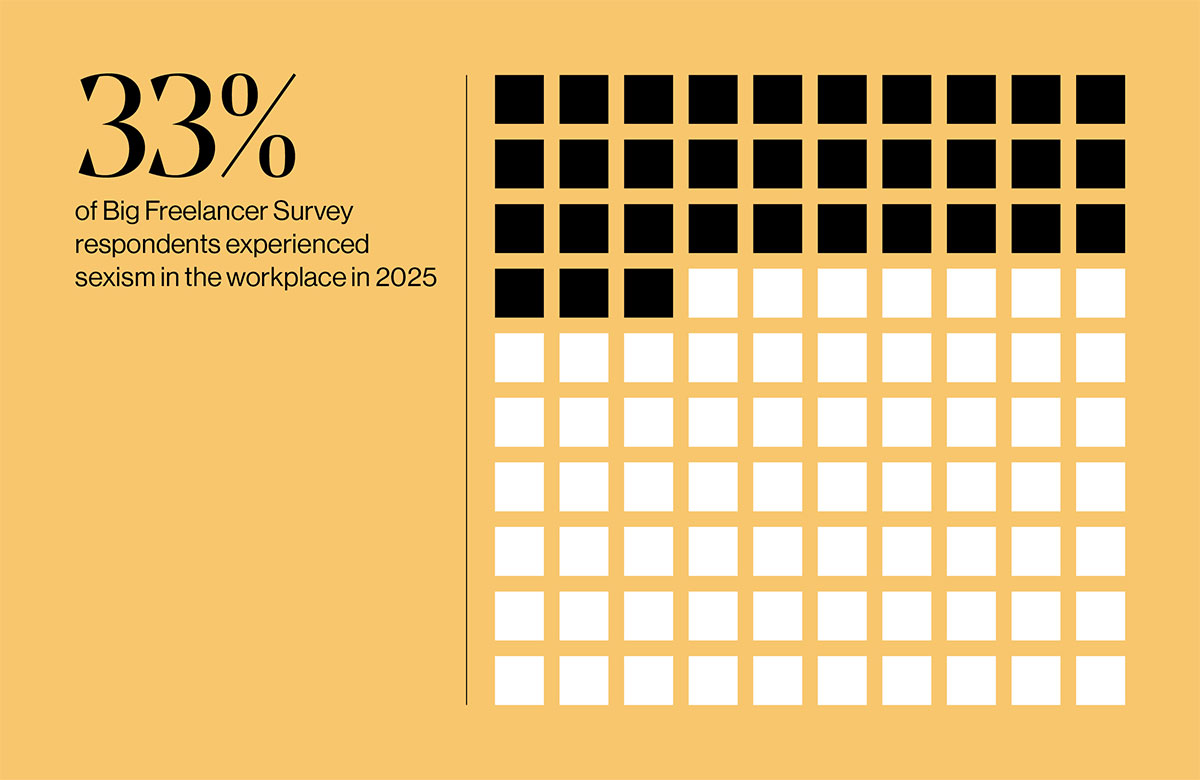
Like much of the industry, freelancers make up the majority of theatre’s technical workforce. The annual Big Freelancer Survey, to which more than 1,000 freelancers contribute information about their experiences in the industry, still contains anonymised accounts of misogyny in ‘technical theatre’ – defined as backstage and offstage roles. More than 33% of its respondents reported experiencing sexism in the workplace in 2025. Although this figure covers freelancers across all roles, it is an indication of the picture for the freelance-dominated backstage workforce.
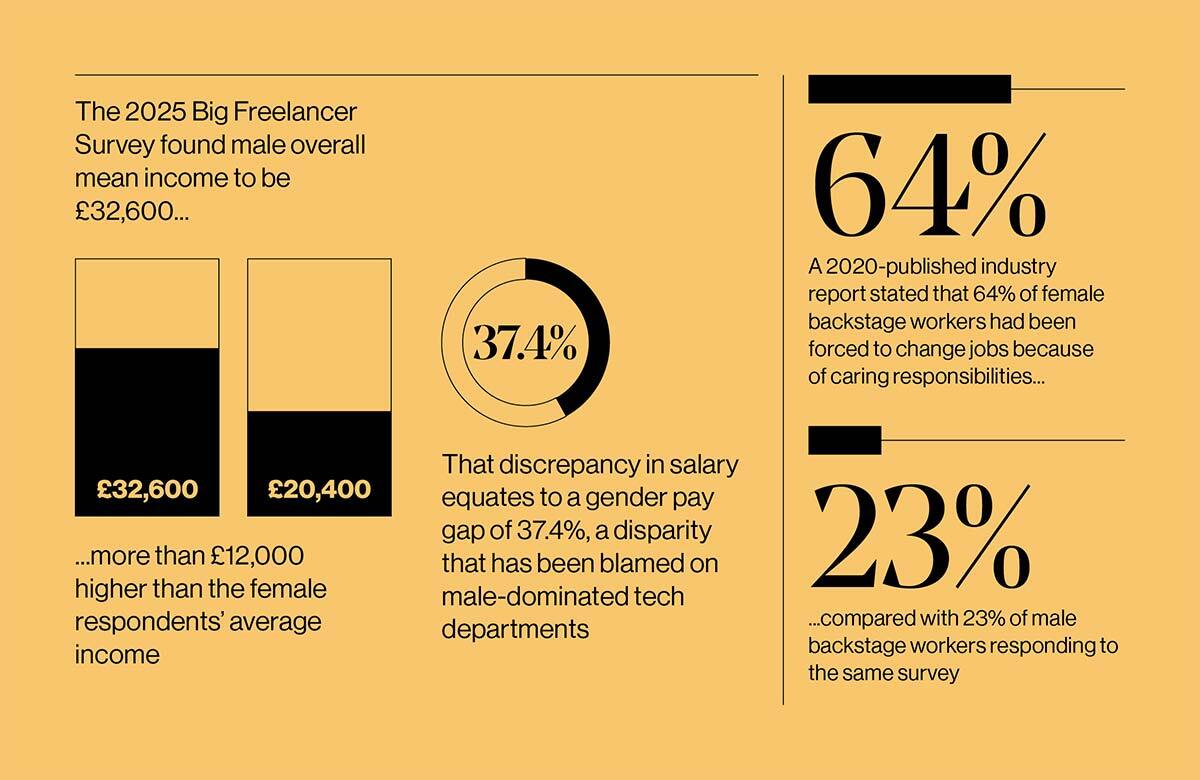
The 2023 edition of the survey also reported a staggering 37.4% pay gap between men and women (a disparity that theatres have previously blamed on male-dominated technical departments). Of the 1,100 freelancers who provided information on their gender that year, the overall mean income for male respondents was £32,600, while for female respondents it was £20,400.
While not accounting for the pay gap among theatre workers with full-time or part-time salaried jobs, the survey hits on an important issue for many in backstage jobs. “Certainly in the technical world, most people are freelancers and negotiating their own rates”, says stage manager Jo Franklin, head of technical theatre arts at Guildford School of Acting.
Continues...
Read More


But it’s not only the pay cheques that signal a gender pay gap backstage. Often, there’s a gender imbalance within facets of technical theatre, with more men working in lighting, sound and video, while women gravitate towards stage management, costume and wigs, hair and make-up. “Pay rates for traditionally male departments... tend to be higher than pay rates for traditionally female areas,” Franklin points out.
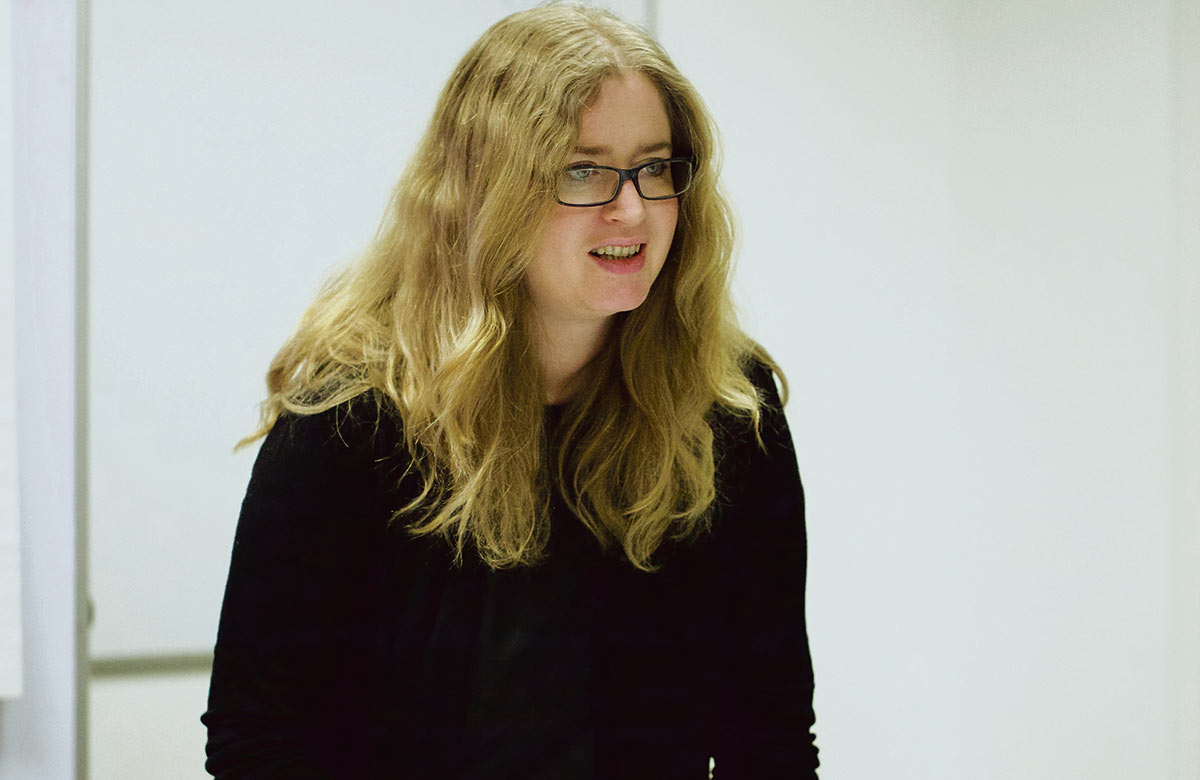
“I think the disparity comes in the amount and type of work you get as opposed to what’s put on the pay cheque,” argues lighting designer Johanna Town, who is chair of the Association for Lighting Production and Design and has more than 40 years of experience in the industry. “It took a long time for me to break into the West End because I was a woman,” she recalls. “I got removed from two shows that transferred [to the West End] in the mid-1990s because they said: ‘We don’t know who this person is.’”
She wasn’t passed over for better paid West End work purely because of her sex, but believes that for much of her career – up until “Covid time” – there was a “lazy” culture of “men employing the same men they like working with”. As a result, her name wasn’t getting out there.
But when it did, and she was appointed to run the Royal Court’s lighting department in 1990, she felt as though her gender contributed to the departures of several staff, forcing her to build her team from the ground up. “I started with nobody,” she remembers. Unperturbed, she employed people who weren’t put off by working for a woman – at one point even running an all-female team – but her belief is that a mixed-gender department is best for everyone.
“Everyone thinks [technical work is] roughy-tough, carrying things and working with electricity, but actually lighting in theatre is creative... even if you work as an electrician, there has to be a sensitivity to that product, and I think women are very good at that,” she says.
‘The disparity comes in the amount and type of work you get as opposed to what’s put on the pay cheque’ – Johanna Town, chair of the Association for Lighting Production and Design
Town has seen the industry become more accepting of women, but has still found that when touring, “you just get checked a little bit more as to whether you can do your job”. Ruth Butler, now director of technical production at the Southbank Centre, recalls: “I used to get comments from truck drivers asking what I was doing there, among the crews filling trucks.”
At the Southbank, Butler leads a team of 50 technicians and delivers about 3,000 events a year. She believes “elements of the lad culture of the 1990s to early 2000s still remain in pockets of the industry”, but reasons that some of that culture comes from “loyalty and pride”. These men see themselves as custodians of the venues where they work, and are reluctant to offer work beyond a small, trusted circle – often made up entirely of men. But while individuals who have worked at a venue for decades and have “historical knowledge that cannot be underestimated”, she believes “it needs careful management” to ensure aspiring technical workers aren’t being excluded.
Kat Ellis, who entered the workforce relatively recently, in 2017 – and has impressively risen to become technical director at London’s Young Vic by the age of 30 – has experienced something similar. “I still sometimes get people assuming someone else in the room is the technical director or the production manager of the show rather than coming to me, or directing their questions at my male colleagues,” she says. A harmless mistake, perhaps, but one steeped in unconscious bias.
The behaviour of male colleagues can be off-putting. “What is often dismissed as just ‘banter’, as well as micro-aggressions, [can lead] to poor retention as well as poor recruitment,” argues Liz Sillett, chief executive of the Association of British Theatre Technicians.
So, how do women break into technical theatre environments that are at best male-dominated, at worst hostile? One thing my interviewees have in common is getting a taste for their niche at a young age and persevering. Butler recalls going to Stage2 Youth Theatre in Birmingham from the age of 14, while Sillett’s “first real theatre experience was in a youth theatre at the Wolsey in Ipswich led by the brilliant Dick Tuckey, who taught us we could all do any role within theatre”.
Continues...
The penny dropped for Ellis when she was studying for a maths degree at the University of Leeds. She realised she was spending more time doing the production management of student musicals, and decided to pursue that passion when she graduated. Town, meanwhile, knocked on the door of the control room at Manchester’s Royal Exchange Theatre and asked how to get a job in lighting. An apprenticeship was coming up, and after completing it, she spent years working at the venue. The Royal Exchange celebrates its 50th anniversary this year, and Town returned to light its production of Private Lives. In one respect, she was lucky. Despite a scarcity of women in lighting when she started out, she “had a good role model” within the Exchange. “The assistant was already a female electrician, so I walked into a world where I thought this was fine.”
But getting a foot in the door is only part of the challenge. The demands of technical theatre work – which often mean being on the road for extended periods, as well as working evenings and weekends – have led to a retention crisis that disproportionally affects women.
“An imbalance of parenting and caring responsibilities leads to a mid-career exodus of those women who have chosen to make a career backstage, where there is a reluctance to look at how roles can be made more flexible, or job shares, to enable retention of skilled people,” says Sillett. A report by Parents and Carers in Performing Arts published in 2020 indicated that six out of 10 female backstage workers (64%) had been forced to change jobs because of caring responsibilities. Only 23% of men who responded to the survey said the same.
“People are looking for flexible work when they have children and it tends to be the women who take that hit,” agrees Franklin. She thanks working at a university, where it’s common for staff to be balancing work with family life, for her re-entry into the career she loves after starting a family. “I still work evenings and see shows, but not every night, [and] when my children were younger, it was possible to be around at the times when they needed me,” she says.
For Butler, a return was largely possible thanks to a job share. She was working as head of technical and production at the Roundhouse in Camden at the time, and the venue was “willing to try something new. This hadn’t been done before, so I was grateful to them for trying – and to the person I shared the role with”. But, in practice, she says, it was still difficult to sustain given the demands of the job. “I have an incredibly supportive husband who has a ‘civilian’ job. He works office hours and has a degree of flexibility which makes my job possible... I don’t know how it’s possible if you’re a single parent.”
The long hours and lack of leave during the production period take a toll on those who are child-free, too. “I’ve missed too many weddings and too many funerals... I haven’t said goodbye to grandparents [and] I haven’t spent as much time with nieces or nephews as I would have liked,” admits Town. “Sometimes, I can spend half my year away from home... it doesn’t suit everybody.”
But since the Covid-19 pandemic, the industry’s attitude to working arrangements has shifted. “If there is a silver lining to the impact of Covid on the industry, it’s how we can all think differently when considering an unusual [working] request,” says Butler.
Franklin agrees. “One thing that has changed for the better in stage management is there’s now more acceptance of job sharing, and the Stage Management Association has been really good at pushing that forward,” she says. “There is also now more acceptance of having more of a life outside of the job.”
Continues...

Shifting attitudes don’t necessarily equate to opportunities, though. A Women in Theatre survey conducted by Sphinx Theatre in 2023 found that only 6% of respondents believed opportunities for women in theatre had increased since the pandemic.
Encouragingly, all of those to whom I spoke commented on a sense of allyship among women in the industry. “There’s a growing group of female technical directors,” says Butler. “We’re in touch with each other and it’s a great support... there’s no competition, just a listening ear. We compare notes on team culture and strategy, and discuss what has worked for us previously. Then we drink wine and laugh.”
Ellis has also found that “there’s a lovely, natural mentorship that happens” between the industry’s women. “You find the other women over time and naturally gravitate towards them for advice and to help bring them up.” And there are advantages, too, of being one of few women working as part of a crew. “I’ve found I’m more likely to be remembered sometimes, or recognised,” she says.
Not all women in technical theatre automatically feel safe in one another’s company. Maddie Coward is a freelance stage manager and, as a transgender woman, she finds herself asking how progressive a theatre is before taking any new job. “Every time I enter a new venue, I’m like: ‘Cool, what’s the temperature check here? Are we a bit more traditional or are we gonna be really championing anybody using the toilets that are most comfortable for them?’” she explains. She also finds herself “navigating the idea that women around you won’t be as comfortable as they are with other women”. She says the common responsibility of knocking on stage doors carries a particular tension, as does booking digs and finding a decent, welcoming host. “I think it’s something women more broadly experience [but] that for me is more complicated. I would much rather stay with a woman, granted, but that doesn’t necessarily mean that I will automatically be safe,” she says, particularly at a time when “there is an alternative narrative out there that paints me as a threat”.
‘One thing that has changed for the better in stage management is there’s now more acceptance of job sharing’ – Jo Franklin, head of technical theatre arts, Guildford School of Acting
As a freelancer who takes shows on tour, Coward finds conflicts can arise between the technical theatre workers employed by a building, and those like her bringing in a show. Male technicians “place their expectations of what my knowledge base is lower, based on both the job I do and because I’m a woman”, she says. But by speaking the language, and offering technical solutions to whatever issue has arisen, she finds she’s usually able to prove herself.
Town remembers having a similar experience, but when she was the employed party – namely the in-house lighting designer, working with external freelancers. She was often underestimated by male contractors, but thanks to her electrical training, “I knew how to talk to them, which made a big difference”. She also believes the gender imbalance in technical theatre is not nearly as bad as it was. These days, she says, “there’s rarely a department I walk into where there wasn’t somebody female on the crew or in the lighting [team]”. Another bonus is “there are lots of new roles, such as programming, and there are a lot of women in programming now”.
What’s more, “theatre is more accepting”, points out Coward. “If you’re noticeably trans, you’re probably going to have a slightly easier time in theatre than you would in other industries.”
Guildford School of Acting’s Franklin notes that the young people coming through its courses are diversifying, too. “We have lots of female, trans and non-binary students joining our programmes... so, it looks like that is changing, but you’d need to track those people through for the next 10 or 20 years,” she says. Ensuring they are not forced out of the industry because of low pay, a lack of opportunity, inflexible working requirements or prejudiced attitudes will be the challenge now.
“More representation of women and non-binary people at management level” would be a welcome start, she says, while Coward would “love to see a kind of career mentorship programme [with] support, fostering and financial backing” of its recipients. It’s something Town, in her role as ALPD chair, is already putting into motion, with ‘observerships’, where people can come to see how roles work, and by connecting people through associations such as Women in Lighting.
In the short term, Butler urges technical departments to remember “we’re all part of the same team [and to] take a look at your technical staff in a different light. It just might help to change our culture”.






Most Read
Across The Stage this weekYour subscription helps ensure our journalism can continue
Invest in The Stage today with a subscription starting at just £7.99


© Copyright The Stage Media Company Limited 2026


