


Even These Things review


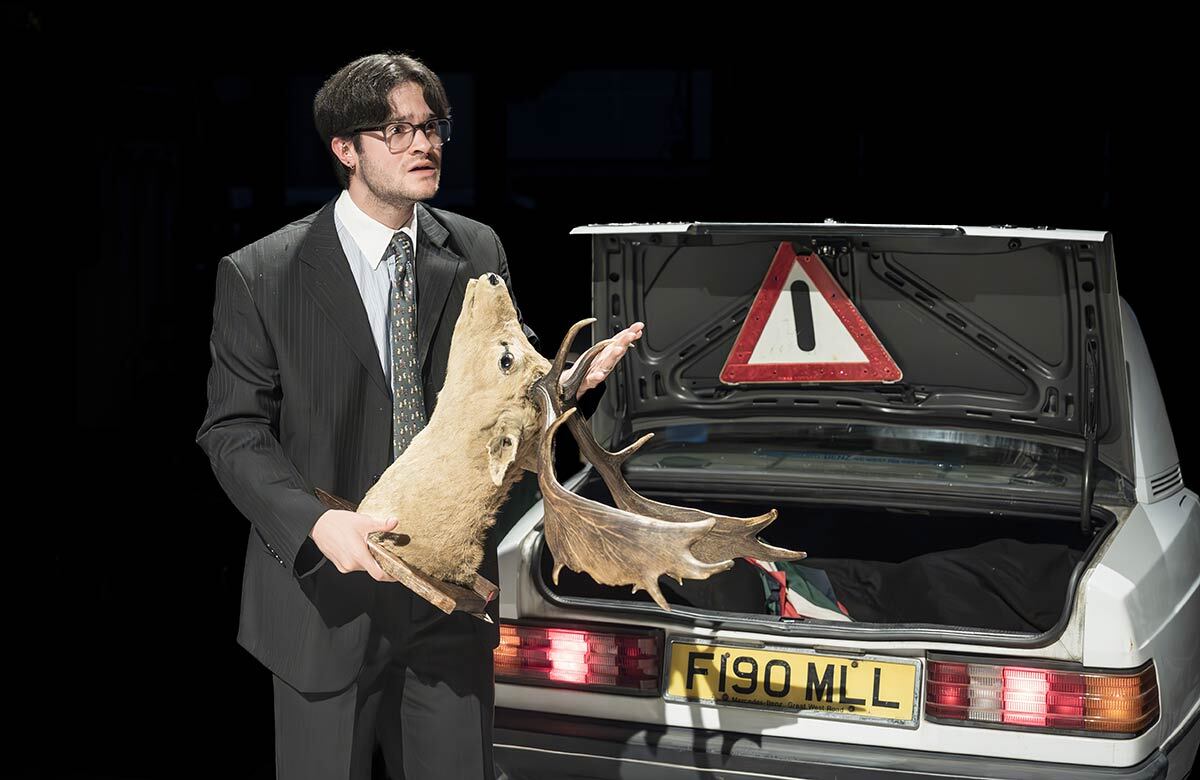
James Macdonald directs Rory Mullarkey’s sensitive but scattershot play about the 1996 IRA bomb in Manchester


Amid the hustle and bustle of a sunny Saturday in Manchester in 1996, a solitary, stationary truck stands out. It was parked a stone’s throw from the Royal Exchange Theatre. Now, on that same stage, Rory Mullarkey’s new play, directed by James Macdonald, looks at the scars left by the truck’s cargo – a 1,500kg IRA bomb – on the city and its people.
The play is split into three acts: before the attack, the day it happened and decades afterwards. In the first, an Irish woman in 1846 (played with gusto by Elaine Cassidy) seeks violent vengeance against a woman who murdered her pig. There are hints of Caryl Churchill in quirky lines such as “not for a universe of apricots”, but the 40-minute monologue is too long, and it’s confoundingly difficult to infer what it’s trying to set up.
The play’s centrepiece, featuring a community ensemble, takes us for a tour of city-centre hotspots on the morning of the attack. The hungover get blinding wake-ups from the morning sunlight. A divorcee backstrokes across the stage. A choir of children sing Oasis, bobbing off in their bucket hats at the end like scattered marbles. We see the proud red letterbox that somehow withstood the blast. And a helicopter spots that fateful truck in the middle of it all.
Katherine Pearce narrates this kaleidoscopic circus of life, her wonderfully tender delivery giving each moment weight and significance. But these fragments feel generic, rather than putting the city’s identity distinctly on display. While endearing, the sequence labours the point that this was a normal day, with normal people going about their normal lives.
Continues...
Read More
The impression is of Mullarkey grasping for the city’s gravity, offering a montage of glances and glimpses at a vast community that swivels on and off. The cursory result makes us feel like that helicopter pilot, surveying from above, at a distance. Moments are moving, but it doesn’t make a piece of fluid drama.
Mullarkey also attempts too many pacing and tonal gear-changes across the disjointed piece. The more poetic and spiritual notes risk landing as twee. Only a director with the sensitivity and care of Macdonald could hold such a play together. His understanding of how to let moments breathe allows stillness and pause, as the drama steps hesitantly towards its subject.
The final section works best. In 2026, a woman in a park opens up to a mother about losing her baby, encapsulating the process of rebuilding after traumatic devastation. Pearce gives another gorgeous performance, squeezing herself as she’s racked with pain, her voice wobbling between grief and resilience. Mullarkey shows the dignity in finding the strength to move forward. Even after all these things, here we are 30 years later, watching people come and go on another beautiful day.
For all the latest reviews, sign up to The Stage’s weekly reviews newsletter

Most Read
Across The Stage this weekYour subscription helps ensure our journalism can continue
Invest in The Stage today with a subscription starting at just £7.99

© Copyright The Stage Media Company Limited 2026


