



How can drama school graduates make their first year in the theatre industry count?
 Samantha Marsden
For every student who lands an agent or job straight out of drama school, there are many others grappling with instability, doubt and the question of what to do next. Samantha Marsden talks to recent graduates and drama school representatives from across the UK about how to navigate the first year after graduation


Leaving drama school marks the end of an intense, structured training experience and the start of something new and completely different. As students prepare to leave the world of training behind, drama school faculty members offer words of encouragement, and realism, for the road ahead.
Advice from drama schools
Ryan Murphy, course leader for MA/MFA Musical Theatre at LAMDA, says: “We try to prepare students not only with artistic rigour but also with resilience, practical tools and industry-facing experiences – but no training can fully replicate the psychological demands of that first year out.” His advice for new graduates is: “Don’t panic if your path looks different to your peers’. The most enduring artists are often the most adaptable. Stay curious, stay connected and never underestimate the power of your network – especially the one you’ve built in training.”
Marco Morbidelli, head of undergraduate performance training and joint head of singing at Mountview, encourages graduates to keep feeding their creative palette. He says: “Continue cultivating your identity and your cultural competency. Watch lots of theatre, films, go to museums, watch documentaries, learn about the life of people you don’t normally hang out with and look at your own life and circumstances through someone else’s perspective. This will enrich your sensitivity and make you able to empathise with more people and stories.” He also advises graduates to “build a routine of practice and classes if you find yourself with a lot of free time, and connect with people with kindness, honesty and integrity in professional settings”.
‘Don’t put all your worth in getting that top agent or a fancy Netflix gig. Everyone has a different journey – value what you have to offer as an individual and prioritise your well-being’ – Ben Buratta, Rose Bruford
Anna Bennett, industry liaison manager at RADA, highlights the importance of staying connected to your craft and your community. “Community is key – not only with your peers, who know you best and understand your training experience, but also with a wider network of graduates from across all drama schools. Make space to come together, share ideas and work, read plays and explore opportunities to collaborate. Stay active in your craft in any way you can.”
Ben Buratta, head of acting and performance at Rose Bruford, adds a powerful reminder about perspective and well-being: “Don’t put all your worth in getting that top agent or a fancy Netflix gig. Everyone has a different journey – value what you have to offer as an individual and prioritise your well-being.” He adds: “You don’t have to prioritise London or big cities – think outside the box and take your work where it is valued.”
Continues...
Read More





Alumni support
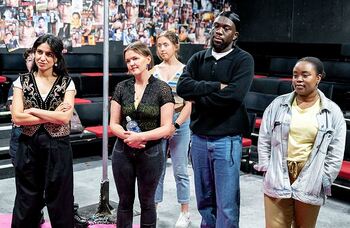
The abrupt loss of a training environment can be destabilising. “Leaving drama school can be a bit of a crash landing,” says actor, musician and film-maker George Airey, a graduate of the Royal Conservatoire of Scotland. “But I think that first year is one that you realise in retrospect is just as educational as any year of study. Leaving with a clear priority and direction as to what you want to do next is a great place to start.”
To combat the sense of isolation, some drama schools offer alumni support initiatives. RCS offers graduates access to a Creative Enterprise Development Office, which provides tailored advice, guidance and mentoring through one-to-one clinics, workshops and structured programmes that support their professional practice and career development. CEDO also provides funding opportunities to develop creative projects and supports alumni to set up creative enterprises.
‘It really can be about who you know, so making connections with people in your field is key’ – Hannah Walters, Royal Welsh College of Music and Drama graduate
RADA keeps its doors open to recent graduates. They are welcome to contact Bennett or other key staff members for advice as they navigate their first year after training. Through RADA’s buddy scheme, students are paired with two graduates who support their transition. RADA also regularly shares open casting calls and job opportunities with recent graduates. Recently, RADA piloted a graduate creative network in partnership with Spotlight and LAMDA to bring together graduates from across drama schools.
LAMDA supports its graduates via an industry team. It offers advice and support with finding agents, headshot choices and supports seeing performances. LAMDA also hosts a festival called MishMash, where alumni can showcase their work.
Hannah Walters graduated from the Royal Welsh College of Music and Drama in 2022 with a Foundation Degree in Scenic Construction and she completed several work placements during her training. She says: “It really can be about who you know, so making connections with people in your field is key because once people get to know your work, they’ll start recommending you for jobs. That’s how your name gets passed around and opportunities begin to grow.”

Creating your own work after graduating
For many emerging artists, the first year out is defined by self-starting. Cecilia Thoden van Velzen graduated from the MA/MFA in Classical and Contemporary Text (Directing) programme in 2024 at the RCS. She says she knew there was going to be a “harsh transition and a potential creative gap”.
Six months before graduation, she started applying to “all the directing/theatremaking jobs in the country, and I do mean all of them”. She put a self-imposed two-hour cap on each application. “Initially, I thought I’d do this to train myself in writing funding bids and concepts,” she explains, “but I was lucky enough that out of my endless list of emails, enough proposals came back positive. I started my first professionally paid gig the Monday after classes finished.”
LAMDA MFA Classical Acting graduate Luke Stiles also took a proactive approach. While visa delays stalled his entry into professional acting for six months, he says it “became a blessing” and it gave him and his cohort “creative momentum”. He and his classmates developed FRAT, a play now heading to the Camden Fringe.
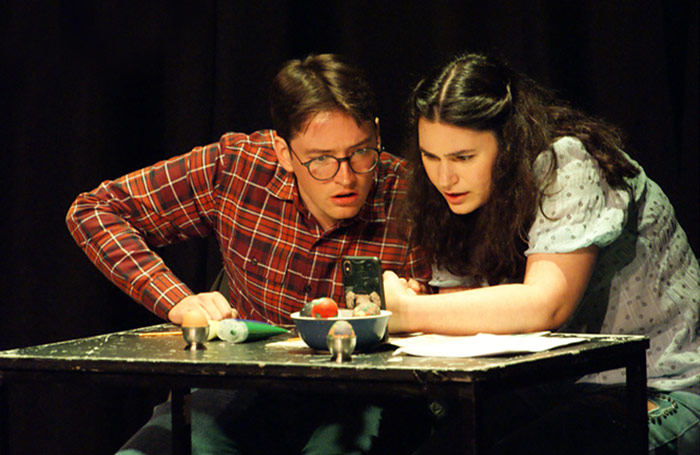
Sahar Yousefi, an MFA Acting graduate from the Royal Birmingham Conservatoire, co-wrote Eggs, a play inspired by their lived experience. “Every burnt bridge leads you to exactly what is meant to be yours,” they reflect. Eggs just won a Hollywood Fringe scholarship and premieres in Los Angeles this summer. After graduating from drama school, they say: “I feel the biggest challenges were finding a community of like-minded artists, navigating ableism and race relations in the UK and immigration. I don’t feel there was a lot of support from the drama school itself once I left or, to be honest, even before I left on facing any of these challenges.”
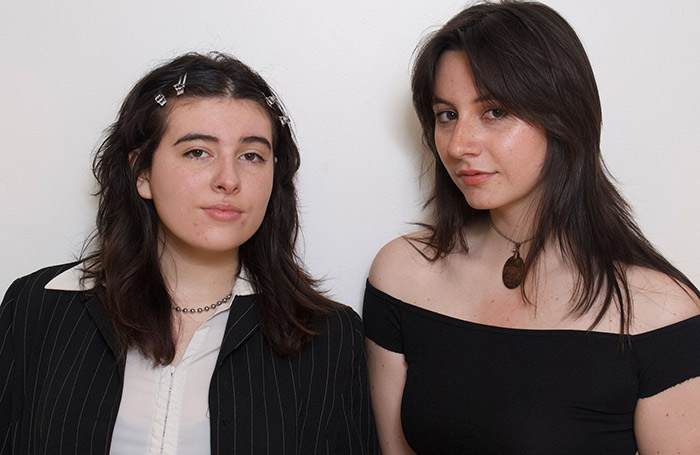
Carleigh McRitchie and Bella Wright formed Nowhere Girls Theatre after graduating from the Liverpool Institute for Performing Arts in Music (Songwriting and Performance)in 2024. They’ve written, produced, directed and performed in the new musical The Gardening Club, which is debuting in London this year.
“We work on The Gardening Club for at least a couple hours each day,” they say, “and try our best to carve out time to see other local theatre so we can stay inspired. It’s all about a balance with work, our musical and consuming art.” The duo add that LIPA has supported the show by offering rehearsal space and a LIPA Enterprise Grant, which will support its debut at the New Wimbledon Theatre this September.
“Entrepreneurship is key,” says Buratta. “Actors who use their time in training to connect with designers, producers, stage and production managers to form companies reap the benefits when they graduate. These meaningful partnerships are crucial to develop creative ideas, performance work and funding opportunities.”
Continues...
Creative balance and well-being for graduates
Sustaining creative momentum, covering living costs and making time for rest and a social life isn’t easy. Graduates warn about burnout. Nathan Friend graduated in 2024 from the Royal Central School of Speech and Drama’s stage management and technical theatre course. He learned the hard way not to take on too much work.
“I’ve double-jobbed once in my life (rehearsals during the day, shows in the evening), and I never intend to do it again,” he says. Friend now schedules dedicated holiday time and builds rest into his routine.
LAMDA MFA Classical Acting graduate Madeleine Bloxam recommends “artist dates”, a concept from Julia Cameron’s The Artist’s Way, to recharge. “It’s a few hours every week where I can find inspiration and a sense of play.”
Yousefi, who struggled with health during drama school, reflects: “Your health is very important. No opportunity is worth risking your mental or physical well-being. Walk away from anything that doesn’t feel safe. There are loving, inclusive spaces out there – you just have to find or create them.”
There is no single way forward. The first year out is rarely smooth, it’s messy, revealing and personal. But with energy, invention and community, there is possibility. Many graduates give up too soon: keep going with curiosity, creativity, kindness, entrepreneurship and determination. Remember what led you to train in the first place and keep hold of that flame to fuel you.




Opinion
Recommended for you



Advice
Recommended for you
Most Read
Across The Stage this weekYour subscription helps ensure our journalism can continue
Invest in The Stage today with a subscription starting at just £7.99


© Copyright The Stage Media Company Limited 2026


