ao link

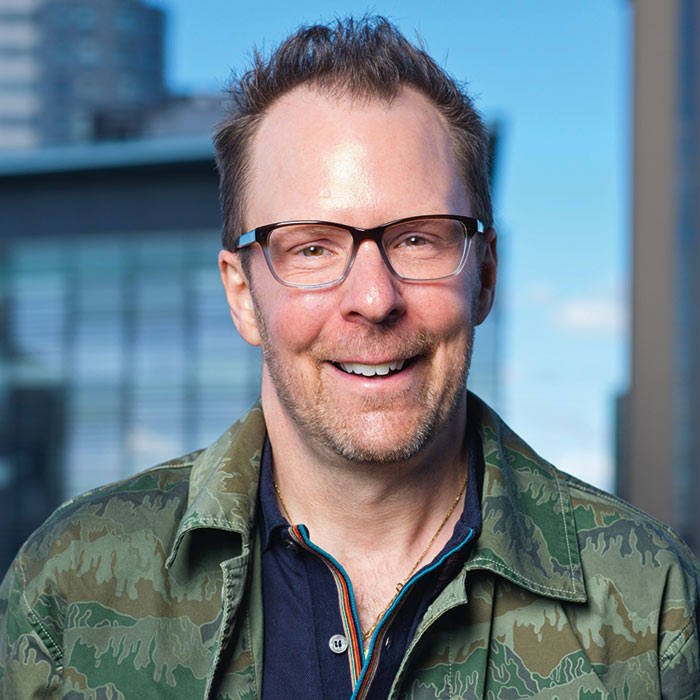
Tony Lankester

“This is a Big Job. Edinburgh Fringe is the gold standard of festival”
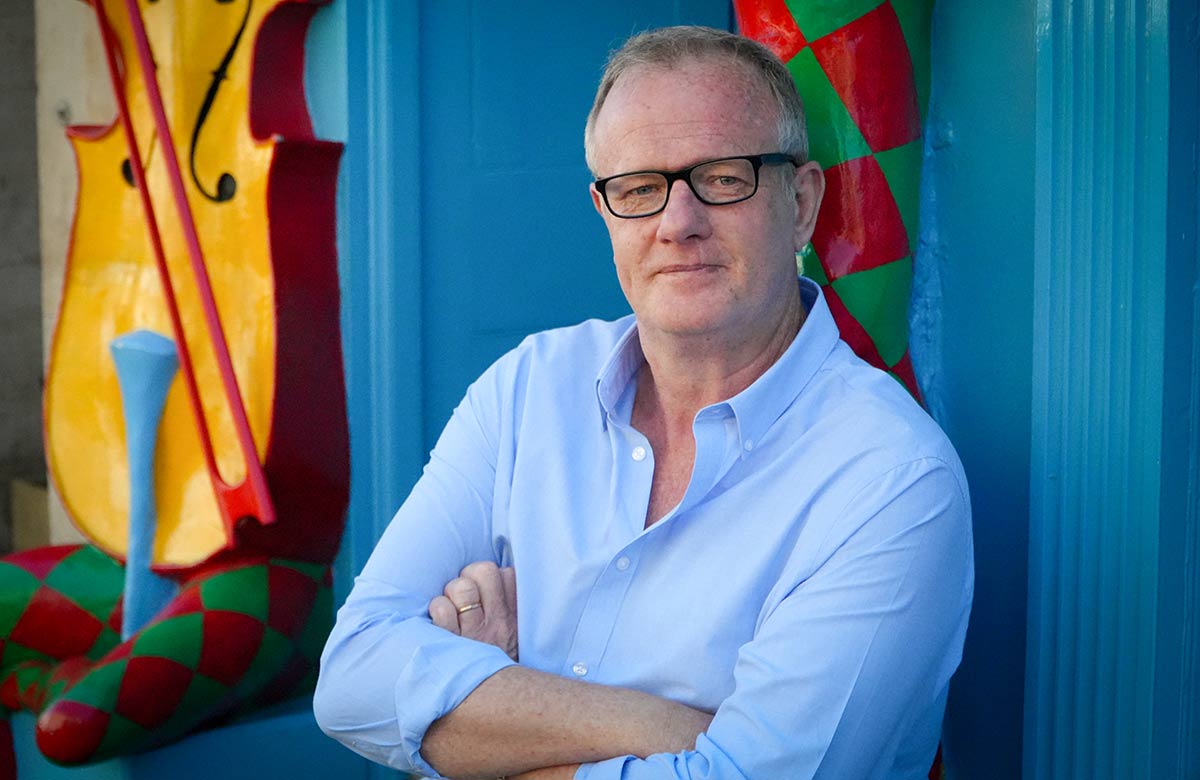
Tony Lankester, Edinburgh Festival Fringe Society chief executive

Edinburgh Fringe’s new boss Tony Lankester has a big challenge on his hands coordinating the world’s largest arts festival. But far from being intimidated by the prospect, he tells Fergus Morgan he is relishing the opportunity to shepherd its evolution

FacebookTwitterLinkedIn

What is the hardest leadership role in the performing arts? Director of a large subsidised theatre? Boss of a big commercial company? Head of an important industry body? Could it be the job of chief executive of the Edinburgh Festival Fringe Society, the organisation that oversees the world’s largest arts festival every August?

It is certainly a role that requires a thick skin. Alongside publishing the main festival programme and running a centralised box office, the Fringe Society provides resources and support for festival participants, promotes the festival internationally and lobbies on its behalf with governments in Holyrood and Westminster, all on a limited budget.

Yet the Fringe Society is not synonymous with the fringe. It does not have input into programming. It is merely the organisation that joins the dots between its various stakeholders – the venues, the artists, the locals, the council, the government, the funders – all of whom are quick to criticise it when things go wrong. When I interviewed Shona McCarthy in March, as she left after nine years as the Fringe Society’s chief executive, she likened the organisation to a “piñata.”

McCarthy’s replacement, Tony Lankester, is well aware of the challenge he is taking on, thanks to his professional relationships with his predecessors in post.

“I sat in this exact office with Jon Morgan in 2008,” the tall South African tells me, when we meet at the Fringe Society’s current office on Edinburgh’s bustling Royal Mile. “I got to know Kath [Mainland] really well, too, and we became mates during her tenure. I also got to know Shona and became mates with her. I’ve come back to Edinburgh a number of times over the years and I was aware of the underlying dynamics of the fringe.
Continues...


Related to this article

Edinburgh Festival Fringe chaos is business as usualEdinburgh Festival Fringe chaos is business as usual
Edinburgh festivals focus 2025Edinburgh festivals focus 2025

“Of course, this is a Big Job, capital B, capital J,” Lankester adds. “I’m going to have to channel everything I’ve done in my career and bring it to bear, but I wasn’t daunted by it. There was no point at which I thought: ‘I can’t do this.’ If I had, I wouldn’t have applied.”

Far from being intimidated by the prospect of coordinating the world’s largest arts festival, Lankester says he relishes the opportunity to shepherd its evolution.

“If you work in festivals, this is the gold standard,” he says. “The Edinburgh Fringe is the thing that people want to work for and want to be at and want to be part of. To be allowed the opportunity to step in and be its caretaker for a bit, which is how I see the role, is amazing. It sounds clichéd to say, but it’s a privilege. It really is.”

Growing up in South Africa

Lankester grew up in Kimberley, a small city in South Africa’s Northern Cape, then went to school in Port Elizabeth, spent a year abroad in Texas and went to Rhodes University in Makhanda – then known as Grahamstown – to study journalism and English Literature. Throughout Lankester’s youth, apartheid – and the cultural and sporting boycotts of the anti-apartheid movement – made South Africa an international pariah. Although there were infamous exceptions, many artists and athletes refused to tour to the country.

“South Africa was extremely isolated culturally,” Lankester remembers. “We didn’t get television until 1977. The first broadcast I saw was the royal wedding of Charles and Diana. Someone had to insert some other random music whenever the choirs in St Paul’s Cathedral sang, because we could not hear British musicians in South Africa.”

By the early 1990s, though, things were changing. Nelson Mandela was freed in 1990. Apartheid was abolished in 1991. The first democratic elections were held in 1994. It was, Lankester remembers, “a wild time” to be a student in South Africa.

“I started university in 1991,” Lankester says. “It was a very exhilarating time. I remember voting in those first elections in 1994. The queues stretched for hours and hours and the energy was amazing. There was a lot of positivity around.”

‘The brief from the Edinburgh Festival Fringe Society board was: We have this thing that is very good. Most of it works well. We need a layer of innovation to take it to the next stage’

For Lankester, a big music fan, the end of apartheid and the end of the cultural boycott meant that he finally had the chance to see his favourite artists perform live. “When Billy Joel came, I saw him twice,” he laughs. “I’m a kid of the 1980s, sorry.”

Grahamstown was a wonderful place to be a student, too, Lankester says, because it is home to South Africa’s National Arts Festival, an annual event that was founded in 1974, nurtured famous artists including the playwright Athol Fugard and the comedian Pieter-Dirk Uys, and grew to become the continent’s largest arts festival.

“It has a very strong progressive streak,” Lankester says. “I had my first taste of it working on the campus radio station. We did special festival broadcasts. I ran a music venue one year, which mostly involved driving the Soweto String Quartet around.”

Career journey

Those exhilarating experiences inspired Lankester’s subsequent career. He moved to Johannesburg to work on SAFM – “loosely the South African equivalent of Radio 4” – where he organised the station’s magazine shows, which he presented himself on a Saturday morning, and sponsored a music venue back at the festival in Grahamstown. Lankester then moved to Cape Town, where he worked in communications for an insurance company for several years, then shifted sideways into the firm’s sponsorship department, and, once again, began sponsoring a music venue back in Grahamstown. It seems as though every job Lankester had, he somehow subverted towards music at festivals.

“That is a big part of the narrative, I’m afraid,” Lankester says. “I love creating moments that wouldn’t otherwise exist. I love seeing an audience experiencing and enjoying something they would not ordinarily get to see. I love seeing the impact that has. And, of course, I love leaning on the bar at the back of the audience with a beer in my hand.”

In 2007, Lankester moved back to Grahamstown to take over as chief executive of the National Arts Festival. His mission was to modernise and monetise the event.

“Suddenly, I was in charge of this beast,” he says. “The festival was great, but it had been doing the same thing every year for 25 years. My mandate from the board was to monetise this thing. We needed to stop being dependent on 10 days a year for revenue. We needed to explore other business opportunities. It was my job to drive that strategy.”
Continues...

Edinburgh Festival Fringe 2025: Little Bulb: Listen Dance will play at Assembly George Square from August 11-13. Photo: Len Copland
Malachi Frost performing on the Royal Mile during the fringe. Photo: David Monteith-Hodg

Under Lankester, the National Arts Festival curated South Africa’s exhibition at the Venice Biennale, it started festivals in Cape Town and the United Arab Emirates, established relationships with other festivals around the world – hence his 2008 trip to Edinburgh to meet Morgan – and co-founded the World Fringe Alliance.

“The World Fringe Alliance was really just a loose grouping of 10 mates from festivals around the world,” says Lankester, who was the association’s first chair. “It was just a support network, really. Running a festival is quite a job, and it is nice to know that, when a particular issue comes up, you have a group of people you can lean on.”

Lankester ran the National Arts Festival until 2019, when he decided to move on. He chatted with William Burdett-Coutts, founder and director of venue operator Assembly, a fellow graduate of Rhodes University, and, at the time, chief executive and director of London’s Riverside Studios, which was about to reopen and needed a new general manager. Lankester’s wife was also keen to spend time in her home country.

“I don’t know if you’ve ever seen Finding Nemo, but there is a scene in which a bunch of fish arrange themselves in the shape of an arrow,” Lankester says. “In our house, because we’ve watched Finding Nemo a million times, we have a saying: ‘The fish are lining up.’ With the job at Riverside Studios, it felt like the fish were lining up.”

Things did not go to plan. The Covid pandemic struck a few months into the job, Burdett-Coutts departed in 2020 – a development that Lankester, who stepped up as chief executive in his stead, remains tight-lipped about – and, weighed down by debt, Riverside Studios went into administration in 2023. Last year, Anil Agarwal, the billionaire founder of mining giant Vedanta Resources, stepped in to save the venue via a charitable trust. Lankester – again tight-lipped – decided it was time to move on again.

‘I love creating moments that wouldn’t otherwise exist. I love seeing an audience experiencing and enjoying something they would not ordinarily get to see. I love seeing the impact that has’

“The brief from the board was not dissimilar to my brief from the board back in Grahamstown,” Lankester says, when asked about the circumstances of his appointment in Edinburgh. “It was: ‘We’ve got this thing that, by and large, is very good. Most of it works well. We now need a layer of innovation to take it to the next stage.’”

That innovation, Lankester continues, could take many forms. One area he is keen on exploring is using artificial intelligence to utilise the Fringe Society’s vast data hoard.

Harnessing ticket data

“We are sitting on a mountain of data stretching back many years,” Lankester says. “We can tell you how many tickets a particular show sold on a particular day in 2007. What we can’t tell you, because we haven’t got the tools to join the dots in the data yet, is who the person that bought that ticket was? What else did they see? How long were they here for? How much did they spend? Did they come back the next year?”

“There is a whole bunch of insights that we can glean from that data that we are just not unlocking,” he continues. “It’s valuable for us from a marketing point of view. It’s valuable data for venues from a programming point of view. It’s valuable for artists and audiences, too. AI can provide some amazing tools to help everyone navigate the festival and make better choices. Running that data project is huge for us.”

Accessing more corporate sponsorship for the fringe, Lankester says, is also key. “Say you are a company like Vodafone,” Lankester says. “At the moment, it’s impossible for you to know how to sponsor the fringe. We can give you a few banners and put your logo on some tickets, but that is about it. If you want to access audiences, you have to have multiple deals with multiple venues. We want to work with venues to say: ‘Let’s create a unified, compelling, fringe-wide offer,’ so if a sponsor wants to come along with a big cheque, we can say: ‘Yes,’ then distribute that money with everybody involved.”

Corporate sponsorship of the arts is a tricky topic right now, though, after high-profile protests against the involvement of Barclays, Baillie Gifford and other financial institutions in arts festivals. Pressure from campaigners over those firms’ investments in the fossil fuel industry and in companies with alleged links to Israel’s defence industries has resulted in several deals, including one between Baillie Gifford and Edinburgh International Book Festival, being terminated. Baillie Gifford no longer sponsors the Edinburgh Festival Fringe Society, but did make a £40,000 donation to the organisation last year.

“Corporate sponsors are very risk-averse, and they will walk away from any environment that is contentious, that is fractious, that is noisy, that is high risk,” Lankester says. “Arts organisations are – almost by definition, all of those things. When you get a sponsor that is prepared to be mature enough to take on that risk, you hang on to them like gold.”

What about public subsidy? The Fringe Society has not received core funding from Creative Scotland since 2018, despite repeated applications, something that McCarthy, Lankester’s predecessor, was particularly vocal about. In March, her tenaciousness finally bore fruit, when the Scottish government agreed to a one-off £300,000 package. That money, though, is ring-fenced for the Fringe Society’s ambitions to exploit its ticketing data and for another project aimed at strengthening international opportunities at the festival. Is there any possibility of core, long-term funding for the Fringe Society itself returning?

“All of the mood music – from the Scottish government, from VisitScotland, from Creative Scotland – has been: ‘Yes, we can see a case for support here,’” says Lankester. “We are developing a multi-year funding ask that spans all public funders and says: ‘Look, if we all want the Fringe Society to lead this festival into a new world, this is what we need.’”
Continues...

Juggling Dom performing in front of the fringe shop. Photo: Roberto Ricciuti

Perhaps the biggest challenge facing the fringe, though, is the accommodation crisis. As the festival has swollen, so has the cost of staying in the Scottish capital during it. Prices have been further inflated by Edinburgh Council introducing licensing legislation for short-term lets in an attempt to ease the city’s year-round housing crisis, and, this August, by Oasis scheduling three gigs at Murrayfield during the festival. In June, Lankester labelled the situation the “single biggest threat” facing the festival.

“Where we are is a complete result of supply drying up while demand grows, so the solution is to expand that supply,” Lankester says. “How can we make it easier and quicker for people to get the permissions needed [to rent out properties] within the framework of the law? How can we tweak that process to make it more efficient? How can we make sure there are enough beds without squeezing residents further away?”

He adds: “The Airbnb-ification of Edinburgh is problematic and breeds resentment. As someone who is trying to buy a house in Edinburgh, with a son about to start university in Edinburgh, I know how difficult it is to find permanent accommodation. If we can get the permitting process right, though, it may solve everything.”

This is, Lankester says, an exciting time for the Fringe Society, for the festival and for the city. There is a potential £50 million windfall for the city on the horizon, when a tourist tax – five percent of accommodation costs, capped at five nights – is introduced next July. “I would like to see some of that money come back to benefit the fringe somehow, not necessarily the Fringe Society,” he says. “If some of it could be used to fix the mobile signal in Edinburgh in August, for example, then that would be a huge plus for us.”

Does Lankester worry that the added expense will put people off visiting during August? “I don’t think so,” he says. “It might suck money from people’s budget that they would otherwise spend on the fringe, but a small tax is not going to scare anyone off. People are prepared for Edinburgh to be expensive in August. You visit Venice during the Biennale, it’s expensive. You visit Austin during South by Southwest, it’s expensive.”

Transformational new home

The Fringe Society will soon have a new headquarters to move into, too, made possible by £7 million of UK government funding. It will be in the freshly refurbished, council-owned South Bridge Resource Centre on Infirmary Street, and it will open in early 2026. The project has had its critics, who have questioned whether the money would be better spent elsewhere, but Lankester is confident that the building will prove popular.

“At the moment, our team is spread across three different buildings, so just having everyone in one building is going to be transformational for us,” Lankester says. “We can also do things in that building year-round that are useful and interesting and beneficial to Edinburgh as a city. We can partner with community organisations. We will have somewhere to tell the story of the fringe and the enormous impact it has had.”

Before all that, there is another festival, kicking off this weekend. The programme currently contains a whopping 3,814 shows, suggesting this year’s fringe could rival the record-breaking edition of 2019, which saw more than three million tickets sold. Will Lankester be throwing himself into it all? “There’s a bunch of shows I’m really keen to see,” he says. “I’m looking forward to dipping into the international showcases. I haven’t been to Summerhall for a couple of years and I’m excited to see something there. Mostly, I’m just looking forward to watching it all unfold, to standing at the back by the bar with a beer in my hand.”


Edinburgh Festival Fringe runs fom August 1-25. Full details at edfringe.com

Big Interviews

Michael Sheen
“It’s not charity work. I’m not doing this as some sort of Welsh saviour”

Michael Sheen

Annilese Miskimmon
“Without ENO, UK opera would be denuded of ambition and excitement”

Annilese Miskimmon

Adele Thomas and Sarah Crabtree
“We’ve wondered whether we should go dark for a period of time”

Adele Thomas and Sarah Crabtree

Nikolai Foster
“Being an artistic director forces you to grow up quickly”

Nikolai Foster

Jessica Swale
“Compared with other parts of the arts, theatre is so welcoming”

Jessica Swale

Elizabeth McGovern
“Doing theatre meant I could hold my own on Downton Abbey”

Elizabeth McGovern

Sutton Foster
“I know who I am, what I stand for and I look forward to bringing theatre back”

Sutton Foster

Carrie Hope Fletcher
“If our industry is worthless, turn off Netflix”

Carrie Hope Fletcher

Julian Bird
“Our place in the world is at risk. It’s as grave as that”

Julian Bird

Nancy Carroll
“As long as my body serves me, I want to use it. It’s my tool bag”

Nancy Carroll

Your subscription helps ensure our journalism can continue

Invest in The Stage today with a subscription starting at just £7.99

The Stage

© Copyright The Stage Media Company Limited 2026

Facebook
Instagram
X
Linked In
Pinterest
YouTube