


Risk-taking is essential to make theatre that matters
 Lyn Gardner


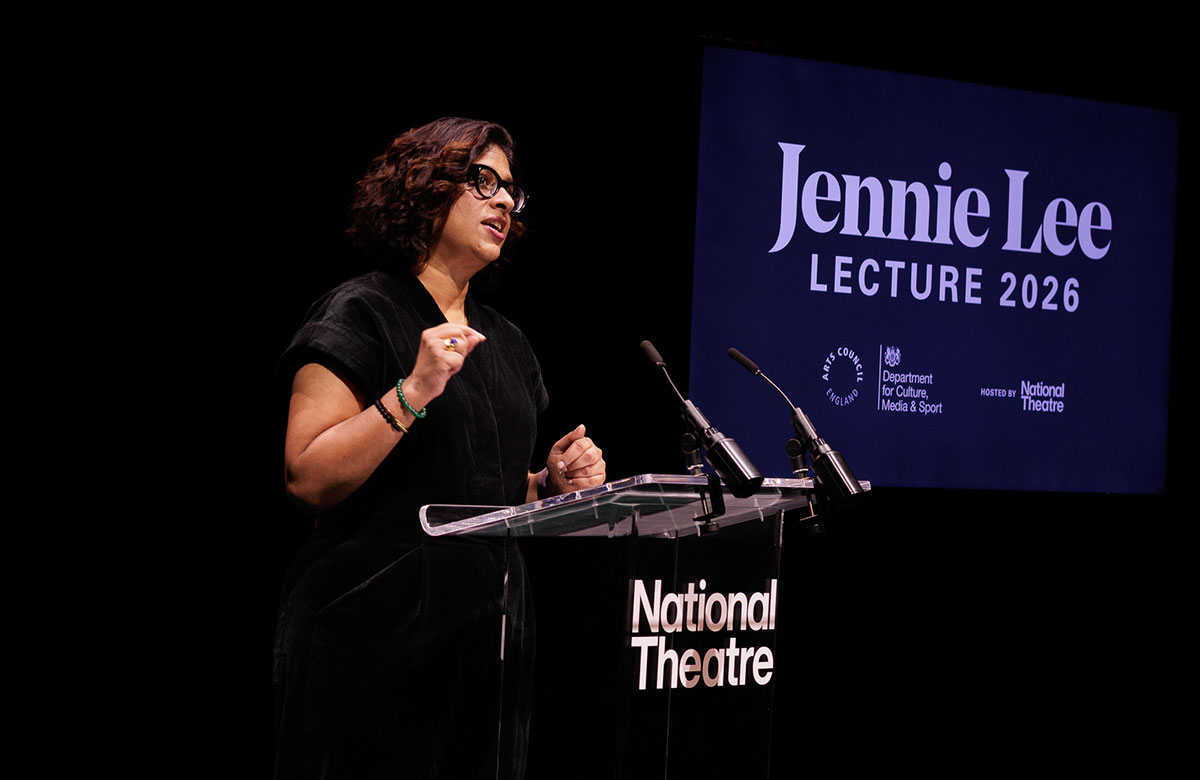
In her excellent lecture celebrating the legacy of Jennie Lee, the woman who secured long-term funding for the arts, the National Theatre’s artistic director Indhu Rubasingham is vigorous in pointing out that “artistic excellence does not come from a place of safety and comfort. It comes from venturing beyond it”.
Rubasingham, herself a product of the better days of arts funding (and also a free university education, which made the choice to study drama less risky), used the lecture to make a reasoned argument, directed at decision makers, of the benefits of the proper funding of the arts. But she also issued a clarion call to the industry and its need to take risks, because “playing it safe will be the end of us” and “if we are conservative in style, in content, in process, we might balance the books today, but we will kill the future of theatre”.
A previous NT artistic director, Nicholas Hytner, painted the tension between wanting to take risks and wanting to survive with rueful precision in his memoir about his time at the NT, the aptly named Balancing Acts: “You start with a vision and you deliver compromise... you know what works, and you also know that if you care only about what works, you end up with something slick but meretricious. You want a play to be challenging, ambitious, nuanced and complicated. You also want it to sell tickets... you want your theatre to vibrate with the rude, disruptive energy of the carnival. But in your heart of hearts, you recoil from the chaos... We want to make art, and we know that we are in showbusiness.”
Continues...
Related to this article
The situation for arts funding is considerably worse than it was when Hytner was running the NT, and Rubasingham is right that unless funding improves, the losses – not just to the public purse and UK’s standing, but more widely to society – will be immense in many different ways. “Jennie Lee knew that democracy was not only built in parliaments and polling stations but also in theatres, galleries, libraries and civic centres,” she said.
What I like about Rubasingham’s appeal is that it is not just aimed at those who make the funding decisions, but invokes the spirit of Lee – at a time when the arts and theatre are under huge pressure – to remind us that retreat on the part of the arts and artists is a serious error with the push towards the “predictable and the profitable” spelling future disaster.
Yes, of course she is calling for more public funding of the arts, a point amplified by the Writers’ Guild of Great Britain in its demand for a renewed boost to new writing, which is in clear decline. But Rubasingham is also clear that artists and theatres need to be braver and cannot sit around hoping to be saved, because taking risks is the only way to ensure the art form’s proper place in society.
Risk is often an essential part of the creative process and who ever made a thrilling piece of theatre by avoiding all risk?
Of course risk-taking means different things for different artists (with risk, context is always crucial, not least because a career in the arts is far less of a risk for some, rather than others who do not have economic safety nets and the opportunity to accrue social capital). And the same applies for different buildings, depending on size, funding, capacity and location.
But Rubasingham is voicing something which needs to be said out loud. The squeeze on funding and other factors, including the pandemic and rising costs, have led to a culture of risk avoidance on the part of managements, boards, producers, funders and also, sometimes, artists. Risk management and risk avoidance are quite different things. The latter has a direct and dire effect on what work is and isn’t developed and programmed and whose voices are and are not heard in theatre.
Risk avoidance is a futile path because risk is often an essential part of the creative process and who ever made a thrilling piece of theatre by avoiding all risk? Risk avoidance leads to dull, safe, forgettable theatre. Theatre that matters less makes the argument for better arts funding far less persuasive.
Rubasingham’s speech offers a call to artistic arms, throwing down the gauntlet for theatre to take its courage in its hands and take risks. Yes, there will be failures along the way. But the consequences of a retreat into timidity will be far more calamitous. Don’t say that Rubasingham didn’t warn us.


Opinion
Recommended for you


Advice
Recommended for you
Most Read
Across The Stage this weekYour subscription helps ensure our journalism can continue
Invest in The Stage today with a subscription starting at just £7.99

© Copyright The Stage Media Company Limited 2026


