Lyn GardnerLyn Gardner is a theatre critic and associate editor of The Stage. Read her weekly column every Monday.
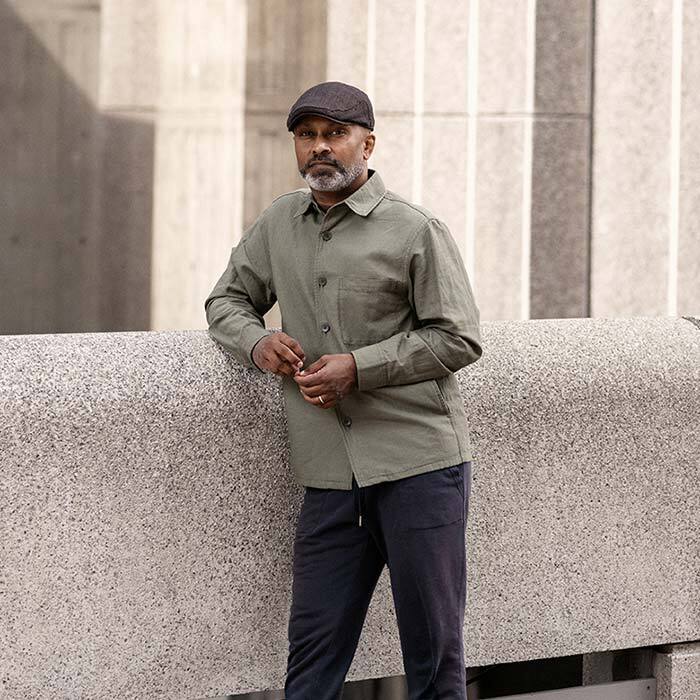
In-demand director Matthew Dunster has a string of impressive credits to his name, including two of the West End’s biggest post-lockdown hits: 2:22 – A Ghost Story and Shirley Valentine. Ahead of the premiere of his latest offering, The Pillowman, he tells Lyn Gardner about his career journey, being a proponent of creative carte blanche and why theatre needs to redraw the picture on directors’ pay

Lyn Gardner is a theatre critic and associate editor of The Stage. Read her weekly column every Monday.
In 2003, director, actor and playwright Matthew Dunster was acting in David Hare’s The Permanent Way at the National Theatre. Running in rep on the same stage was Martin McDonagh’s The Pillowman. Dunster never saw it. At the time he felt guilty. But now he’s directing a revival of The Pillowman, opening at the Duke of York’s this month with Lily Allen playing a writer being interrogated by the police in a totalitarian state. With hindsight, he is relieved he didn’t see it.
“Thank God I didn’t,” he says, as we talk in rehearsal complex the Jerwood Space near Waterloo. “On the first day of rehearsals I said to everyone I know that they will know people who saw it in 2003 who say they will never forget it, and that it is their favourite play ever. That can be a burden for any revival. But we must never be reverent. We have to take a run at this thing, and we owe it to the play to be brilliant, so let’s hit it really hard.”
It’s a revival that was first mooted in 2016, after Dunster and McDonagh worked together on McDonagh’s play Hangmen, which transferred from London’s Royal Court to the Wyndham’s Theatre in the West End. Before the pandemic struck, The Pillowman was due to open in the summer of 2020. So, Dunster has been living with the play for seven years but says that both he and McDonagh reckon 2023 couldn’t be a more appropriate moment to revive it.
‘I find it terrifying that the British theatre institutions that claim they will support writers under attack are attacking writers themselves’
He points to the fact that governments regularly try to silence writers, as happens in The Pillowman. As one of the policemen says: “We like executing writers; it sends a good signal.” Which is why the production has partnered with Pen International, the charity supporting writers and promoting freedom of expression, and will include a series of events around the show. The faces of different writers in prison across the world will grace the billboards outside of the theatre on St Martin’s Lane.
But the always straight-talking Dunster, whose Twitter account is fearless, whether he’s castigating the critics for classism or celebrating his support for Manchester City, thinks British theatre is increasingly guilty of censoring itself too. “There is an urgency because of the conversations around what our writers can and cannot say on our stages. With Martin’s work, some English theatres have said they are keen to revive the Irish plays but ask if he can take out certain words. But he has written those words because they reflect the attitudes of the characters and if you change them you are trying to rewrite history,” says Dunster.
He continues: “I find it terrifying that the British theatre institutions that claim they will support writers under attack are attacking writers themselves. I’ve been reading Entertaining Mr Sloane and The Homecoming recently, both staged before censorship was repealed from theatre, and it’s interesting the way violence and sex and sexuality is coded because those playwrights couldn’t be explicit. It makes what they are saying all the more potent and dangerous.
Continues...


“But in some ways, I feel as if we are in a worse situation now. We should be able to say anything on our stages – officially, nobody is shutting us down, but a combination of self-censorship and peer censorship is doing that job. Within the artistic community, I find it really, really scary the speed at which a mob can be incited to attack another artist.” He adds: “If we don’t dare ourselves to say and think everything, then we are never going to be fully armed to protect our freedom.”
A former associate at both the Young Vic (with David Lan) and during Emma Rice’s tenure at Shakespeare’s Globe (there’s a great episode of Rice’s podcast, Tea and Biscuits, in which the two talk unguardedly about their time at the Globe and the responsibilities of the artist in relation to the institution), Dunster is one of the UK’s hardest-working directors. The playwright Dennis Kelly once described him as “a unicorn”, because he is that rare thing in British theatre – a working-class director.
Over the past 15 years, despite the pandemic, he has directed more than 50 plays – including the premiere of another McDonagh play, A Very Very Very Dark Matter at London’s Bridge, as well as Hangmen on Broadway, and productions at the Royal Shakespeare Company, the Royal Exchange in Manchester, Regent’s Park Open Air Theatre and the Globe. He’s also the man responsible for two of the West End’s biggest post-lockdown hits, 2:22 – A Ghost Story and Shirley Valentine starring Sheridan Smith, and is a vocal champion of Stage Directors UK. As its co-chair, with Pooja Ghai, he has helped it into a position to become a union, a move he reckons is both overdue and very necessary.
‘Like every football player, every actor is different. So, every actor needs you to be a different kind of leader’
“It is so hard to have a career as a director. It is just not paid enough. Our contracts are put together by Equity, a union whose main focus and expertise has been actors. So contractually, we don’t start getting paid until the first day of rehearsal, which makes no sense because we’ve been working for months before that. Then we stop getting paid when there is still so much maintenance to be done on a production. We get paid slightly more than a designer on a job-by-job basis, but a designer can design several shows at the same time. A director can’t be in two places at the same time. It is going to take a lot for the industry and the unions to work together to redraw the structure of directors’ contracts so that it becomes a career choice open to everyone, not just those with money.”
Dunster says the fact that roughly 44% of the UK population is working class but only about 10% of those working as theatres directors are working class “is the only figure I need to know”. While at the Young Vic, it was his job to nurture talent and run inclusive workshops. “I saw such potential, such talent in those directors, but pretty soon as people work their way up through different levels of development, awards and bursaries, it became clear that it was a very select group of people who stuck with it all the way up the pyramid.” Those without financial safety nets seldom made it. In his early days, Dunster says, it was only the fact he was also acting, and might nab a well-paid advert, that allowed him to continue as a director.
Born and raised on a large estate in Oldham, Dunster discovered theatre by doing, not seeing, after a teacher (“the brilliant Colin Snell”) encouraged him to take part in a school production of Kes. “I played the bully, and I just loved it,” he recalls. Another future professional actor, Paul Hilton, was in the year below him and the two played the brothers in a production of Lyle Kessler’s Orphans at the National Student Drama Festival when Dunster was 18. There, he met Ian Rickson and Polly Teale, already working directors, who went on to cast him in professional work. A decade later, he and Hilton again played brothers in DH Lawrence’s The Daughter-in-Law at the Young Vic.
What was your first non-theatre job?
Paper round in Oldham. I was the only boy whose round wasn’t just on the estate but went into the countryside. There were farm dogs. Lots of farm dogs. It was quite traumatic.
What was your first professional theatre job?
Flying by Helen Edmundson in the National Theatre Studio, directed by Polly Teale.
What is your next job?
Directing the first Australian version of 2:22 – A Ghost Story in Melbourne.
What do you wish someone had told you when you were starting out?
Just keep making work. Since I’ve graduated, I’ve always trusted that the work I was doing would create other work and that has been true for me. Acting, writing, directing and teaching are the only four jobs I’ve done since I left Bretton Hall.
What is your best advice for actors auditioning?
Tell people how you feel when you go in. Tell them if you are dyslexic or are terrified. Don’t waste energy trying to mask it.
Who or what are your greatest influences?
Pina Bausch and Robert Lepage.
Do you have any theatrical superstitions or rituals?
Press nights always brought me out in a cold sweat. Sitting behind a critic watching their pens move was traumatic. So I began the ritual of taking the creative team for a fancy dinner.
Continues...
When he failed to get into drama school, Dunster went to work for North West Water, but three years later secured a place at Bretton Hall, arriving at a golden time: “Wayne McGregor was in the year below and I’d just missed The League of Gentlemen. It was a fantastic place to be.” Leaving, he had a play produced at Contact in Manchester almost immediately.
Dunster went on to write about his Oldham childhood in his semi-autobiographical 2008 coming of age drama You Can See the Hills, about a teenager who can see the hills from his council estate but whose horizons are stunted by circumstance. He puts being able to forge a career in theatre down to the fact that he had three strings – he could act, write and direct – his lack of student debt (“I got tuition fees paid and a full maintenance grant”), and that he arrived in London in 1995, at a time when the benefits system had the flexibility to allow him to do a theatre job, sign back on the following Monday and have his dole and housing benefit back in place by the Thursday.
“Hopefully I’m a little bit talented too,” says Dunster wryly. “But I have been very, very lucky, and I just want to make sure that the opportunities I’ve had are there for others.”
His directing break came while appearing in The Daughter- in-Law at the Young Vic and Lan asked him what he was doing next. He was directing Stone Circles by Alan Bleasdale’s nephew Gary Bleasdale at the south-east London fringe theatre the Brockley Jack. Lan went along and the next day offered Dunster a chance to direct in the Young Vic studio: a revival of Joe Penhall’s Some Voices. His directing career and relationship with the Young Vic thrived.
‘If we don’t dare ourselves to say and think everything, we are never going to be fully armed to protect our freedom’
Dunster has a strong claim to being one of the commercial sector’s most successful directors and is very much in demand, but what makes him unusual is the sheer depth and breadth of his interests in many different parts of the theatre industry that are often siloed from each other. He is as likely to be working with choreographers such as McGregor and Javier De Frutos or with Told by an Idiot as he is directing True West in the West End; he’s a dab hand at Shakespeare but also a seasoned new-writing specialist. And while he is now most often found in the commercial sector, he is a great supporter of those community-minded artists making work outside of big institutions. During lockdown, he collaborated with former Battersea Arts Centre artistic director David Jubb on the excellent podcast series Culture Plan B, showcasing some of these artists.
He is both a great supporter of subsidy and a critic of how it is used, particularly in the amounts that flow into buildings. “I think we need to rethink buildings and their staffing,” he says. “I walk into a commercial theatre office and there are two or three people working there. Walk into a subsidised theatre and there are 50 people working there. What are they all doing? I know that buildings are complex, but they are a drain on resources, and they create pockets of energy that might be the wrong focus. I just think that the subsidised sector might learn from the commercial sector about where it might free up money for art. At the Globe, the theatre office was 10 people and the creative output was huge.”
Dunster also reckons that buildings need to be more porous. “Maybe the walls and the doors are the problem. I think every theatre building needs to rethink the relationship between the people within the walls and the people outside.”
He worries that the opportunity for change the pandemic presented has passed without much transformation. “I haven’t recovered from watching resources disappear into buildings during lockdown. I think people are hugely disappointed. Those slogans like ‘build back better’. People laugh at that now, but I think we really believed them at the time, and I think we probably let ourselves down coming back.”
Given his strong opinions and his experience across both the commercial and subsidised sector, inside buildings and with independent companies, on community projects and his campaigning work with Stage Directors UK, wouldn’t he be well placed to take on a leadership role? After all, the National will likely be coming up soon.
He laughs. “I won’t be applying. First, that’s because I am a dad (he is the father of triplets) and I want time to be a dad. I take my hat off to Rufus [Norris], who can do that job and be a dad too. I admire my peers who take on these jobs because these buildings are such a poisoned chalice. The culture at the moment means they walk into the job with targets on their back. The amount of attack that goes on – whether it comes from genuine grievance, frustration, or jealousy – is a hell of a lot to soak up. I don’t know how someone like Vicky [Featherstone at the Royal Court] is still standing.”
‘Lily just got better and better in 2:22. By the end, she was really excellent’
Dunster just wants to concentrate on making great work that reaches the widest possible audience. Casting Lily Allen in her first stage role in 2:22 – A Ghost Story achieved the latter, and now she’s playing the role of Katurian, the writer being interrogated by the police, in The Pillowman. The role was originated by David Tennant in 2003 and for Allen it will be a much bigger ask than 2:22.
“Lily just got better and better in 2:22. By the end she was really excellent. She was so good that I knew it wasn’t the end of our journey together. Then one night Martin and I were having dinner and he said: ‘What about Lily for Pillowman?’ It came about in a very casual way, and it just felt right. I remember saying to him that Lily is very small. She’s a delicate person physically. There’s a stage direction early on where it says one of the policemen pulls the writer from the chair, kneels on their body and gouges into their face, and I said to Martin: ‘That’s going to be very difficult for an audience to watch with Lily.’ He said: ‘Exactly! It makes total sense. It’s about the brutality of the totalitarian state. Why protect anybody; the more horrific the better.’ So that was the beginning.”
Continues...


The journey is still going on in the Jerwood rehearsal room and won’t reach our eyes until this weekend. But Dunster will be applying the things he has learned as an actor along the way and asking lots of questions.
“Being asked questions is great for an actor because it leads you to making choices and decisions. I learned that from Richard Wilson, the best director I ever worked with as an actor. He was interested in the detail, and he didn’t care how long it took us. I first worked with him on Richard Bean’s first play Toast at the Royal Court. We sat around in a circle with Richard asking questions. After a while I said: ‘When are we going to get up?’, and he said: ‘How can you move before you know who you are?’ And I just thought: ‘Yeah, slow down. Ask the questions.’”
He says that, because he was an actor, he has been very lucky to be exposed to many different directors and their practices along the way. Even so, Dunster says he has learned most about leadership and running a rehearsal room from reading the autobiographies of football managers and how they manage their teams.
“Like every player, every actor is different. So, every actor needs you to be a different kind of leader. There is no point standing in front of the room and saying: ‘This is the way we are all going to work.’ I never found that useful as an actor and it’s not useful for a director. Some actors need constant provocation; some need a hell of a lot of care. It’s your job as a director to supply whatever they need. That’s when you get great work.”
Born: 1969, Oldham
Training: Bretton Hall
Landmark productions:
• Love and Money, Royal Exchange, Manchester and Young Vic, London (2006)
• You Can See the Hills, Royal Exchange and Young Vic, also writer (2008)
• Macbeth, Royal Exchange, Manchester (2009)
• Love the Sinner, National Theatre, London (2010)
• The Most Incredible Thing, Sadler’s Wells, London (2011)
• Saturday Night and Sunday Morning, Royal Exchange (2012)
• Mogadishu, Royal Exchange (2011); Lyric Hammersmith, London (2012)
• A Midsummer Night’s Dream, Regent’s Park Open Air Theatre, London (2012)
• Before the Party, Almeida Theatre, London (2013)
• The Lightning Child, Shakespeare’s Globe, London (2013)
• Mametz, National Theatre Wales (2014)
• Love’s Sacrifice, Royal Shakespeare Company (2015)
• Liberian Girl, Royal Court, London, and touring (2015)
• Hangmen, Royal Court and Wyndham’s, London (2015-16), Golden Theatre, New York (2022)
• Imogen, Shakespeare’s Globe (2016)
• Much Ado About Nothing, Shakespeare’s Globe (2017)
• True West, Vaudeville Theatre, London (2018)
• A Very Very Very Dark Matter, Bridge Theatre, London (2018)
• Oedipus, Bunkamura, Tokyo (2019)
• 2:22 – A Ghost Story, Noël Coward Theatre, London and other West End venues (2021-23), Center Theatre, Los Angeles (2022)
• Shirley Valentine, Duke of York’s Theatre, London (2023)
Agent: Charlotte Knight at Knight Hall Agency
The Pillowman runs at the Duke of York’s Theatre, London, from June 10 to September 2. Details at: thedukeofyorks.com
Invest in The Stage today with a subscription starting at just £7.99