ao link

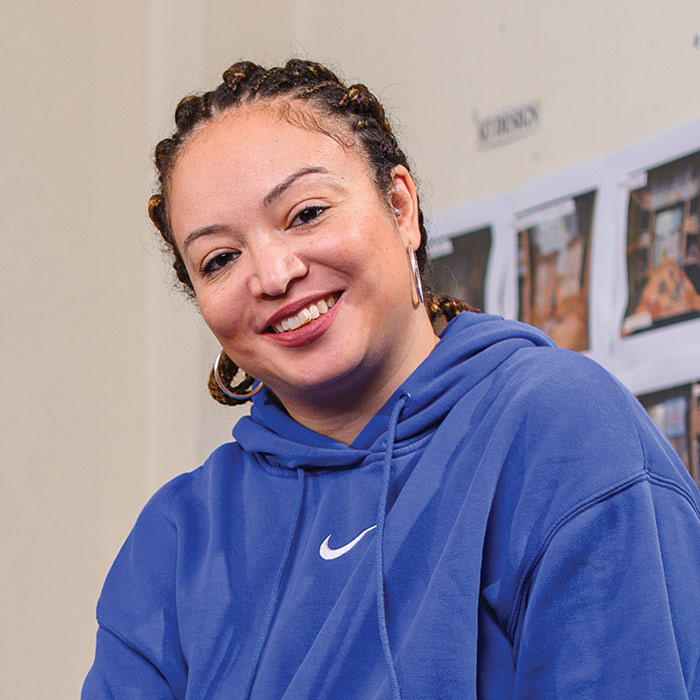
Claire Walker and Hannah Essex

“Our job is to create the conditions for theatre to thrive”

Claire Walker and Hannah Essex

In their first interview since taking the helm at SOLT/UK Theatre, joint chief executives Claire Walker and Hannah Essex tell Alistair Smith why they are evangelical about job-sharing and co-leadership, and their main areas of focus: audiences, workforce, and championing the theatre sector while making the case for policy change that will help it flourish

FacebookTwitterLinkedIn

It is Wednesday. This would not usually be remarkable, but today I am meeting the new joint chief executives of the Society of London Theatre and UK Theatre on the only day of the week the pair overlap in their shared office in the heart of Theatreland. When Claire Walker and Hannah Essex were appointed in June, it marked a series of firsts for the theatrical membership organisations: their first female chief executives, the first people to take on the role from outside the arts world, the first job-share.

Walker and Essex – and it is always that way around, like Ant and Dec; they are sitting opposite me, left to right – are now a little more than 60 days into their new role, one of British theatre’s most important, but they are entering the ninth year of their partnership, which has already seen them job-share at two other organisations: social enterprise Teach First and the British Chambers of Commerce, where they were co-executive directors before succeeding Julian Bird at SOLT/UK Theatre this autumn.

Both started off – separately – in student politics. Walker went on to work on the Britain in Europe campaign to join the Euro (“obviously the least successful campaign in history”, she recalls), while Essex pursued a career working in press and public affairs for an education charity. Their paths first crossed when Essex was working at Teach First and Walker was now at family support charity Family Lives. They collaborated on a campaign aimed at getting parents and teachers to work together to deliver better educational outcomes for children. They got on and kept in touch.

Moving on

Then, in 2014, Walker dropped Essex a note to let her know she was thinking about moving on from her role at Family Lives – which had received multiple years of government cuts due to austerity. Essex was herself about to go off on maternity leave and had a brainwave. “She said: ‘Why not come and do my maternity leave?’,” recalls Walker.

But it wasn’t quite that simple. When Essex asked Teach First, the organisation – quite understandably, she stresses – insisted on a full recruitment process, from which she was excluded due to potential bias. In the end, though, Walker was appointed as the right person for the job and covered for Essex while she was off having her first child. This was also not entirely straightforward.

“About eight weeks into her maternity leave, when she was heavily sleep-deprived with a baby that wouldn’t sleep, Hannah rang me up and said: ‘I can’t see how I can come back’,” continues Walker. “She was really going through the early stages of parenthood. She said: ‘Maybe I should resign.’ I said: ‘Whatever you do, don’t resign because you won’t get your maternity pay. Go away, have six months where you don’t worry about it, then come back’.”

She did and Walker got on with the job. Then, one day while visiting an international conference, it was her turn to have a brainwave. “Our equivalent at the Australian version of Teach First said: ‘Well I assume you and Hannah are job-sharing when she comes back?’”

Walker hadn’t even thought about it at that point, but she called her friend on the way back from the airport to suggest the idea. “I just said yes,” says Essex. “Career had always been important to me and the desire to have children had come as a bit of a surprise. In my head, I couldn’t accept that I would have to compromise a career I had built over 15 years to have children, and job-sharing seemed to be the only way I could continue to do what I was doing while also spending adequate time with my children.”

Again, though, it wasn’t quite that simple. They had to make the case for the job-share and – at a time when flexible working was much less common – devise a process that would work for them both.

“We have to give credit to Teach First: they started with yes,” says Walker. “Our experience over eight years since is that many people don’t start at yes.”

To illustrate her point, Essex recalls her first ever conversation with a recruiter when four years later they looked to move on from Teach First.

We accept it will take a while for people to get used to our way of working, but we are very clear you get much more than just one – Claire Walker

“I asked: ‘Have you spoken to the client about job-share and whether they would be interested?’ And the recruiter said: ‘It’s not something we’ve discussed with them and my gut says no.’ That was our first foray into trying to move.”

Today, the pair are evangelical about job-sharing and co-leadership. They don’t see it as an alternative, but an improvement. “We believe co-leadership is the best way to lead,” says Walker. “We accept that it will take a while for people to get used to our way of working, but we are very clear that you get much more than just one. Sometimes, we are literally in two places at once. There was one great meeting during Brexit [while they were working for the British Chambers of Commerce] when Hannah was meeting with the Cabinet Office and they said: ‘You really need to speak to this particular person in another government department’, and she was able to say: ‘Oh, I am meeting with that person at this very moment in time.’ Because I was there with them.”

“We spend a lot of our own time talking to people who are job-sharers or who are setting up a partnership or trying to move as a partnership,” adds Essex. “We make it a personal mission to talk a lot about it, because we want other people to know that it can be done. We want employers to know that it’s something they should be open to.”

Their own process is known as a ‘pure’ job-share. They have joint responsibility for everything, share an email address, a diary and a OneNote account and like to use a joint WhatsApp group rather than text, so that when one of them is on a day off, the other can pick up a conversation and the person contacting them doesn’t need to worry about their enquiry falling through the cracks. Walker describes it as a “relay race”. She works Monday to Wednesday and Essex works Wednesday to Friday. One is always on call at the weekends and during the holidays.

They also talk about their partnership in terms that are reminiscent of a marriage: Essex refers, half jokingly, to being in a “committed relationship” with Walker, while Walker adds that they have “rules of divorce – which we’ve never invoked” and that on both the occasions they moved job they went through a “recommitment ceremony”, which is actually a bit more prosaic than it sounds: they just agree how long they are both definitely, 100% committed to the new role.

There are good reasons for this: because their professional lives are so deeply intertwined, so are their personal ones to some extent. When one has to take time off work, the other has to step up. So, for example, when Walker had to have a hip replacement, Essex increased her weekly hours. And vice versa when Essex went off on her second maternity leave.

“Hannah’s decision to have another child directly impacted me,” observes Walker. “So,” recalls Essex, “Claire was the second person I told before anyone in my family.”

Return to their roots

After their initial partnership at Teach First, their next joint role was at the British Chambers of Commerce, where the pair held the role of executive director. They had taken the job because they had wanted to return to their roots in student politics and have a position that put them right at the heart of Westminster. The biggest issue of the day was Brexit, and the BCC – which represents UK businesses and champions global trade – was at the front line of many of the most pressing issues arising from Britain’s decision to leave Europe.

In the end, it proved to be an even bigger challenge than they could have imagined. “I remember Claire saying to me in January 2020: ‘Well, we’re through the Brexit period, nothing is ever going to be that hard. We have a stable government with a big majority so there’s going to be a really clear political agenda for us to get our teeth into. This is going to be a much better year.’ Then six weeks later the entire economy shut down.”

In addition to the obvious challenges Covid posed for the BCC and its membership, both Walker and Essex also found themselves landed with extra caring responsibilities, including home-schooling. “I couldn’t have done that two-year period as an individual. Without the job-share, I would not have survived in that job because it was so intense,” Essex observes.

Many of their achievements during that period – including furlough and last Christmas’ grants for businesses – have also had a significant impact on theatre, but prior to their move to SOLT/UK Theatre they had had no direct involvement with the sector, other than as regular audience members. But in January of this year, they had decided it was time to move on from the BCC, and the opportunity presented itself. It was Essex who first spotted it and sent a text to Walker – with a gif of Angela Lansbury – saying they should apply for the role and pointing out: “And, by the way, they organise the Olivier Awards.” Now, they say, there is a picture of Lansbury – who sadly died only a few days after the pair took up their position – in one of their boardrooms (“it watches over our meetings”).

They say they have been made to feel extremely welcome in their first two months in the role and think the sector seems to welcome the fresh perspective they bring from outside the arts world.

“We had a very clear vision about what we wanted to do when we came in,” says Walker. “We have – in our first 60 days – tried to be very true to that vision. And I think that was the vision that both boards [of UK Theatre and SOLT] wanted to see here.”

“We think our job here is to create the conditions for theatre to thrive,” continues Essex, “which is very broad and it’s not just down to us to do that – lots of organisations have that purpose. But that is the North Star. That’s why we’re here. And we have three areas we think our work is focused around.”

The first is audiences: “Diversifying, retaining, increasing audiences, getting people to go to the theatre and making sure they are excited to do that.” The second is workforce: “Supporting development of the workforce, encouraging people back into the workforce and to look at theatre as a career.” And the third is advocacy: “Being a strong voice for the sector, championing the sector and making the case for policy change that will help the sector to thrive.”

Continues...


Related to this article

Exclusive: overhaul at SOLT/UK Theatre as new bosses ring changes for 2024Exclusive: overhaul at SOLT/UK Theatre as new bosses ring changes for 2024
Incoming SOLT chief executives face big challengesIncoming SOLT chief executives face big challenges
Theatres cut from portfolio face tough decisions – SOLT and UK TheatreTheatres cut from portfolio face tough decisions – SOLT and UK Theatre

Claire Walker and Hannah Essex at this year’s  UK Theatre Awards. Photo: Pamela Raith
Claire Walker and Hannah Essex at this year’s UK Theatre Awards. Photo: Pamela Raith

A question of priorities

I ask them in which of these three areas they think SOLT/UK Theatre is currently performing best.

“It’s a question of priorities rather than qualities,” responds Essex. “So some really fantastic work is happening here. I think audience has been the priority from a SOLT perspective; from a UK Theatre perspective, it’s been workforce.

“Advocacy is the one where both memberships have said to us that they want to see us doing more of that. Some great work was going on during the pandemic, so it’s about building on that and taking it to the next level. Even since we’ve been here, we’ve done some really good work around Theatre Tax Relief, talking to the Treasury and others about that. And we’re building up a plan, which we’ll launch in the new year, around other advocacy asks. We want to reinvigorate the All-Party Parliamentary Group for Theatre, we want to build more partnerships across both sides of the house in government. We’ve already started on that. That was our core strength we brought from the BCC: our advocacy and campaigning work.”

When it comes to that advocacy, one area the pair have already identified as a weakness is data.

“The sector has been amazing at profiling the art that it creates and that it is amazing,” says Walker. “For us, that goes without saying: it is an incredible sector that is really exciting and does some fantastic stuff. I think in order to create the conditions for theatre to thrive, we need to make sure that those partners we need to hear from us – government, the Opposition – really understand the business element of showbusiness.

“That doesn’t mean we are saying in any way that the art isn’t important – it really is – but for those particular stakeholders, they need to understand how much we are a draw for tourism, for the wider economy, for hospitality. And we need to work really closely with those other partners and explain that ecology for both London and across the UK. That is the area where I think we can really make some gains in the next couple of years.”

Historically, theatre has been incredibly opaque when it comes to publishing financial data. Does this mean it will have to learn to be more transparent?

“There are ways of doing that that protect confidentiality in a way the industry would like,” Walker adds. “But, yes I think we do probably need to make a little bit of progress on that. But by doing that, there will be huge benefits.”

The pair have currently developed a one-year business plan focusing on these three elements. When it comes to audiences, the focus is – unsurprisingly – on attempting to return audiences to 2019 levels, something that is proving more of a challenge outside London than in the capital.

“In London, it ebbs and flows – some weeks we’ve hit 2019 [levels] or gone beyond. Other weeks we haven’t. The start of the year was really tricksy,” says Essex. “Out of London, audiences are well off where they were in 2019.

“Because we don’t have officiallondontheatre.com or the equivalent of the TKTS booth outside London, we are talking to members and to boards about: what is our role in attracting people back to theatre when each theatre is already doing its own marketing and each production has its own marketing plan? But there is absolutely a challenge around outside London for theatre audiences.

“It’s either the cost of living or that people have got out of the habit. There’s also some concern around the cost of touring and whether that is having an impact on the availability of shows for people to see. Plus, there are issues with trains and buses. There’s a lack of confidence from people of: one, will I get Covid and not be able to go? And two, will I be able to get there if the transport isn’t available?

“So that’s a massive challenge. We wrote to the transport secretary yesterday to say that these strikes were having an impact [on theatres] and you need to do everything you can to resolve this. Every production that needs to pay for hotels for cast and crew, for taxis to get people home or they lose shows – that’s a massive impact. And that’s not just in London, that’s around the country.”

When it comes to workforce, they are surveying the work that is already happening when it comes to training and development and trying to identify what gaps the organisation can fill. In the meantime, they continue with SOLT and UK Theatre’s annual training and events programme.

Continues...


Q&A: Claire Walker

What was your first non-theatre job?
I was a nursing auxiliary in a local care home. I think I thought I was going to be a doctor… (see below).

What was your first theatre job?
This one! Unless you count Mary Poppins in the school play.

What do you wish someone had told you when you were starting out?
Your career path doesn’t feature in any book or career fair, but it is going to be an amazing ride.

Who or what was your biggest influence?
Every day at work: Hannah. At home: my husband and my children. They all make me a better person.

What is your best advice for job interviews?
Research relentlessly. The panel, the organisation, the sector. Seek views on the role and organisation from friends, colleagues and anyone you can find. Then be yourself.

If you hadn’t been a chief executive at an industry body, what would you have been?
From an early age, it was clear I was going to end up in some kind of campaigning role. Although bizarrely, Hannah and I both think we would have enjoyed being doctors.

Do you have any superstitions or rituals?
Hannah always stands/sits on my left. Like Ant and Dec.


Addressing the skills crisis

They acknowledge there is a very real talent drain affecting theatre but also stress that it is not sector-specific.

“When we started at BCC in 2018, we went around the country and asked people what the biggest challenge was they were facing and looked at all the data. The number one thing they said? Skills and lack of skills in the workforce. Even in 2018 that was an issue across the economy,” says Essex. “There are a couple of things that have confounded that: Brexit has had an impact, Covid also.

“It isn’t just a theatre challenge, but there are some specific challenges for theatre, which hospitality is also facing. It’s the hours – it’s the evening and weekends. Some people, during the pandemic when the theatres were closed, went and found other work, which was as rewarding but didn’t have those demands.”

“There is a challenge for the sector and we have to find the right way of capturing the excitement and not changing the fact that the delivery hours are the delivery hours, but there are other ways that people can carve up roles and be creative about roles that can help make that feel more sustainable,” adds Walker. “And there are other things that can be done, for us to look at partnerships across the sector, about moving in and out of the sector: it shouldn’t just be film or theatre, it could be both. The skills crisis is real for this sector, but it’s also real for the rest of the country.”

Perhaps unsurprisingly given their personal experiences, they believe flexible working can be part of the answer. “There’s strong evidence that flexible working increases applications for roles, particularly from women, and at a time when many organisations are struggling to fill skills gaps, it is essential to be open to it rather than seeing it as a ‘nice to have’,” says Essex.

When it comes to advocacy, Walker and Essex – sometimes together, sometimes separately – have been busy meeting people from across the sector and in government. They have already met with the arts minister, the Treasury, staff at the Department for Digital, Culture, Media and Sport and the Opposition. Lobbying efforts are focused on Theatre Tax Relief and there are nascent plans for increased work around theatre’s role as a driver for tourism.

Next year they will start on a strategic review, which will kick off in January with an aim of reporting at the beginning of the summer. It will look in detail at the set-up of both SOLT and UK Theatre. “Do we have the right partnerships? Are we working in the right way? Are we structured in the right way in terms of membership structures?”

This will include the potentially thorny question of whether SOLT and UK Theatre should remain as two separate organisations with two separate boards.

“We’ll involve members and staff in that discussion,” says Walker. “We have no fixed view about what the end result looks like – it has to work to ensure that theatre thrives and we have to recognise that while there’s a lot that unites, there are challenges that are different outside of London and in the West End. So we’re really open. The most important thing before we have that review is making sure that our staff in this building have a really clear sense of what they deliver for both, and that we have a business plan with some joint elements, some elements specific to UK Theatre and some specific to SOLT.

“We have a responsibility to those people sitting outside [in the SOLT/UK Theatre offices] that they are really clear about what they do and we also have a responsibility to our stakeholders and our members, that it all makes sense. At the moment, we are working on the staff element and we’re talking to members of both organisations with the same weight and that’s really important to us, but longer term we do have to resolve what that looks like. And we’re really supported by the presidents of both organisations. We have to do any change for the right reason.”

Continues...

Claire Walker and Hannah Essex

Complexities of SOLT/ UK Theatre

“And it’s not the only question,” adds Essex. “There’s a lot of complexity within the membership: you’ve got venue owners, you’ve got producers, you’ve got people who do both, you’ve got individuals, you’ve got organisations, in London and out, people who do both, funded, unfunded, commercial, not-for-profit. There’s a complexity in the organisation that goes beyond just London and the rest of the UK, so we’ve just got to look at: what’s our core purpose and what membership or organisation structure is best to achieve our core aims? And then, is the change that would require worth the effort compared to what else we could be doing?”

Before they get to those big questions about the future of their own organisation, the pair have been dealing with a membership that is having to grapple with existential questions of its own, following the recent funding round from Arts Council England that saw massive cuts to the London part of the trade body’s membership, including 100% funding cuts to organisations including English National Opera, Hampstead Theatre and the Donmar Warehouse.

Reflecting on the funding decisions, the pair take a balanced view. “Overall, theatre organisations got slightly more in cash terms than previously, but obviously they can do less with that because the cost of everything has gone up,” says Essex. “For some, it’s a really fantastic opportunity either to continue the great work they are doing or to do fresh things. There are some organisations that were funded for the first time – it was really great to see more diversity, more disabled-led organisations, more organisations led by people from the global majority. So, some really good stuff.

“But,” she pauses, “for those organisations that received a cut or entirely lost their funding, that is obviously extremely difficult. And there are organisations doing fantastic work having to think about how they are going to adjust to these huge changes.”

The pair have been talking to the Arts Council about whether the transition funding available to those organisations is sufficient and whether both ACE and SOLT/UK Theatre could do more to help.

The Arts Council was told to cut London. It was political – Hannah Essex

They have particular concerns around the decisions taken to make significant cuts to opera companies and the lack of apparent strategy behind them.

“There are process issues that we have written to the Arts Council about,” says Walker. “Much can be improved for future rounds and in the short term, but fundamentally they were delivering on a decision that we need to be clear was set by DCMS… fundamentally it was a political decision.”

“They were told to cut London and that was always going to leave us in a very difficult position,” adds Essex.


Q&A: Hannah Essex

What was your first non-theatre job?
Saturday job in a local newsagents.

What was your first theatre job?
This one! Unless you count being Mary in the school nativity…

What do you wish someone had told you starting out?
Some of the things that you perceive to be your weaknesses are actually your greatest strengths.

Who or what was your biggest influence?
Claire, obviously. And the amazing coach/mentor I had when I got my first senior management job.

What is your best advice for job interviews?
Remember it’s a two-way process, so make sure you ask good questions and find out if this is the right fit for you.

If you hadn’t been a chief executive at an industry body, what would you have been?
From an early age, it was clear I was going to end up in some kind of campaigning role. Although bizarrely, Claire and I both think we would have enjoyed being doctors.

Do you have any superstitions or rituals?
Claire always stands/sits on my right. Like Ant and Dec.


Bullish about theatre’s prospects

Despite these cuts and the myriad other challenges facing the sector, the pair are bullish about theatre’s prospects.

“There are lots of challenges for this sector. We will make sure there’s someone fighting their side. There are lots of things that are incredibly difficult – cost of living, train strikes, energy prices. All those things are really difficult, but we should be confident about our product. Our product is really incredible,” says Walker.

“So our job is to make sure that as much possible we can have the conversation with the Department for Business, Energy and Industrial Strategy to smooth the energy issue where we can and make sure we are seen as a sector that’s still vulnerable and make the case for theatre. But we also need to have confidence that, if we get all those things right – if we get Theatre Tax Relief, if we get the conditions right, if we help support the workforce, we can grow and thrive as a sector.

“That’s not to demean the cost-of-living crisis or any of those other huge issues, but people still want memories and we are in the memories business. Theatre is really good at making memories, so we should be confident in that.”


CV Claire Walker

Born: 1978, Wokingham
Training: BA (hons) Politics, University of Durham
Key jobs:
• Youth officer, Britain in Europe (2001-02)
• Save the Children – various campaigning roles on international development and UK issues (2002-08)
• Director of policy and communications, Family Lives (2008-13)
• Director of communications, Teach First (2014-18, shared with Hannah Essex from 2015)
• Co-executive director, British Chambers of Commerce (2018-22)
Awards: Women in Westminster: The 100 (March 2022)

CV  Hannah Essex

Born: 1980, Portsmouth
Training: BA (hons) European Studies (Spanish), University of Essex
Key jobs:
• Vice-president, University of Essex Students’ Union (2002-03)
• National women’s officer, National Union of Students (2003-04)
• Vice-president (education), National Union of Students (2004-05)
• Press and public affairs manager, then head of communications and business development, Teacher Support Network (2005-10)
• Director of communications, Teach First (2010-18)
• Co-executive director, British Chambers of Commerce (2018-22)

Awards: Women in Westminster: The 100 (March 2022)


For more on SOLT/UK Theatre, visit: solt.co.uk; uktheatre.org

Big Interviews

Michael Sheen
“It’s not charity work. I’m not doing this as some sort of Welsh saviour”

Michael Sheen

Annilese Miskimmon
“Without ENO, UK opera would be denuded of ambition and excitement”

Annilese Miskimmon

Adele Thomas and Sarah Crabtree
“We’ve wondered whether we should go dark for a period of time”

Adele Thomas and Sarah Crabtree

Nikolai Foster
“Being an artistic director forces you to grow up quickly”

Nikolai Foster

Jessica Swale
“Compared with other parts of the arts, theatre is so welcoming”

Jessica Swale

Elizabeth McGovern
“Doing theatre meant I could hold my own on Downton Abbey”

Elizabeth McGovern

Sutton Foster
“I know who I am, what I stand for and I look forward to bringing theatre back”

Sutton Foster

Carrie Hope Fletcher
“If our industry is worthless, turn off Netflix”

Carrie Hope Fletcher

Julian Bird
“Our place in the world is at risk. It’s as grave as that”

Julian Bird

Nancy Carroll
“As long as my body serves me, I want to use it. It’s my tool bag”

Nancy Carroll

Your subscription helps ensure our journalism can continue

Invest in The Stage today with a subscription starting at just £7.99

The Stage

© Copyright The Stage Media Company Limited 2026

Facebook
Instagram
X
Linked In
Pinterest
YouTube