Partnerships between regional theatres can help to spread the cost of bringing larger-scale works to audiences nationwide. However, as Mark Babych highlights, such productions require compromise and clarity of vision from the outset
Mid-scale regional producing theatres are increasingly financially squeezed. In recent years, they have relied more and more on collaboration to sustain ambitious artistic programming while managing monetary pressures.
These partnerships – ranging from shared productions to joint commissions – represent not just a pragmatic response to the pressure on resources amid soaring costs and funding that can’t keep pace but also a positive response to how theatres can work together to remain resilient in a challenging climate.
Mid-scale theatre buildings and companies occupy a crucial position in the UK’s theatre ecology. They must balance artistic ambition with the practical realities of maintaining buildings and (unlike London’s commercial West End) the specificity of serving local audiences. Typically, they have a seating capacity of about 300-600, mostly produce their own work and are strongly embedded in their communities, with a range of creative participatory opportunities for local people. They nurture artist development and operate using a combination of public funding, commercial investment and philanthropic support.
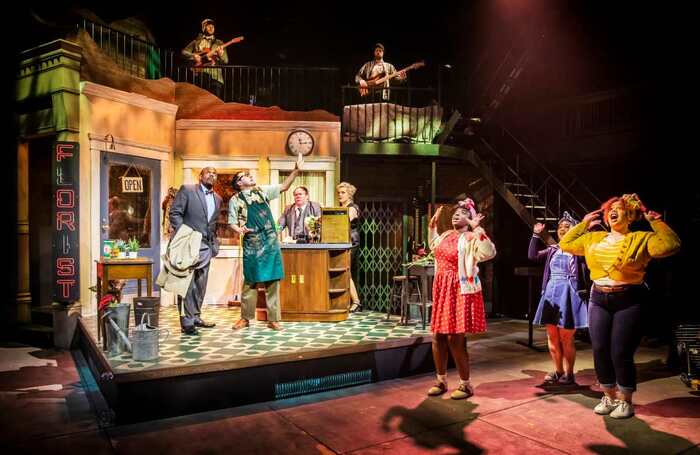
Over the past couple of years, Hull Truck Theatre has worked with several of our regional partners on a range of projects, from one-off pieces – including a production of the popular sci-fi musical Little Shop of Horrors – to bold new writing, including working with Pilot Theatre to present Mary and the Hyenas to audiences in both Hull and London. In addition, we have formed a successful three-year education partnership with Derby Theatre and Octagon Theatre Bolton to deliver a curriculum-based drama title to audiences each spring/summer from 2024 to 2026.
Continues...
On one level, co-producing is a financial necessity. Without partnership, the creation of a steady influx of new work into regional theatres would simply not be possible. Making theatre is expensive – sets, actors, creatives, marketing, access and venue costs add up quickly – but through collaboration, we have been able to mitigate the artistic and financial risks of larger-scale work by sharing pre-production costs, making it more feasible and within reach.
There are other benefits, too. Expanded audiences and reach mean that as the show tours between partner venues, the work and its artists are exposed to different communities, greater numbers of people and increased ticket sales. Wider access to resources and expertise often sees technical teams, production departments and marketing and education teams working together and learning from each other, often bringing fresh perspectives to deepen and expand knowledge and best practices. Dynamic creative teams often bring exciting and innovative approaches to making work, further expanding the diversity of artists involved and re-energising the producing pipeline and methodology.
While co-producing offers many advantages, it also comes with its challenges. It may make financial sense, but that alone shouldn’t be the main driver. It really only works when it’s driven by the art, a shared set of values and alignment of artistic vision. Different artists bring different approaches. Therefore, clarity of vision from the outset is essential for it to be understood and backed by everyone involved. If it goes well, then great – it’s exciting and thrilling. But if it doesn’t turn out the way that you planned, then it’s important to work together to gather the learnings to refine and improve the offer.
It’s important to remember that your way might not be the best way, and a challenge to existing ways of working is sometimes a good thing
Logistically, co-producing is a complex web of coordination; adapting to differing auditorium shapes and performance spaces, scheduling rehearsals, coordinating approaches to tech weeks and fixing touring dates requires meticulous planning across multiple venues. Sometimes, the ideal dates for your own venue may not be the ones that fit the wider schedule, so compromise and flexibility are part of the deal. Rights may not be available, and not every production will be of equal appeal – what works in one city may not land in another.
The model also makes it more difficult to make work that really resonates locally, as this is more challenging to find co-producers for. Audiences may want different things, which impacts budgeting, projected and actual ticket sales and, ultimately, the level of risk each partner is prepared to take.
Contractual and financial agreements can take time, and understanding who covers which costs, who does what and how is not always straightforward. Co-production agreements are often complicated, and different operating models sometimes lead to protracted negotiations. Learning to navigate different approaches is all part of the process – it’s important to remember that your way might not be the best way, and a challenge to existing ways of working is sometimes a good thing. Maintaining a healthy balance between collaboration and creative control may mean compromise is necessary, while still holding on to your core values.
Continues...

Listening is key. Embrace it, as refining and adapting the vision and scope of a project can lead to great results. In developing the vision for our upcoming co-production of Macbeth, we gathered creative learning teams from Hull, Derby and Bolton with teachers from each partner area to find out how our production could best serve students and those teaching the text at GCSE.
Sharing the vision for the production, discussing it and feeding back into the process at an early stage was invaluable. It enabled us to refine some artistic choices and revisit early thoughts, setting a clear pathway for all three learning teams to deepen their work in preparation for the production.
While the evolution of co-producing among mid-scale theatres is increasingly part of the operating model, I’m acutely aware of the challenge it also represents for the sector. Despite the positives of collaboration, longer runs and an increase in scale and ambition, the volume of work being made across the country is worryingly decreasing, along with opportunities for employment. No one wants to make less work – it’s the very stuff that feeds the soul, fires the imagination and gives us a burning light of joy, hope and togetherness in a fractured world.
As we try to battle the tide of rising costs, we must work together to find solutions to these challenges and embrace our collective power, imagination and voice to ensure artists and stories continue to impact, change and examine the way we view ourselves and the changing world.
Invest in The Stage today with a subscription starting at just £7.99