


Yentl review


Tightly wound, richly theatrical adaptation that finds modern resonance in an old story


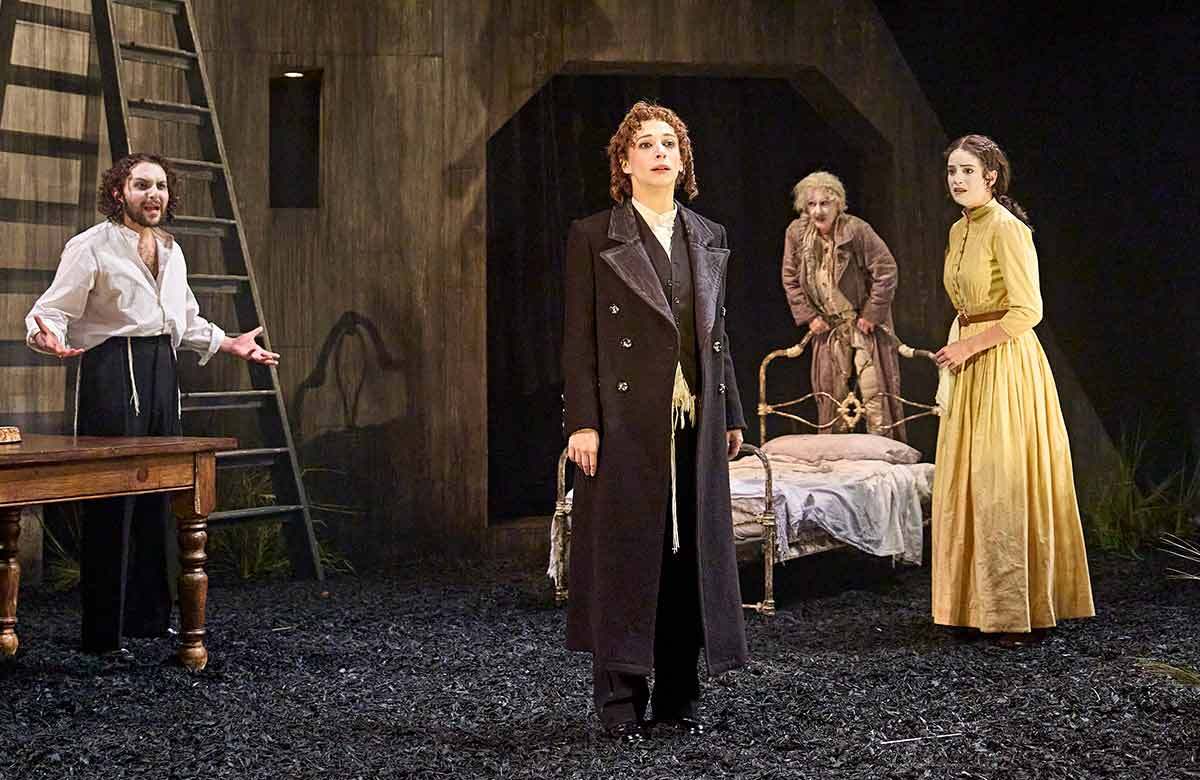
Forget any preconceptions that you might have based on the 1983 musical movie version of Yentl, directed by and starring Barbra Streisand. This version, transferring after a successful run in Australia, has its roots planted firmly in the original short story by Isaac Bashevis Singer and a rich tradition of Yiddish theatre. Adapted by Gary Abrahams, Elise Hearst and Galit Klas and directed by Abrahams, this work is both richly theatrical and refreshingly uncompromising, told in a mixture of Yiddish (with surtitles) and English.
On a darkened stage, the mysterious Figure (Evelyn Krape) explains how every letter of the Jewish alphabet is either masculine or feminine. Even the name of God in Hebrew is constructed from male and female letters – and so we are introduced to Yentl (Amy Hack), a young woman with a desperate need to learn scripture in an age when only men can study. When her father dies, she makes a desperate move, disguising herself as a young man. In the guise of Anshel, she finds her feet, making friends with Avigdor (a brooding Ashley Margolis), a fellow student whose betrothal to Hodes (Genevieve Kingsford) has been broken off under mysterious circumstances. Things spiral out of control when Avigdor persuades Anshel to marry Hodes in his place – but there is only so far this deception can continue.
Continues...

Abrahams’ production revels in the inherent theatricality of the story and its themes of gender, equality and love. The Figure who guides the narrative is an arcane presence, instructing both Yentl and the audience in matters of life and tradition. Played with mischievous glee by Krape, she sets the dark tone of the piece, exploring the nature of ritualism in religion and the masks we all wear in everyday life. This adaptation eschews romanticism – so readily exploited in Streisand’s version – fusing the carnal with the spiritual. The men talk of sex as much as they talk of the Torah, and Yentl’s journey becomes a pressure cooker of desire and frustration.
Through Hack’s marvellously driven and wholly believable Yentl, we get a real sense of that tension building and the dangers they face on the road they have taken. One lie begets another and before long, the whole community is drawn into a black farce from which there is unlikely to be a happy ending.
Abrahams’ direction struggles a little with tempo and tone in the first act, but otherwise this is a potent story, told with imagination and flair. Yentl’s journey takes place in a tiny European community at the turn of the last century; but in a world where gender and identity have become so divisive, it delivers a potent message about equality and personal freedom.
For all the latest theatre reviews, sign up to The Stage’s weekly reviews newsletter

Most Read
Across The Stage this weekYour subscription helps ensure our journalism can continue
Invest in The Stage today with a subscription starting at just £7.99

© Copyright The Stage Media Company Limited 2026


