


BAFTA incident exposes the need for more relaxed theatre performances


Publicly at least, the dust has settled on this year’s BAFTA controversy. But the conditions that led to it are theatre’s own, too. For those who missed it, two celebrated Black actors, Michael B Jordan and Delroy Lindo, were subjected to a loudly voiced racial slur by Tourette’s campaigner John Davidson, as they faced television cameras to present an award at the film ceremony late last month.
While the screen industry picks over the fault lines, what might theatre learn from the fiasco?
For beyond the failures of both the BBC’s editing and its chain of command in live broadcast, at its root sits the complexity of accommodating the multiple (and sometimes conflicting) requirements of audiences, while respectfully balancing this with what performers need to do their best work.
That’s why theatre needs to ramp up its provision of relaxed performances. Theatre inclusion advocate Touretteshero describes these as performances that accommodate for "people who find it difficult to follow the usual conventions of theatre behaviour" – including people with young children, or those with movement or neurological conditions. As BAFTA-gate proved, sometimes attempts to manage a condition publicly can exacerbate its effects – when what’s needed is reasonable and proactive adjustment.
Continues...
Read More
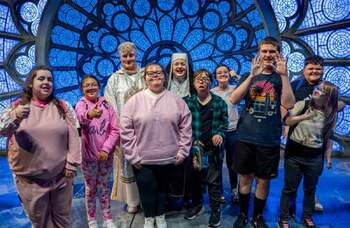
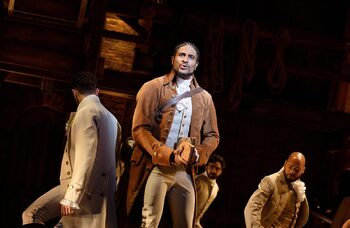
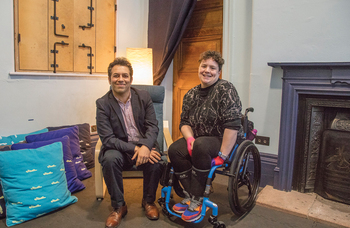
Relaxed performances have been with us since 2006; now they are seemingly commonplace. But sadly, there’s scant provision across commercial and West End shows.
Go Live Theatre is a charity that gives children and young people from vulnerable and challenging backgrounds opportunities to experience live theatre. Last year, the charity audited some of the largest scale and longest-running commercial shows to determine the level of relaxed performances taking place. Data was gathered through mapping of 39 West End theatres and 36 regional theatres.
The results show an unacceptable demarcation between West End and publicly funded theatre. In June of 2025, just 10% of West End productions had a relaxed or chilled performance available to book (excluding publicly funded organisations like the Royal Ballet and Opera). Across regional theatres surveyed, 91% of theatres with charity status or public funding had relaxed performances scheduled.
The picture looks even more bleak on the West End’s long-running shows: of the 21 productions that as of June 2025 had been running for more than a year, only eight (38%) had ever offered a relaxed or chilled performance in their West End run.
I wondered how the statistics Go Live produced last June would compare to now. I didn’t do a comprehensive search; as a litmus test I chose a new, family-friendly West End show and searched online for details of relaxed performances. The result? There are just three relaxed performances scheduled over the next year of this huge, crowd-pleasing show.
We know many West End theatres are doing the best they can within finite structural limitations – the post-pandemic spend on new toilet facilities and access ramps has been very welcome and makes many a Victorian building more appealing. There’s absolutely no question of further structural redesign to allow for ease of access in these cramped auditoria.
West End theatres are ideally placed to drive the culture change that’s needed around relaxed performances
But what if every performance was a relaxed one? What if, instead of having to find the one relaxed performance in the run, we all grew to accept that the two seats closest to the aisles were ‘relaxed seats’ – for those who need to come and go? Because a relaxed performance need not be about providing for neurological or movement conditions. The Society of London Theatre and UK Theatre’s State of British Theatre Report from 2025 revealed that long run times (over 2.5 hours) or shows with no interval can discourage some from booking. Even a bladder infection might make one wish for the freedom that a relaxed performance gives.
At a recent schools production at Theatre Royal Stratford East, I watched three people enter and leave the auditorium at different times, during the extremely powerful Here There Are Blueberries. The concentration of everyone else in the auditorium was unwavering. Which speaks to what performers need to do their best work. Actors value engagement over silence. Most would prefer to know the audience was comfortably with them rather than willing the interval to begin.
The fact is that relaxed performances are more frequently programmed by publicly funded venues or venues with charity status. This suggests they are linked to funding requirements, rather than embedded as industry standard. Relaxed performances are not a statutory requirement, but Arts Council England regards them as best practice.
There are vastly different expectations of public and privately funded organisations – not just in theatre. Public funding comes with more scrutiny of spend; commercial theatre has accountability first to its investors. But consumers everywhere are increasingly demanding similar levels of accountability from the products and services we enjoy – even those accountable to their shareholders for profit.
West End theatres are ideally placed to drive the culture change that’s needed around relaxed performances. A commercial, West End production by definition has mass appeal. Shouldn’t mass appeal mean mass accessibility, too?



Most Read
Across The Stage this weekYour subscription helps ensure our journalism can continue
Invest in The Stage today with a subscription starting at just £7.99

© Copyright The Stage Media Company Limited 2026


