


The Green Room: What are the challenges of touring?


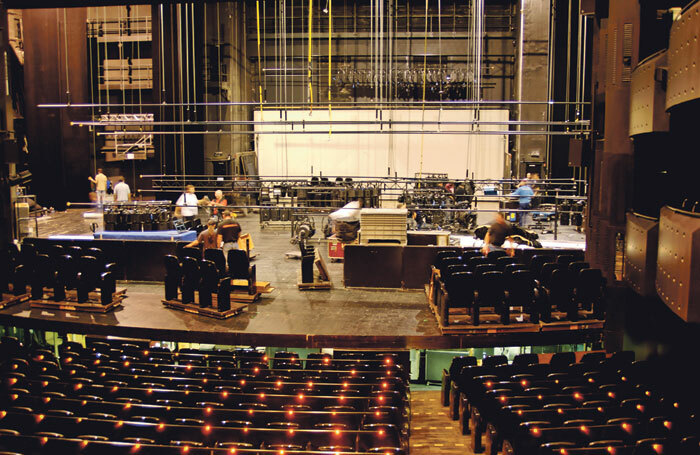
Meet our panel: We have given our panellists pen-names and used stock images but their biographies reflect their real career details…
 |
Sam Andrews is 31 and is a lighting designer. He has worked extensively in London and theatres across the country |
 |
Susie Bussell is in her 50s. She started as a performer before moving into stage management. She is now a company stage manager |
 |
Jane Keeling, 52, trained as a stage manager and has been an assistant stage manager, deputy stage manager and company stage manager |
 |
Rob Victor is 30 and trained in production and technical theatre. He is a freelance lighting designer, production manager and event technician |
Rob In my experience with smaller-scale international touring shows, we’ve faced problems with local electricity being the wrong voltage for the toured equipment (in fairness, we did discover this in pre-production).
Susie I often take productions on ‘number one’ tours prior to the West End. Weekly touring gigs of straight plays, that kind of thing. That first get-in can be a big test of a production. You plan and plan and plan, but until that first get-in, you don’t know if it will all come together. No matter how much planning you do, there are always unknown factors.
Thomas I seem to remember a tour we both worked on, Susie, where it looked like everything might not fit on the truck on our first move.
Susie Yes, I remember that. After a couple of venues you have a routine and a system for everything.
Jane I remember in the early days of my career doing very small-scale touring. A transit van, a company of actors and me. It was great how we all mucked in and got on with it, although I’m glad I don’t do those tours any more. A young person’s game.
Thomas Ah yes, I remember working on a small-scale tour years and years ago. I was a visiting director and the company instructed me to factor in time at the start and end of the day in the last week of rehearsals for the cast and stage manager to rehearse the get-in and get-out, divvying up jobs etc so the get-in was as smooth as the production when the tour launched. It was an excellent mentality. Although I’m glad I don’t work on that scale any more – only because it is incredibly draining. As you say, Jane – a young person’s game. I have the utmost respect for those working on tours of that scale.
Susie I always find it useful in production meetings to talk about what needs to be rehearsed when we get into a venue – whether it be the obvious things like rehearsing scene changes etc with local crews (when they’re involved), or just being able to have 30 minutes with the cast on stage before the first performance in a new venue. It is all too easy for these types of things to get lost on a schedule.
Thomas And that’s one of the many reasons we’ve enjoyed working together so many times, Susie.
Rob We’ve faced problems with boxes not making it on the container to China (or maybe getting lost at customs, we never did figure that out). This resulted in a mad panic as various company members (and our festival producer hosts) were dispatched around Shanghai to re-prop the show, while I had to spend several hours searching for a vital, show-critical USB-to-MIDI cable, without which there wouldn’t be a show.
Sam As a lighting designer I don’t tend to tour with a production, although I do tend to visit the production at a couple of venues. When I was working in LX before becoming a designer, I was never lucky enough to tour with a production. I feel like I missed out.
Rob Once, we were doing a one-day in and up when the set truck was held up in Swiss customs for four hours, so didn’t get to us until about midday rather than 8am… There are often language issues, and while translators are a gift from above, many of them are not technical, so most technical phrases aren’t translated easily.
Sam I am very reliant on my production LX to maintain the quality when a production is on tour. Obviously I plan it as meticulously as I can, but different venues can have different challenges and it is easy when schedules are so tight for the quality to diminish. The teams that keep that quality there do an incredible job.
Jane It can be dispiriting sometimes as the cast disappears off on a Saturday night without noticing the huge job ahead of the crew and stage management. It isn’t that we want a medal, and it is all part of the job, but it makes all the difference when someone notices what goes into moving a big production.
Rob The one thing that can make or break a stop in a venue is the local crew. I’m lucky to have worked with some excellent crews all over the world.
Susie A great deal of the challenges I might face touring are often down to the local crews I work with. Most of them are brilliant, and you really appreciate their time and expertise, but there are theatres that you dread going to on a tour because you know how hard the get-in will be. Some crews can add hours to a get-in.
Rob The worst crew I’ve ever worked with was sadly in an (unnamed) West End theatre. They managed to add three full hours on to the get-out (compared with every other venue we’d toured to) for no apparent reason… The conspiracy theory at the time was that we were the last get-out before Christmas and they wanted the extra few hours’ pay so worked slow.
Susie Often any ‘bad’ crews I come across seem to be in theatres where the crew is clearly undervalued and demoralised. They are also usually the exception rather than the rule.





Most Read
Across The Stage this weekYour subscription helps ensure our journalism can continue
Invest in The Stage today with a subscription starting at just £7.99


© Copyright The Stage Media Company Limited 2026


