There’s been much debate within the industry this year about unruly customer behaviour at theatres. Do audiences agree that there’s an increasing problem? David Brownlee analyses the statistics
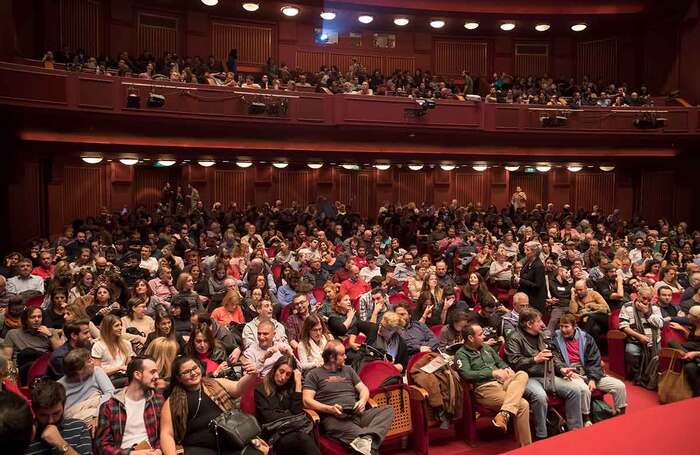
It’s extremely disturbing to read reports in The Stage that audience behaviour has worsened since theatres reopened following the lockdowns, and that such behaviour, which has included front-of-house workers being punched and spat on, is making staff scared to work at some venues. Have audience members also noticed a decline in behaviour? And what is annoying them about their fellow theatregoers?
In March 2023, we asked survey participants (see methodology at the end) three questions about audience behaviour in our monthly survey. We received 715 responses.

What best describes the behaviour of your fellow audience members when you last attended an indoor theatre performance?
Our first question was designed to give a snapshot of the most recent experience of our respondents. Half of the 692 respondents who answered this question reported that on their last visit, they witnessed universal respect of performers, theatre staff and audience.
While the next most popular response was ‘largely respectful’ (43%), more than one in 15 respondents (7%) reported that a ‘substantial minority’ of the audience were ‘not respectful’. A further 1% stated the ‘majority of the audience’ was ‘not respectful’.

Across all the performing arts venues you attend, over the past 10 years do you believe audience behaviour...
We then asked more broadly about perception of trends in audience behaviour over time. Of the 660 respondents who expressed an opinion, 56% felt it was ‘very similar’. The 9% who stated they thought it had improved were heavily outnumbered by 35% who thought it had declined.
So, what does the audience think has contributed to this decline? We asked an open question about this in the survey. Some respondents gave a pithy response. Others shared an essay. For each respondent, we categorised their response based on the key focus of the content if it was clear or the first topic covered if it wasn’t. A total of 272 respondents took the opportunity to share their views.
Is there any particular aspect of audience behaviour you believe has declined in the past 10 years?
Number one in the list of audience gripes was increased noise and talking (27%). Here’s what some of the respondents had to say: “It always now seems to be a few groups who are excessively noisy during musicals causing annoyance to the majority there.” Others said they see some fellow audience members “talking as if they are at home watching TV”.
Use and misuse of mobile phones was just less than 1% behind, with 26% saying this aspect of behaviour had deteriorated. For example, respondents said they see fellow theatregoers “either trying to video performances or, more often, just scrolling through their phone during performances”.
Alcohol was next (13%), with a mixture of respondents concerned about the effects of drinking, suggesting that they witness theatregoers who “can’t control themselves when drunk”, but also those who just think selling alcohol and theatres shouldn’t mix: “Allowing alcohol in the auditorium is a big mistake,” said one.
Eleven percent of comments centred on issues broadly around rudeness and lack of respect for other members of the audience. “Generally, people are more selfish and ruder,” one respondent said.
Complaints about food consumption in the auditorium (10%) were not limited to rustling wrappers. “Munching on food, especially popcorn or unwrapping sweets,” one said, while another respondent said they had experienced audiences “eating takeaway food in theatres”.
Three percent of respondents were principally concerned about latecomers. “If you’re late, wait!,” one said.
A further 3% felt there was too much audience participation: “Singing and dancing at musicals – it’s not a concert, it’s a musical.” Another respondent said they sometimes witness people singing along, even when specifically asked not to.
Our final 7% of responses covered a wide variety of topics, including mess-making and dress code. “Cleanliness – take litter home or bin it,” one said, while another complained: “The state of dress has declined. I counted two men wearing suits during the two operas we attended, very sad.”
A note on methodology
The Stage suggested three additional questions be added in March 2023’s UK Performing Arts Audience Survey. Currently, 37 participating venues across the UK collectively invite 20,000 participants (all of whom have attended the venue at least once in the past five years) to take part in the monthly survey. Data was collected from March 6-13, with a total of 715 respondents. Participating venues include both commercial and not-for-profit organisations. As well as both producing and presenting theatres of all scales, concert halls are also represented. It’s a survey of theatre (and concert) goers, not the UK adult population as a whole. More recent and frequent bookers are more likely to respond to the survey.
The UK Performing Arts Audience Survey is managed by TRG Arts/Purple Seven on behalf of the 38 participating theatres. The questionnaire has been designed by Morris Hargreaves McIntyre and Data Culture Change. Analysis of responses and the writing of this report has been led by Data Culture Change.
Invest in The Stage today with a subscription starting at just £7.99