


 Theo Bosanquet
Theo is a freelance writer and editor. Formerly editor of WhatsOnStage, he has written for a range of publications including the Guardian,
...full bioHaving starred as Thomas Cromwell in the first two parts of Hilary Mantel’s Wolf Hall trilogy, the actor is also co-writing the stage adaptation of its finale, The Mirror and the Light. As it opens in the West End, he tells Theo Bosanquet about being inspired by his drama teacher, pursuing wide-ranging roles and the vital importance of gathering together to engage in culture


Theo is a freelance writer and editor. Formerly editor of WhatsOnStage, he has written for a range of publications including the Guardian,
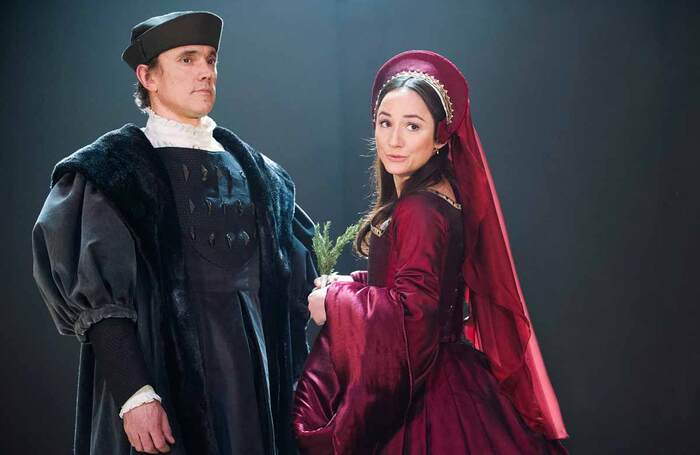
...full bioBen Miles is feeling grateful. Amid the challenges and uncertainties of the past 18 months, he landed the “perfect” lockdown job of co-writing the third part of the Royal Shakespeare Company adaptation of Hilary Mantel’s Wolf Hall trilogy, The Mirror and the Light. And now, as we emerge back into some form of normality, he is preparing to lead the production into the West End as he takes protagonist Thomas Cromwell to his grisly end.
“It feels so fantastic to be back in the rehearsal room with him,” he says, speaking of Cromwell like an old friend. “I’ve been living with this book since 2018, when Hilary would send me sections of it as she was writing. My response was invariably ‘it’s brilliant’ – I mean, what else is there to say about her work?”
When Mike Poulton, adapter of the first two books, was unavailable for the third, Mantel asked Miles for suggestions of who might co-write with her this time around. After giving it some thought, he found himself throwing his own hat in the ring. “I just felt I’d love to have a go, because every time we had worked together on the previous plays I had really enjoyed it, so there was a kind of nascent working relationship in place already.”
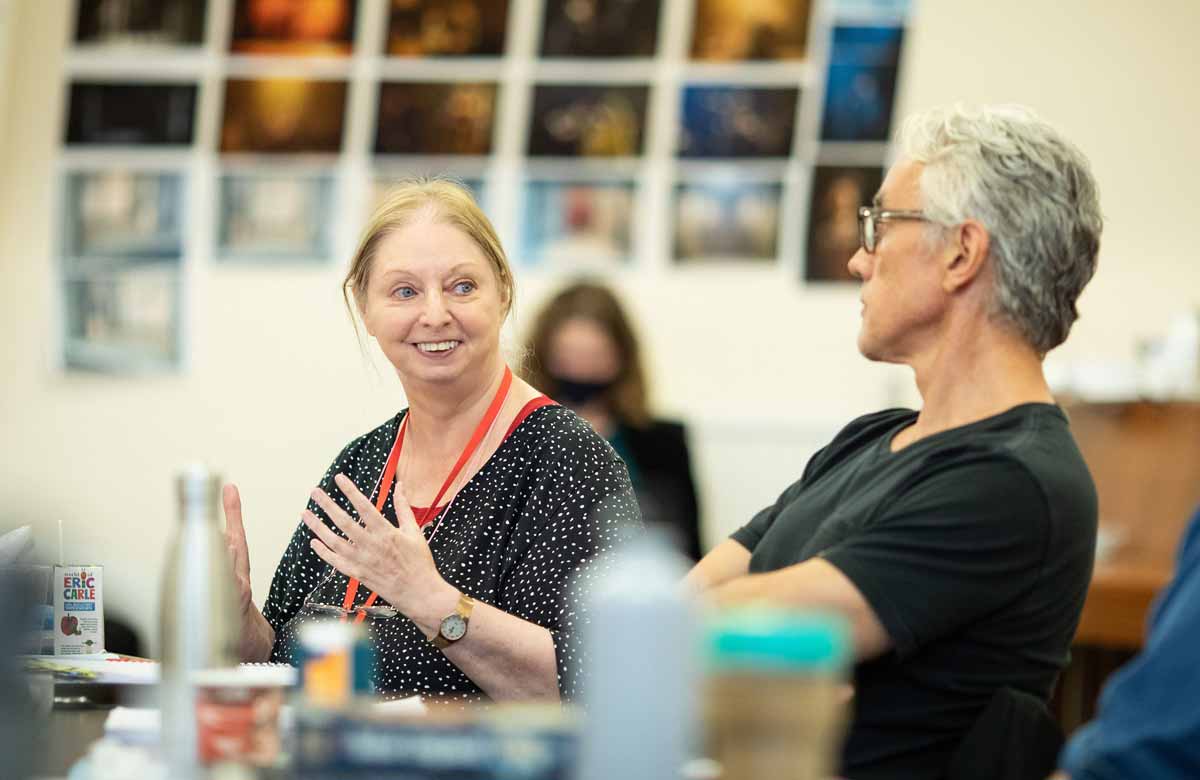
The double Booker Prize-winner enthusiastically agreed and so, during lockdown, they collaborated remotely, Miles “in my shed in London”, Mantel at home in Devon. It was an epic undertaking. At nearly 1,000 pages, The Mirror and the Light is considerably longer than each of the previous books. Beginning in the aftermath of Anne Boleyn’s beheading in 1536, it chronicles the further rise and subsequent fall of Cromwell, culminating in his execution in 1540.
‘I’d really enjoyed working with Hilary Mantel on her previous plays – we already had a nascent working relationship’
“When we dramatised Wolf Hall and Bring up the Bodies, we had two plays – or six hours – to do two books,” says Miles. “This time we have two and a half hours to do one book that is longer than the others put together. So, there was some severe and quite rigorous distillation to be done.” The process, he adds, was less about cramming in as much as possible, as “choosing what story from the book we wanted to tell”. He credits producer Matthew Byam Shaw for his early faith in their concept, and for backing Miles as an untested new writer.
Speaking to Miles, it’s no surprise that both Mantel and Shaw felt The Mirror and the Light was safe in his hands. His passion and reverence for the work is palpable; he also shares an almost telepathic instinct for Cromwell. During the previous productions, he would regularly email thoughts he had in character to Mantel, several of which ended up being included in The Mirror and the Light.
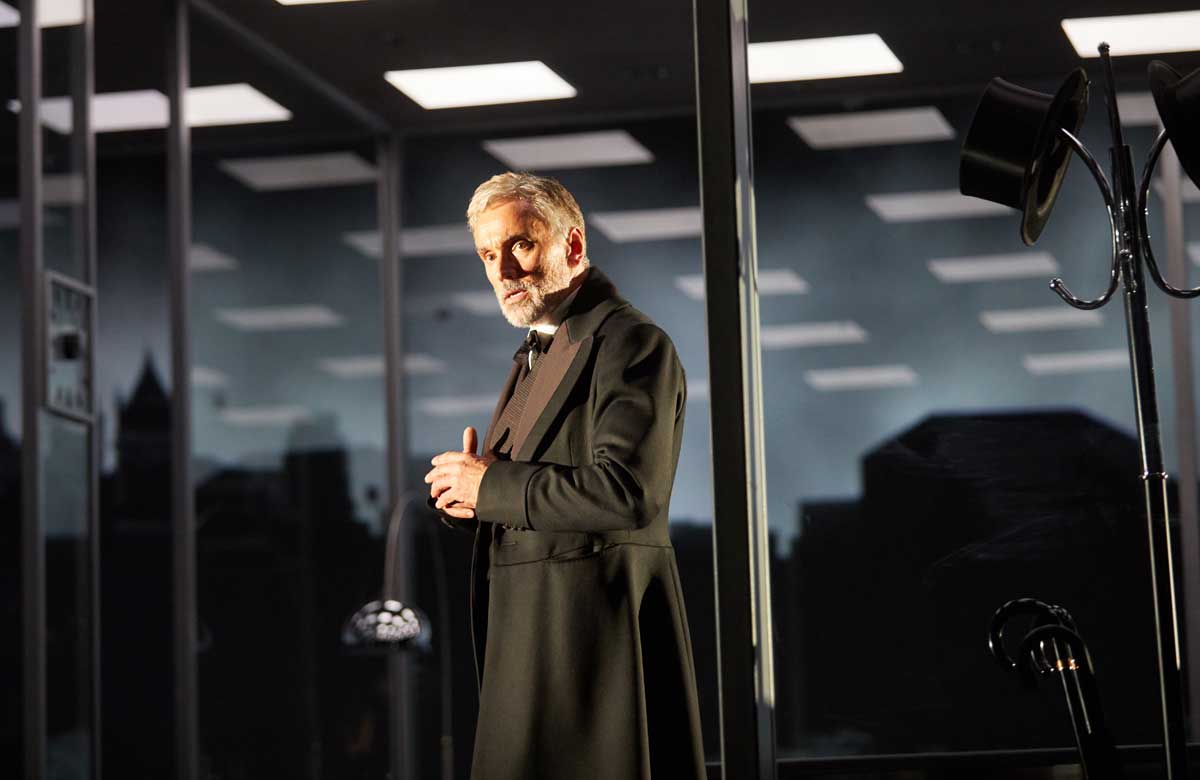
But such commitment has meant other opportunities have had to be missed, including the chance to go to Broadway with The Lehman Trilogy, in which he starred at the National Theatre in 2018. It was a difficult decision.
“I had a long chat with [the production’s director] Sam Mendes about it, and he was really fantastic, he completely understood and accepted the choice, which is testament to his generosity with actors in general,” he says. “But I’m very sad not to be going with it to Broadway because I think it’s a terrific piece and I loved the whole experience of doing it.”
Miles adds that he is comforted by knowing his role, alongside fellow original cast members Simon Russell Beale and Adam Godley (with whom Miles was jointly nominated for an Olivier), will be taken by Adrian Lester. “I know it’s in safe hands and I wish them all the best.”
Related to this article
Q&A Ben Miles
What was your first non-theatre job?
Potato picking.
What was your first professional theatre job?
Acting assistant stage manager in A Woman of No Importance for the Cambridge Theatre Company, directed by Bill Pryde.
What do you wish someone had told you when you were starting out?
Don’t take it personally.
Who or what was your biggest influence?
Luke Skywalker.
What’s your best advice for auditions?
It’s the hardest thing to do, but be yourself.
Do you have any theatrical superstitions or rituals?
Not really, though I did take some grit from the shore of the Thames with me when Wolf Hall transferred to Broadway. I sprinkled little bits around the auditorium.
Forging a varied career
That Miles sits in the same bracket as these heavyweights is testament to a career that has moved seamlessly between comedy and epic drama. After all, the role that first made him famous was brash womaniser Patrick in BBC sitcom Coupling, at the time considered the ‘British Friends’.
How does he reflect on that now? “It was great fun, and it did get me recognised,” Miles says. “Steven Moffat, as we all know now, is such a fantastic writer.” He is still in touch with the cast, which also included Richard Coyle, Sarah Alexander and Jack Davenport, and lives near Gina Bellman, who played Jane.
Afterwards, he was flooded with offers for comedy projects, he says. “You realise that’s how people see you, as a comic actor, and though it’s nice to be appreciated and offered things, there was a moment when I thought: ‘It would be nice if this wasn’t just it.’ ”
He remembers feeling a need to steer his career back into what he terms “more neutral territory”, something that any actor in danger of being typecast will appreciate. “Comedy is a joy to do, and can be incredibly rewarding, but so can many other things,” he says. “I’ve tried to have as much diverse work as I can in my career and I’ve ended up being lucky in that sense.”
A quick skim over Miles’ CV confirms this. His roles encompass Lark Rise to Candleford to Black Mirror on screen, and Ayckbourn to Pinter on stage. He has also enjoyed a prolific voice-over career, including narrating the entire Wolf Hall trilogy (a staggering 80 hours in total). Soon, he is likely to find an entirely new fanbase when his role in a yet-to-be-announced Star Wars spin-off comes to Disney Plus – something that marks the fulfilment of a lifelong dream, as a self-confessed Star Wars addict.
It’s also noticeable how comfortably Miles has moved from support roles to leading men. In a piece comparing his portrayal of Cromwell to Mark Rylance’s in the BBC adaptation of Wolf Hall, Mark Lawson astutely observed that Miles “gave a masterclass in the duty of a leading actor to be the carburetor of a show, regulating the flow and energy”.
‘My drama teacher really allowed people to explore their creative sides in a school that could be quite tough’
It all started at school in Derbyshire in the late 1970s and early 1980s when Miles attended what he describes as a “flagship comprehensive”, Tupton Hall. “It was a very sporty school, and I played a lot of rugby for the first three years, but then I decided to focus more on drama, despite resistance from the sports teachers.”
In particular, he credits drama teacher Reg Shaw for turning his head from sport to acting. “Most of us have that teacher, and he was mine. He really allowed people to explore their creative sides in a school that could be quite tough.” He started out working backstage as a technician on the school plays until someone pulled out of a production of A Christmas Carol and he was asked to play Ebenezer Scrooge. “I really enjoyed it and things just went from there,” he says.
Subsequently, Shaw encouraged him to apply for a summer course at the National Youth Theatre, and he went on to study acting at Guildhall. In recognition of the formative influence of his teacher, who died earlier this year, Miles is dedicating his performance in The Mirror and the Light to him.
His early experiences fuelled a passion not only for acting but for the wider importance of the arts, and he says this has only sharpened in the wake of the pandemic. “It has really struck me recently how the creative arts, particularly those that involve a group of people gathering together, are literally essential to a society’s well-being. It doesn’t serve our culture: it is our culture. And I think the absence of it has caused more people to realise that it isn’t a luxury, but a necessity.”
Staging The Mirror and the Light
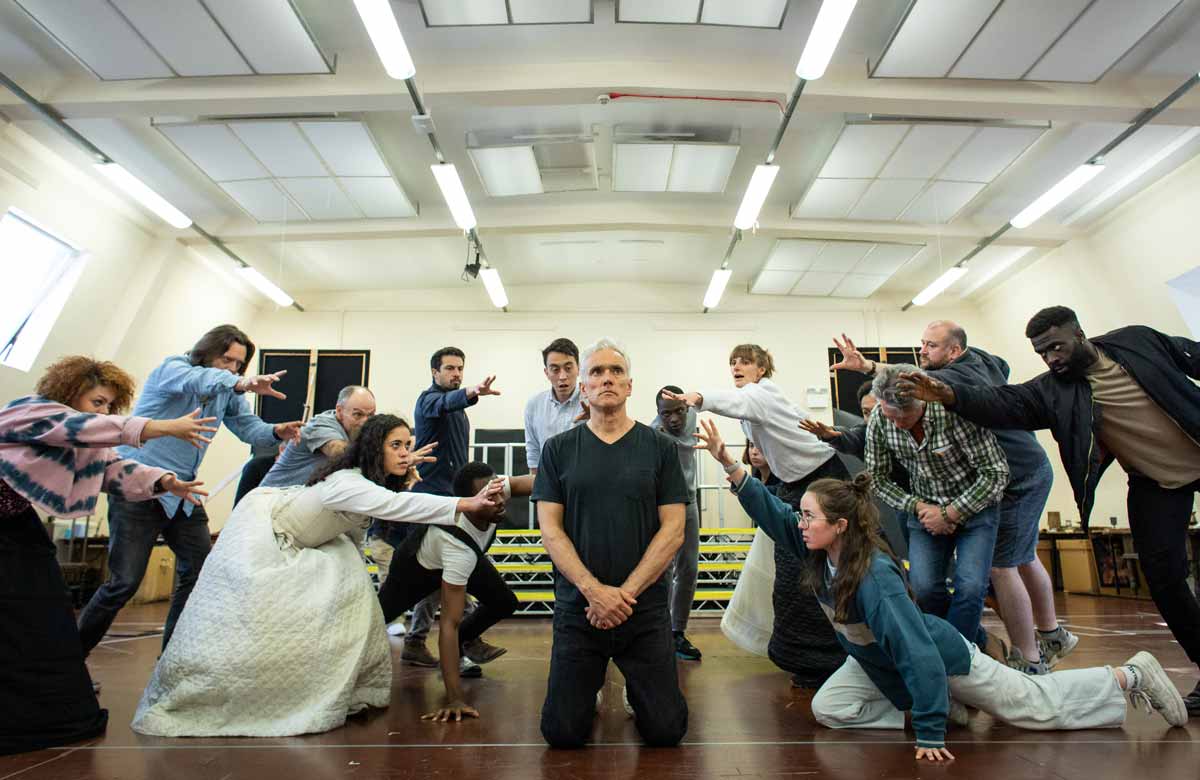
As with any production opening this autumn, the company of The Mirror and the Light are acutely aware that coronavirus restrictions could return at any time, but during rehearsals Miles says “none of us have really considered that prospect – we are just working on creating the best show we can”.
The play is opening at a sad time for the Royal Shakespeare Company. Artistic director Gregory Doran is currently on a leave of absence to care for his husband Antony Sher, who is terminally ill. “It was very sad news to hear and we all as a company wish them well and send them love,” says Miles, who describes Sher as an “absolutely phenomenal actor”.
Doran has been closely involved in the play’s development, which is an eye-catchingly big production at a time when many others are scaling down. But the RSC’s £19.4 million loan from the Culture Recovery Fund has given it breathing space. And, besides, considering the success of Wolf Hall and Bring Up the Bodies, The Mirror and the Light seems about as assured a choice as a new play can be.
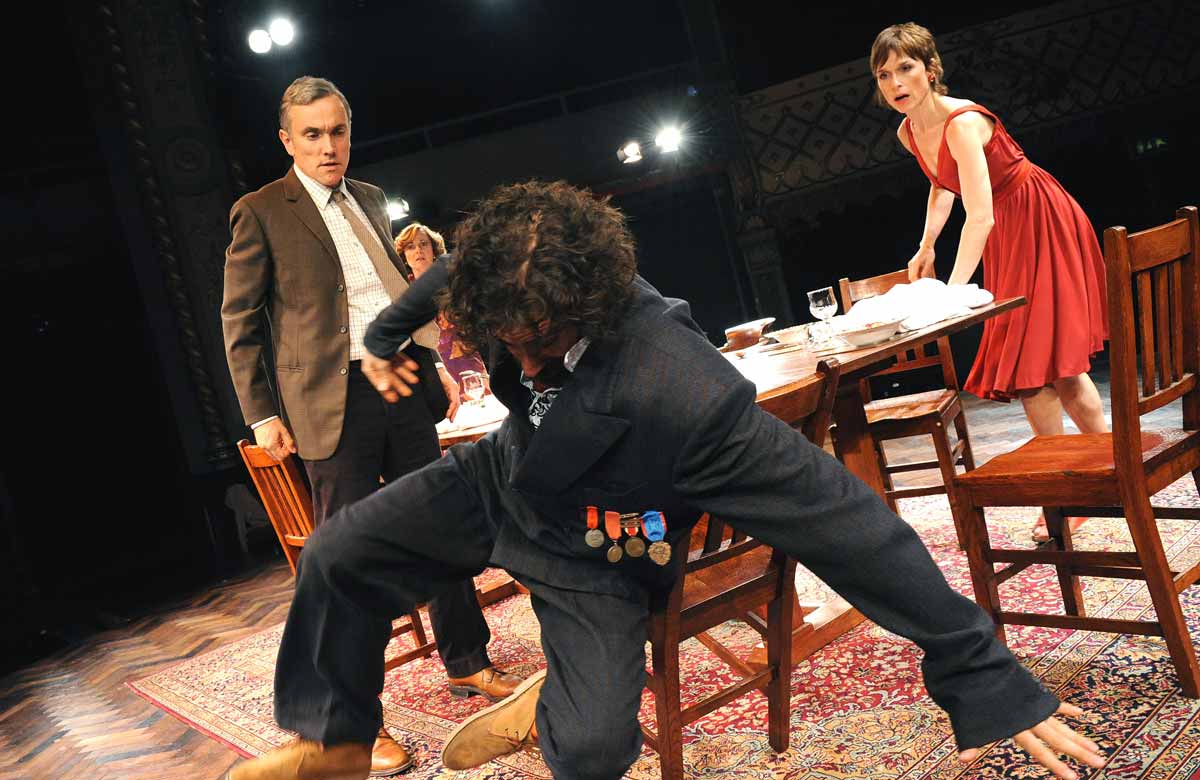
One thing is for certain: the fact there will be no two-play days will make things easier for the cast, which is reunited with director Jeremy Herrin. Miles describes the physical demand of performing Wolf Hall and Bring Up the Bodies on the same day as akin to running a marathon. “I think I had about a scene and a half off over six hours,” he says. “It was tough going, physically and mentally.”
He recalls being so exhausted during the first preview of Wolf Hall in the Swan in 2013 that he had an “out-of-body experience”.
“My sugar levels plummeted and I really had no idea who I was speaking to, what was coming next – or literally what line was going to come out of my mouth. It was terrifying. I could feel myself just sort of float up to the top of the Swan and I was looking down on myself going: ‘Well, good luck mate.’ This happened about 20 minutes in. I don’t know how I got through the performance.”
‘It’s a thrilling prospect, having an idea and putting it into dramatic form’
When Miles recounted the experience to fellow cast members at the next day’s notes session, nobody said they had noticed. And he soon came to enjoy the two-show days, and the experience of taking the audience through the story up to Anne Boleyn’s death.
“It was wonderful at the end of the night when the audience congratulated us and we sort of thanked them for sticking with it,” he says. “It was really thrilling to go on that particular journey. The entire company was wonderful at realising the scale of it, and just going for it each day.”
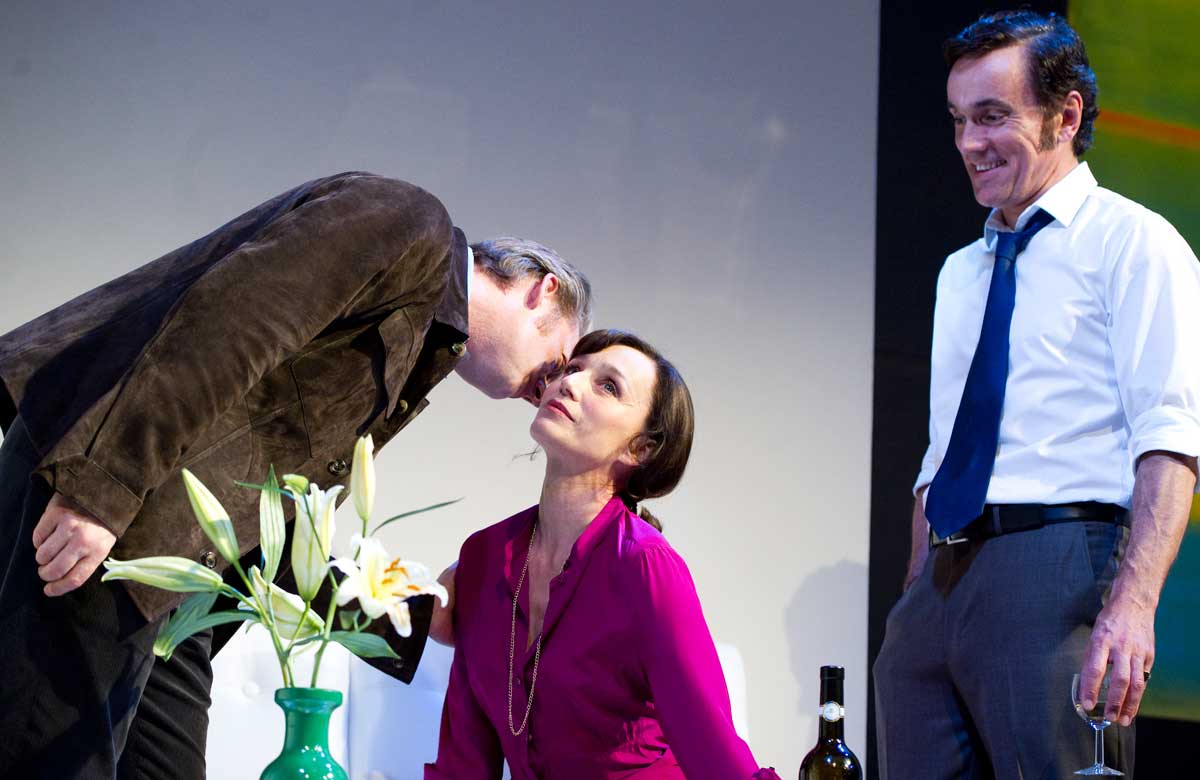
No stranger to epic productions, Miles appeared alongside Stephen Mangan in the Old Vic’s acclaimed staging of Alan Ayckbourn’s trilogy The Norman Conquests in 2008, which, like Wolf Hall, subsequently went to Broadway. “That was probably the first large-scale thing I’d experienced,” he says. “It was quite a hill to climb, doing three shows in one day. In New York we did two triple-show days over a weekend, which took real endurance. But it was a wonderful thing to be part of, a really joyous event.”
Miles says the fact his CV features such a notable number of extended performances is more by accident than design, and jokes that it would be good to do something shorter next. “I did a show at the Royal Court in 2007 that was 38 minutes long [Mike Bartlett’s My Child], perhaps I could do that again.” I suggest Caryl Churchill’s 14-minute new play What If If Only at the same address might fit the bill. “Perfect,” he responds.
But perhaps Miles’ next project will be on the page. He says that writing The Mirror and the Light has whetted his appetite for the discipline. “I’ve loved it and hope to do more of it,” he says, mentioning he has in mind a couple of other adaptations and would also like to work on something original. “It’s one thing to adapt someone else’s work but to come up with an idea yourself is quite something else. I now have even more admiration for writers than I did before. It’s a very exciting, thrilling prospect, having an idea and putting it into dramatic form.”
He acknowledges how fortunate he is to be able to cut his literary teeth on a project of this profile. And it’s striking that, with Mantel recently saying that she would prefer now to write plays than novels, and Miles expressing his interest in pursuing more writing, they have both been finding their way in new territory.
“I’m fully aware of what a fantastic first guide I’ve had,” he concurs. “I’ve been a co-author with one of our greatest writers ever. To have been able to put my toe in the water alongside Hilary Mantel is the most amazing privilege.”
CV Ben Miles
Born: 1966, Wimbledon
Training: Guildhall School of Music and Drama
Landmark productions:
Theatre
• Richard II, Old Vic (2005)
• The Norman Conquests, Old Vic, London (2008)
• Betrayal, Comedy Theatre, London (2011)
• Love, Love, Love, Royal Court, London (2012)
• Wolf Hall / Bring Up the Bodies, RSC (2013)
Television
• Cold Feet, ITV (2000)
• Coupling, BBC (2000)
• Lark Rise to Candleford, BBC (2008)
• The Hollow Crown, BBC (2016)
• The Crown, Netflix (2016)
• The Trial of Christine Keeler (2019)
Film
• Red Joan (2018)
• Woman in Gold (2015)
• V for Vendetta (2005)
Agent: Markham, Froggatt and Irwin
The Mirror and the Light runs at London’s Gielgud Theatre until January 23, with press night on October 6.

Big Interviews

Marianne Elliott and Tom Morris
Michael Sheen
Sutton Foster

Julian Bird
Recommended for you
Opinion


Most Read
Across The Stage this weekYour subscription helps ensure our journalism can continue
Invest in The Stage today with a subscription starting at just £7.99

© Copyright The Stage Media Company Limited 2026


