


Clarification on Korea’s musical theatre scene – this week in Your Views


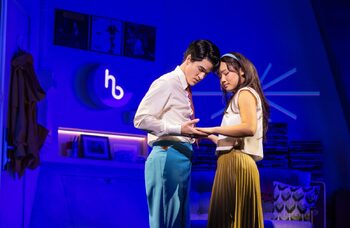
I greatly enjoyed Alistair Smith’s thoughtful analysis of Maybe Happy Ending (‘Were this year’s Tonys a landmark moment for musical theatre?’) and the wider Korean musical theatre scene. As the UK correspondent for the National Theatre Association of Korea and a subscriber to The Stage, I have followed developments in both industries for more than 20 years, so allow me – very respectfully – to add a small factual clarification.
While Seoul’s Daehangno district is indeed a hive of theatrical activity, the figure of “around 300 venues – almost all dedicated to musical theatre” slightly overstates the case. Current Korea Performing Arts Information Service data show roughly 200-250 registered performing arts spaces in Daehangno, the majority of which programme straight plays alongside dance, comedy and music events. Musical-only houses – particularly those purpose-built for large-scale productions – number closer to a dozen city-wide. Recent industry surveys indicate that musicals account for about 15-20% of annual productions in the district.
For context, the most recent KOPIS/GOKAMS statistics (2023) recorded 3,191 musical “production runs”. Of these, roughly 68% were short-season children’s or youth shows staged in small venues; large-scale licensed productions or brand-new commercial premieres made up only a few dozen to, at most, a couple of hundred runs.
Industry surveys further suggest that the pool of genuinely new titles (first-ever premieres) is around 200 a year – about 40-60 large-house, commercial launches and the remainder in small theatres, schools or amateur settings.
None of this diminishes the extraordinary vitality of Korean musical theatre; it simply places that success in clearer statistical context. I hope this information is helpful, and I look forward to The Stage’s continued coverage of Korea’s fast-growing contribution to the global musical theatre landscape.
Junyoung Kim
Via thestage.co.uk
Continues...
Read More
Al’s progress shows lack of true intelligence
Regarding your story (‘‘Culturally indefensible’: AI bill passes without amendment’), it is sadly no surprise that this morally bankrupt government would ask for consultation and then ignore the warnings that consultation points out. It’s like calling the fire brigade to report one’s house is burning, only to find they come and pump petrol on the flames.
If a government can sanction that anyone rich enough can steal the parts of the individual – their voice, their image, and the very creativity that make an artist’s unique take on the ‘human condition’ theirs – to create a cheap facsimile, then we can see that maybe mankind has run its course after all.
The passing of this bill truly shows us what happens when those supposedly in charge to protect us make decisions using a ‘facsimile of’ rather than true intelligence.
Cyril Nri
Via thestage.co.uk
What AI is capable of is unknown – utilising the creative work of others is only the start. A disappointing decision.
Louise Penn
Via thestage.co.uk
Alan Strachan’s time at the Open Air Theatre remembered
I am certain that my dear friend Alan Strachan would have been sad that his time at Regent’s Park Open Air Theatre was not mentioned in his obituary written by Nick Smurthwaite.
I appreciate that with such an eminent career some things have to be omitted. However, Alan played a huge part in the success of that theatre during my tenure as artistic director.
I will always be grateful for all the support he gave me and just wanted to make sure that part of his career was not forgotten.
Ian Talbot
Email address supplied



Most Read
Across The Stage this weekYour subscription helps ensure our journalism can continue
Invest in The Stage today with a subscription starting at just £7.99

© Copyright The Stage Media Company Limited 2026


