


Chichester College Group: building the next generation of theatre technicians
Chichester College Group’s industry-leading apprenticeship schemes, rated Outstanding by Ofsted, give organisations a way to plug vital skills gaps and break down barriers to entry


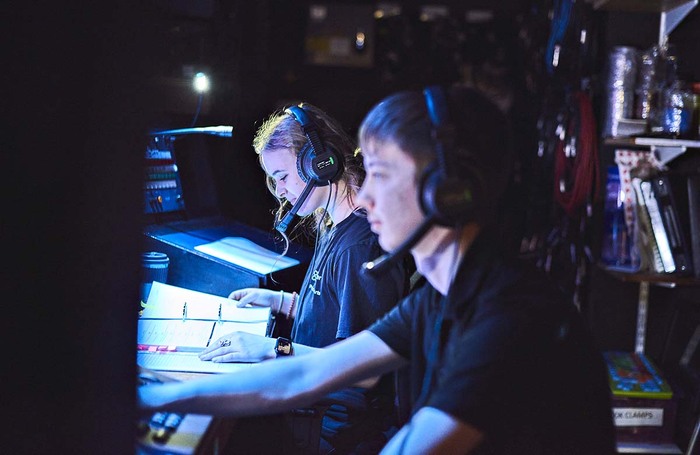
Chichester College Group is proving that apprenticeships are a viable answer not only to the increasing pressures on higher education but also to the theatre industry’s urgent skills gap crisis. By offering hands-on experience as part of a blended training model, it is leading the way when it comes to vocational higher education for the creative industries.
“We’ve got a thriving programme that we’re very proud of,” says creative industries apprenticeships manager Sally Garner-Gibbons, who highlights the way it is meeting the evolving needs of both employers and young professionals. “It solves that classic conundrum that graduates can find themselves in, whereby they can’t get jobs without experience and can’t get experience without jobs. Our apprentices get both.”
Despite the college being based on the south coast, CCG apprentices work across the UK with its many partner venues, including Pitlochry Festival Theatre, Northern Stage and the Royal Shakespeare Company, as well as the nearby Chichester Festival Theatre. Much of the training takes place remotely to enable students to work from anywhere.
“Our reach is national,” says Garner-Gibbons, “and we’re totally flexible to the needs of our partner organisations. So, whether they’re a local theatre producing seasonally, a full-time receiving venue or a major West End producer, we can tailor our apprenticeship programme to fit.”
Continues...

CCG’s apprenticeships provision was recently rated Ofsted Outstanding, with all students benefiting from a combination of real-world experience, online masterclasses led by experts across film, theatre and live events and face-to-face workplace assessments.
“Their training and support have been instrumental in developing our apprentices, who bring fresh ideas, enthusiasm and real skill to our organisation,” says RSC early careers manager Kieran Corrigan. “The programme has had a positive impact across our teams, helping us grow talent from the ground up and strengthen the future of backstage theatre.”
Chichester Festival Theatre, which has hosted apprentices for 12 years, is similarly effusive. “Their provision is superb, and the benefits to us and our workforce have been enormous,” says technical director Chris Boone. “We value the personal relationship with the teams at CCG and are always pleased with the consistently high standards they set.”
These endorsements are testament to the fact that apprenticeships benefit students and venues alike. It’s a model that has echoes of the old repertory system, whereby actors and backstage workers alike learned their skills on the job.
‘You have to learn through professional industry experience. Our course offers the practical and theoretical training that is very much needed’ – Sally Garner-Gibbons
Among the options available at CCG are two newly introduced apprenticeships. One trains participants to become a costume technician, able to manage a wardrobe department, the other a hair, wigs, make-up and prosthetics technician. Both offer the opportunity to acquire specific sets of skills that are vital to the workplace right now.
“Our apprenticeships are all created to reflect what the industry is telling us they need,” says Garner-Gibbons. “I know from my experience working backstage, for example, that there is a significant lack of skilled wigs, hair and make-up artists. A lot of people think you can train yourself to do it by watching TikTok or YouTube videos, but that is absolutely not the case. You have to learn through professional industry experience. Our course offers the practical and theoretical training that is very much needed.”
The wigs apprentices get the chance to augment their experience with two short residencies at the group’s state-of-the-art facility at Northbrook College in Worthing, which includes a main theatre, rehearsal studios and an extensive wardrobe and wigs department. This means that regardless of what’s on offer at a host venue, all students have the same opportunity to learn.
“Most of the training happens in the workplace, but we are fortunate to have the expertise and facilities in-house to top up the essential practical training where necessary,” says Garner-Gibbons. “It also means that in an area such as wigs, we can prepare apprentices properly before they go into a professional environment.”
Continues...
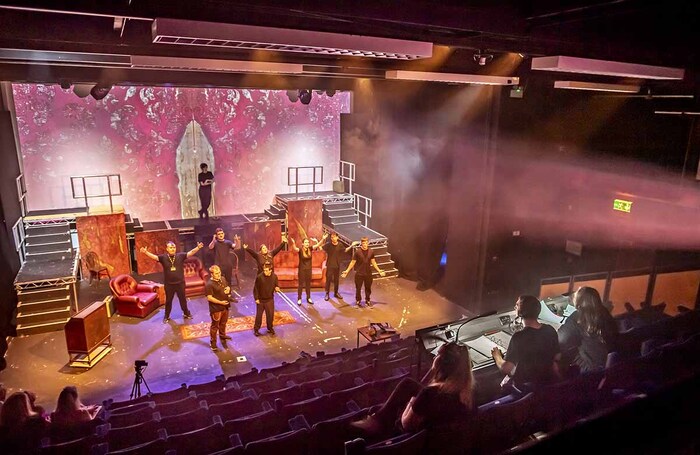
Other popular courses include content creator, community outreach and higher-level audio visual technician, as well as two production technician apprenticeships – one aimed specifically at those wanting to work in theatre, the other for live events. There is even a programme for mid-career professionals looking to further their skills in production management for theatre or TV and film. All cost nothing for the apprentices themselves, who are paid a training salary by their host organisation, which, as Garner-Gibbons points out, is an economy in the long term.
“Ultimately, you’re building a technician who can then become a full-time member of staff who is able to contribute from day one. The other key thing is that you’re training them based on your particular processes. So, whether companies end up employing their apprentices at the end or not, they’re contributing to a vital pool of skilled technicians. It’s a wonderful cycle.”
This is echoed by the employers themselves. Stevy Bachtalia, technical coordination manager at Delfont Mackintosh Theatres, says the scheme “works with the culture and values of our company”, adding: “Their support to employers is only surpassed by their dedication to the development of our apprentices and contribution to the industry’s next generation of technicians.”
If hosts are unable to offer the full breadth of training in-house, CCG facilitates shared apprenticeship experiences, allowing learners to complete secondments across different organisations. This ensures every apprentice gains comprehensive and high-level industry experience.
‘Whether companies end up employing their apprentices at the end or not, they’re contributing to a vital pool of skilled technicians. It’s a wonderful cycle’ – Sally Garner-Gibbons
During their training, apprentices complete bespoke modules that include both practical and knowledge-based assessments aligned with industry standards. The apprentices are assessed against industry standards relevant to their role and the competencies agreed between employer, college and awarding assessment organisations.
All of which means the offer is difficult to beat for those seeking a more direct route into the industry. And Garner-Gibbons knows this all too well, having entered the profession this way herself.
“I didn’t go to university, but I trained with the most incredible stage management team who took me under their wing and taught me in the kindest, most gentle way. As I progressed through my career, I got involved with training young stage managers and technicians, so going into education was a natural extension of that.”
She emphasises that another benefit of apprentice training is that it breaks down barriers of access and encourages people from a broad range of backgrounds to consider a career in the creative industries. At a time when the cost of living is biting and tuition fees are set to increase, this matters more than ever.
“There is nothing I love more in the world than this industry. It’s given me so much, taken me around the world and taught me so much about being human,” Garner-Gibbons adds. “I passionately want to share that with the next generation, without them having to get into massive debt in order to do it.”
CCG is always keen to speak to new partner organisations who share this aim and are looking to bolster their backstage teams with exciting new talent. If that sounds like you, then don’t hesitate to get in touch.
For more information, click here or email sally.garner-gibbons@chichester.ac.uk and sdekker@crawley.ac.uk






Most Read
Across The Stage this weekYour subscription helps ensure our journalism can continue
Invest in The Stage today with a subscription starting at just £7.99


© Copyright The Stage Media Company Limited 2026


