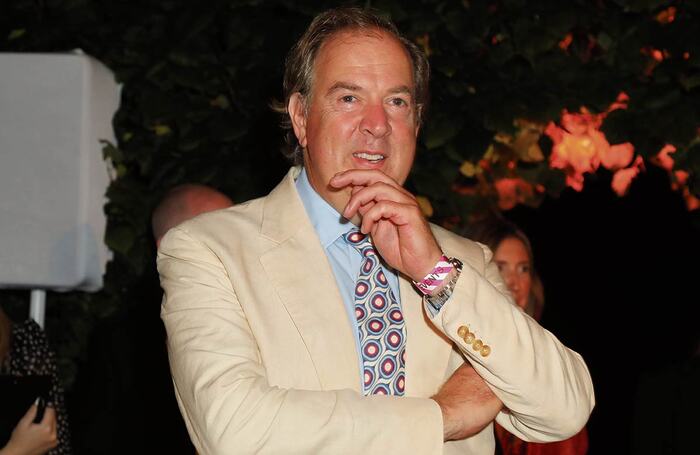
ATG chief executive Mark Cornell has just announced his immediate departure from the theatre operator, and will be replaced by Go City’s Ted Stimpson. Could this mark a significant change of direction for ATG?
When Mark Cornell was drafted in to replace Howard Panter and Rosemary Squire as chief executive of Ambassador Theatre Group in 2016, it came as a huge shock to the theatre sector.
Panter and Squire were ATG’s founders and had overseen its rise from a single venue operator to the largest theatre operator in the world. To many in theatre, they were ATG.
Cornell’s departure this week does not have the same shock value, but it is still surprising – and sudden. The news came out of the blue and Cornell leaves his role with pretty much immediate effect.
When he joined ATG, Cornell was seen as an outsider. His background was in luxury goods (and before that, the army) and there was a certain amount of snobbery within the sector about the idea of a ’non-theatre person’ running the UK’s leading theatre company.
Things did not start particularly well: he oversaw some unpopular redundancies across ATG not long after joining and it took him and his new team a little while to find their feet.
However, by 2020, the company’s production arm was performing strongly enough to win producer of the year at The Stage Awards, thanks to a series of notably ambitious ventures, including the Pinter at the Pinter season and Ian McKellen’s nationwide tour of his one-man show.
At this point, there were rumours that ATG was being prepared for a sale. Indeed, my understanding is that it came very close to an agreement before Covid arrived and scuppered the deal.
Then, of course, Cornell had to shepherd ATG through the pandemic – something he did ably. Politically well-connected, he also proved to be one of the key figures lobbying government for support for the theatre sector during this time.
Post-lockdowns, ATG’s bounceback has been impressive. Its production of Cabaret – and the dramatic transformation of the Playhouse Theatre to host it – was a real sign of ambitious intent at a time when many other producers were playing it safe. Cornell was one of the driving forces behind this and has been rewarded with what has probably been the West End’s biggest post-lockdown hit.
Meanwhile, box-office performance at its London theatres has been strong, although outside the capital things have been tougher. Earlier this year, it continued its expansion into the US with a deal with Jujamcyn, which included ATG taking some form of control – the terms of the deal are still a little unclear – of the US group’s five Broadway theatres.
Last month, Cornell gave an excellent speech at ATG’s summer party and seemed to have really grown into his role as an industry spokesperson representing theatre’s biggest employer, something he had previously appeared reluctant to do. His comments on the need for the government to give due weight to arts education were well-timed, well-judged and popular with assembled attendees.
So, why does Cornell suddenly find himself leaving ATG only a few weeks later?
Reading between the lines of ATG’s press release issued today, it feels as though his replacement Ted Stimpson has been brought in to build the group up for sale – something that he has experience with and which ATG’s private equity owner Providence probably feels is overdue, given the relatively short turnarounds such businesses tend to work to.
With his luxury goods background, Cornell’s focus at ATG always appeared to be on the importance of quality content – theatre shows – and how they could then be marketed to more well-off theatregoers. Cabaret – with its premium prices and dinner packages – was a prime example of this. Quality theatre was always at the heart of his vision, which is one of the reasons why ATG’s production arm thrived under his leadership.
Stimpson’s experience is primarily focused on what Providence describes as "delivering strategic and operational excellence at tech-enabled consumer facing businesses".
While I suspect that not many people within theatre regard themselves as working in a "tech-enabled consumer facing business", it would appear that Providence does, so one would expect to see Stimpson focusing on how ATG can expand and make the most of its online ticketing operation, which is already one of the biggest players in UK theatre.
While most recently at Go City, Stimpson developed and expanded a company that offered a passcard for tourists when visiting a city (London, New York etc) to give them access to multiple attractions at a reduced price.
Although theatres do not feature as part of this offering, it’s notable that in London, cinemas do. One wonders whether there might be plans for some kind of expansion of ATG’s membership scheme to offer something similar across its venues – albeit how well this would work within theatre remains to be seen.
Whatever the case, it feels as though his appointment could mark a significant change of direction for ATG. Indeed, the group’s press release describes the appointment as preparing the ground for the "next phase of its development". Precisely what that means, we shall have to wait and see.
Invest in The Stage today with a subscription starting at just £7.99