


Is commercial Off-Broadway on the rise again? And will that mean for not-for-profit companies?
 Howard Sherman


Evolution is usually so slow that it can only be observed over time and in retrospect. Nonetheless, during the first two weeks of January, the Off-Broadway scene in New York showed some notable shifts that were presaged last year but will surely continue to play out over the coming months and years. Their impact was immediately evident.
The first breaking news was a report on the website Broadway Journal, run by former Bloomberg News reporter Philip Boroff. He wrote that the firm of Lutz and Carr, independent financial auditors of Signature Theatre Company, had issued an advisory letter as part of the annual audit. It read in part that given the company’s assets and liabilities, Lutz and Carr had “substantial doubt about the organisation’s ability to continue as a going concern”.
While the letter doesn’t in and of itself mean that Signature is on the verge of imminent collapse, it does show the enormous risk at hand. In the past, such a letter could cause significant corporate and foundation gifts to dry up, since such donors often shy away from organisations where uncertainty about the future reigns. Since Covid, when instability is more widespread, this isn’t necessarily quite as damaging, but it’s certainly a warning light for donors and for the company itself that steps must be taken quickly to shore up the situation.
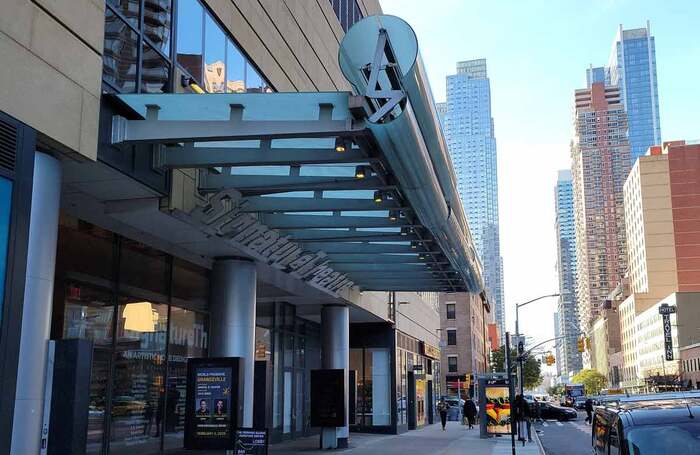
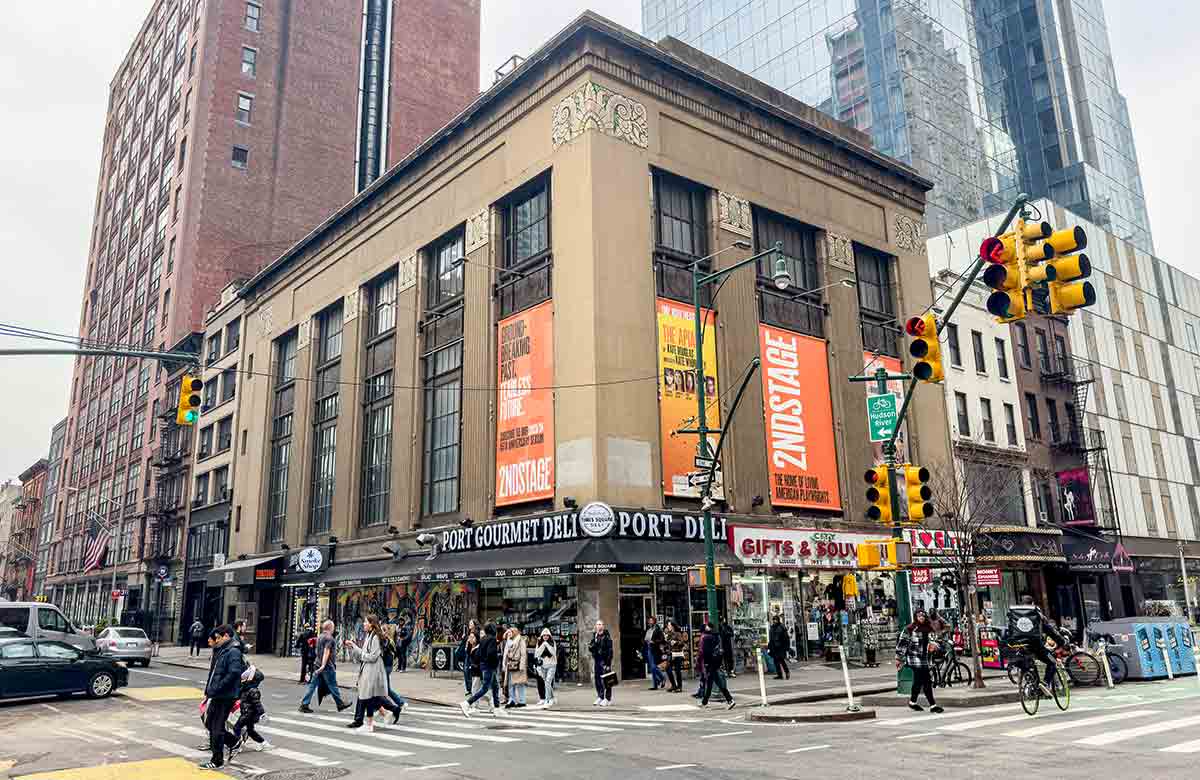
Signature has been producing much reduced seasons in the past few years in its three-stage complex on West 42nd Street, making its theatres available for rent to other companies and commercial productions alike. Among those troupes is Second Stage Theatre, which decamped its Tony Kiser Theatre at 43rd Street and Eighth Avenue after 25 years due the increased lease term. This means that Signature will be home to three Off-Broadway institutional companies, as the New Group has also been producing there regularly since late 2014.
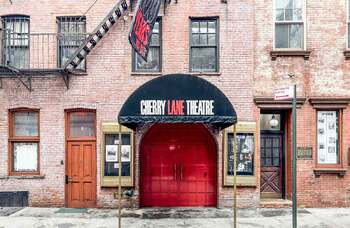
While the Kiser Theatre’s site remains under consideration for redevelopment by its owner, it will not be lost as an Off-Broadway venue. The ambitious commercial producing company Seaview Productions, now half owned by Sony Music, has taken the lease and will rename the 296-seat venue Studio Seaview, with plans to produce limited commercial runs along the lines of its previous Off-Broadway ventures, Hold on to Me Darling and Danny and the Deep Blue Sea. Those both played at the Lucille Lortel Theatre in Greenwich Village, owned by the Lortel Foundation. It joins the Minetta Lane Theatre, operated by Audible, and the historic Cherry Lane Theatre, purchased by film studio A24, as part of a new wave of commercially operated Off-Broadway venues.
Also in the rush of announcements, on Sunday evening, the Atlantic Theater Company first cancelled the day’s performances, then postponed the runs, and by mid-week fully cancelled two new shows, on both its main stage and second stage. Following last year’s announcement that the company’s backstage workers had voted to unionise, the theatre and the union had not yet come to contract terms. So the crew walked off the job to push towards an agreement. The theatre countered by saying the union’s terms would hobble the company and potentially impact other Off-Broadway groups if the rates and regulations were used as the template elsewhere.
Continues...
Related to this article
The Atlantic’s staff follow backstage workers at the Public Theater – a significantly larger company financially – who unionised last June.
The Atlantic’s simultaneous shuttering of two shows that had both begun previews is a huge step, since the expenses of the production are mostly incurred while ticket revenue must be returned to customers. A statement about the shutdown from the Atlantic raised the spectre of Off-Broadway companies, including themselves, needing to shut down because of increased expenses. As always in such cases, public statements are in part negotiating positions, but the economics of Off-Broadway have long been challenging.
This seems to indicate an era in which commercial Off-Broadway, for many years in the shadow of enterprising not-for-profits, is once again on the rise amid a changing environment for the institutional companies. Yet if the not-for-profits face unionisation, what does that mean for these other venues owned or operated by corporate entities with deeper pockets? Will they end up setting the terms for Off-Broadway employment at a higher level than the not-for-profits can sustain?
And will those commercial entities hasten greater colonisation of Off-Broadway by stars, even at the institutional companies? Signature’s next show was to have featured recent Oscar-winner Brendan Fraser in his return to the New York stage after 15 years, only to see him withdraw from Samuel D Hunter’s Grangeville days ago. But that was quickly followed by the news that Maya Hawke of TV’s Stranger Things would make her Off-Broadway debut at Signature later this season in a revival of Sarah Ruhl’s Eurydice. Meanwhile, back at the Lortel, another commercial production – the transfer of Andrew Scott in Simon Stephens’ adaptation of Vanya – is the most recent Off-Broadway show to wield Broadway prices. Where Off-Broadway was once seen as the lower-priced alternative to Broadway, Scott’s solo turn is asking more than $400 a seat at some performances, a startling figure – and that’s before the secondary market gets involved.
The sped-up change Off-Broadway raises concerns about the welfare of the institutional companies in a landscape where commercial Off-Broadway is starting to look very much like Broadway itself. It’s possible that more institutional companies may have to band together in varying permutations along the Signature-New Group-Second Stage lines to shore up their stability. But it also may mean that for the kind of inventiveness and creativity that has characterised Off-Broadway for so long, intrepid artists, theatres and theatregoers may have to look increasingly to Brooklyn and Queens, and perhaps even the Bronx and Staten Island, too, for places where new artists and new works can emerge affordably and equitably for all concerned.
Continues...
This week in US theatre
Sanaz Toossi’s Pulitzer Prize-winning English opens January 23 on Broadway via Roundabout Theatre, with Knud Adams’ original production, first seen Off-Broadway at the Atlantic Theater Company, intact. The entire acting company company, led by Marjan Neshat as a teacher of English in Iran, are making their Broadway debut.


Opinion
Recommended for you



Advice
Recommended for you
Most Read
Across The Stage this weekYour subscription helps ensure our journalism can continue
Invest in The Stage today with a subscription starting at just £7.99


© Copyright The Stage Media Company Limited 2026


