


Elite isn’t a dirty word in sports, so why is it so in the arts?
 David Benedict


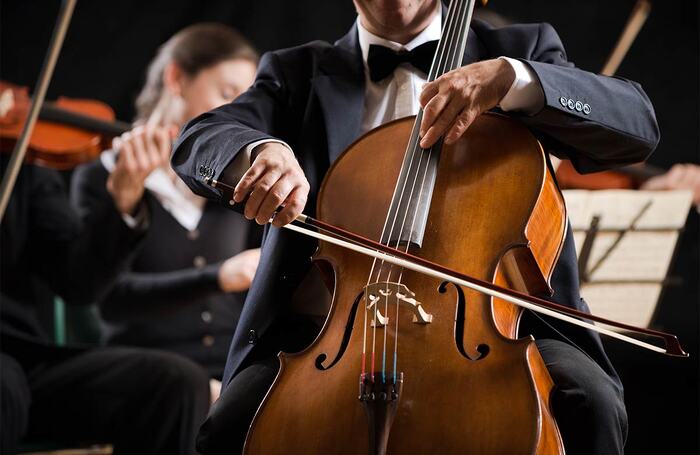
It was unlikely to fill, let alone win over, an auditorium. But five 20th-century classical works by Walton, Ravel, Gershwin and Dutilleux sold every seat last Friday night at the Barbican Hall thanks to an orchestra and conductor in only their second London concert. And at the explosive fortissimo at the end of their – pardon the technical term – rip-snorting performance of Boléro, the entire audience leapt up with a roar.
I’ve banged on about automatic standing ovations before, but this was something else. Forget the quality-irrelevant West End cantilever curtain-goes-down-audience-stands-up system. This was a polite classical audience so ignited by nearly two hours of joy that mere applause was nowhere near enough.
In 2018, conductor John Wilson took the name of the defunct Sinfonia of London and created it anew. Like the original, its players are hand-picked freelancers: soloists or lead players holidaying from playing in the finest British and European orchestras and ensembles from the Royal Liverpool Philharmonic to the Britten Sinfonia and the London Symphony Orchestra. It’s an all-star band of more than 90 players who record – and now tour – forever egging each other on to giddying heights.
You can hear the zing, finesse and gleam of their sound on their award-winning recordings. Seeing them live lets you bask in the immensity and intensity of their sound but also adds a whole other dimension.
Their collective performance is physical. They don’t just sit and play dutifully. Their bodies live out attacking rhythms. You watch their eyes darting between their scores and Wilson’s full-body conducting, topped off with his precise baton. Best of all, you see them beam with delight as one of them pulls off a cunning solo. This is complete artistic teamwork. It’s theatrical. And as flabbergasted critic Alexandra Coghlan wrote on Twitter afterwards: “Can someone please lock the Arts Council in a room with them – it’d be quicker and more effective than all the words in the world.”
What we were applauding was excellence.
These players trained for years to develop instrumental dash and daring, ability to communicate, technique: in other words, complete musicianship. They’re at the top of their game and were they gymnasts, tennis players or footballers, they would be lauded as elite players.
ACE is suddenly now arguing that a new opera-funding strategy is needed. In which case, why strangle organisations before devising it?
Yet in the arts world, “elite” is the dirtiest of words. But what’s wrong with wanting arts organisations to employ and encourage the very best in their field, to let audiences experience the performing arts at the same level as the most high-achieving sports professionals? In both disciplines, merely adequate performances excite no one, but give audiences breathtaking skill and matchless artistry and you’ll fire them up to return for more.
But thanks to the 2019 change of thinking at Arts Council England and its Let’s Create strategy, not only is being an elite artist now officially scorned, the entire idea of excellence has been relegated.
“Relevance,” argued Simon Mellor, ACE’s deputy chief executive for arts and museums, “is becoming the new litmus test. It will no longer be enough to produce high-quality work. You will need to be able to demonstrate that you are also facing all of your stakeholders and communities in ways that they value.”
This is what underpins what passes for the thinking behind the ACE cuts to English National Opera, Welsh National Opera and Glyndebourne, plus other unfashionable classical music organisations such as the Britten Sinfonia, whose excellence (and unique audience provision) allegedly no longer fits ACE’s funding criteria.
Oh really? Take ENO. ACE’s report on its three-year plan could not be more glowing. It praises the company in every area, singling out its successful dedication “to changing perceptions of opera and to create ‘a system change’ for audiences, performers and communities”. Its expected outcomes for funding for creative and cultural communities were described as not just good but “strong”. Ditto the probability of achieving its goals for “inclusivity, relevance and ambition”.
Yet ACE is suddenly now arguing that a new opera-funding strategy is needed. In which case, why strangle organisations before devising it? Forging new structures and relationships with funders, venues and audiences takes consultation. How much has there been with any of the affected organisations? None.
ACE chief executive Darren Henley has been called to address the DCMS Select Committee at 10am this Thursday (December 8). The meeting is open to the public. Show support and attend or watch on Parliament TV. Not a classical music lover? The next arts organisation to face the chop could be your favourite. Get watching. And get vocal.



Opinion
Recommended for you






Advice
Recommended for you
Most Read
Across The Stage this weekYour subscription helps ensure our journalism can continue
Invest in The Stage today with a subscription starting at just £7.99


© Copyright The Stage Media Company Limited 2025


