


Macbeth review

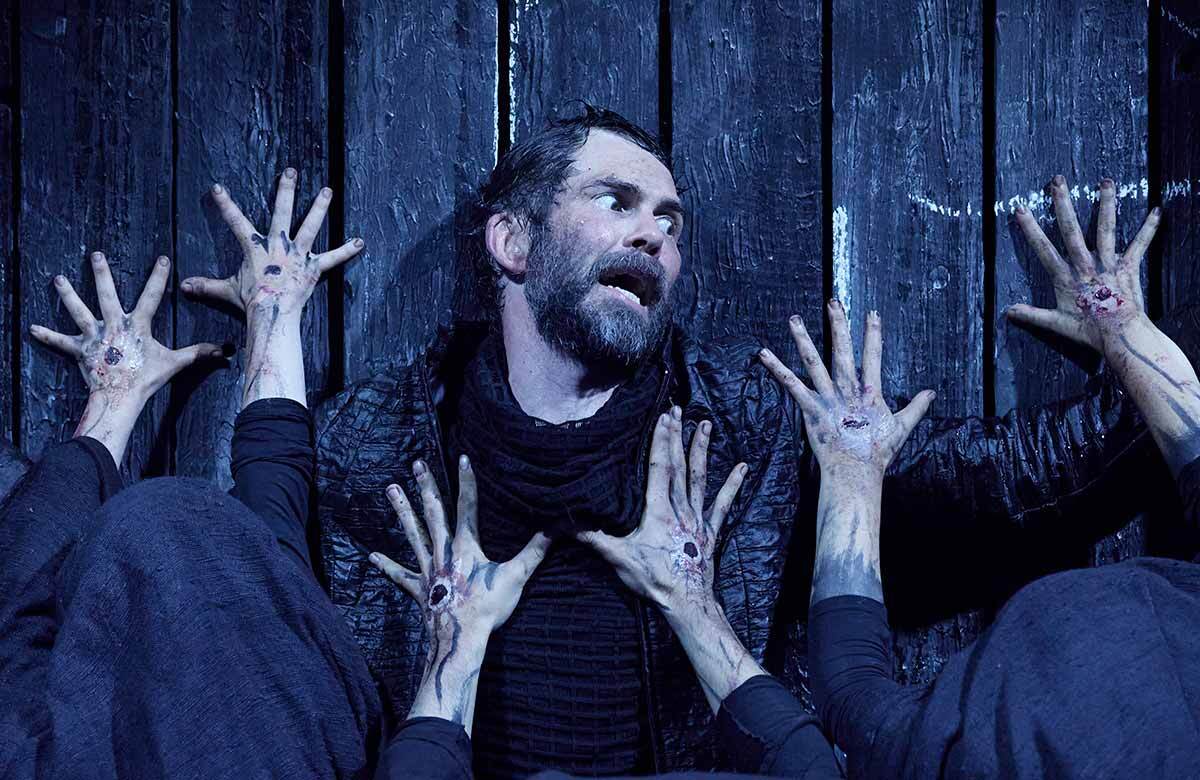
Druid’s take on the Shakespearean tragedy encases two meticulously observed central performances in a sensual design concept


Last year, the Galway theatre company Druid celebrated its 50th birthday with a new production of this tragedy, the latest in its ongoing exploration of the Shakespearean canon. But this simple statement of fact gives no clue as to the theatrical brilliance and forensic complexity of this staging.
The company’s engagement with Shakespeare began in 1982, with a presentation of Much Ado About Nothing, led by Druid founder member Marie Mullen as Beatrice. More than four decades later, again under Garry Hynes’ searching direction, Mullen is cast as one half of a partnership of an entirely different variety. In this visually stunning re-visioning, she is the power-crazed wife of Macbeth (Marty Rea), an aristocratic warrior, many years her junior who, in recognition of his heroic actions, has had the title Thane of Cawdor bestowed on him by the Scottish king (Seán Kearns).
Francis O’Connor’s black-timbered, earth-floored setting is underscored by Colin Grenfell’s sharp LED bands and shadowy torchlight, by Gregory Clarke’s sinister soundscape and Conor Linehan’s expressive, multilayered score. Together, they summon up echoes of internal turmoil, moulded by elemental forces in the outside world, where witchcraft and superstition hold sway and the ominous warnings of three hooded hags will exert profound, often contradictory influences on human behaviour and life-changing decisions.
Continues...
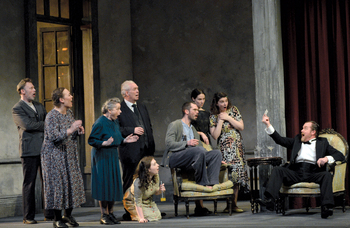
For all the pagan impulses, megalomania and rampant bloodletting that drench their existence, the Macbeths constantly turn their gaze towards an elevated, crucified figure, central to an unspoken holy trinity. Audience members seated on stage evoke thoughts of the baying crowd surrounding the trio of crosses at Golgotha.
Through undulating verbal delivery, choreographed movement and deeply mined characterisations, the action swirls around the power of three, a number rooted in the magic and mystery, rites and rituals of the Celtic world, in which this intensely Irish production of the Scottish play is set.
The meticulous, uncompromising attention to detail undertaken by Mullen and, particularly, Rea results in two sublime central performances. Arriving home from the wars, Macbeth greets his wife like an eager puppy, gambolling and crawling on all fours, taking her proffered dagger into his mouth like a bone. But as his lust for kingship waxes and his moral compass implodes, the tables turn and the roles reverse. The puppy becomes a predatory, swarming creature, haunted by the (rather tame) spectre of Birnam Wood approaching Dunsinane.
He embarks upon a rampage of killing, culminating in the entrance of the bloodied ghost of Banquo (Rory Nolan) into a celebratory feast. From that terrifying moment, Mulllen’s Lady Macbeth visibly ages, sacrificing her sanity and her life to the monster she has created. Talk of tyranny, revenge and indiscriminate murder brings the medieval world of the play smack into our own troubled times.
Belfast, and then at the Lime Tree Theatre, Limerick, on 23rd-25th April
For all the latest theatre reviews, sign up to The Stage’s weekly reviews newsletter

Most Read
Across The Stage this weekYour subscription helps ensure our journalism can continue
Invest in The Stage today with a subscription starting at just £7.99

© Copyright The Stage Media Company Limited 2026


