


Changing ends: what these producers learned from swapping the West End for Broadway
Earlier this month, established producers spoke to Tim Bano about the complex and evolving relationship between the West End and Broadway. But what does this mean for the next generation hoping to take shows across the Atlantic? Participants of the New York exchange scheme run by producer training charity Stage One spoke to Theo Bosanquet about their experiences


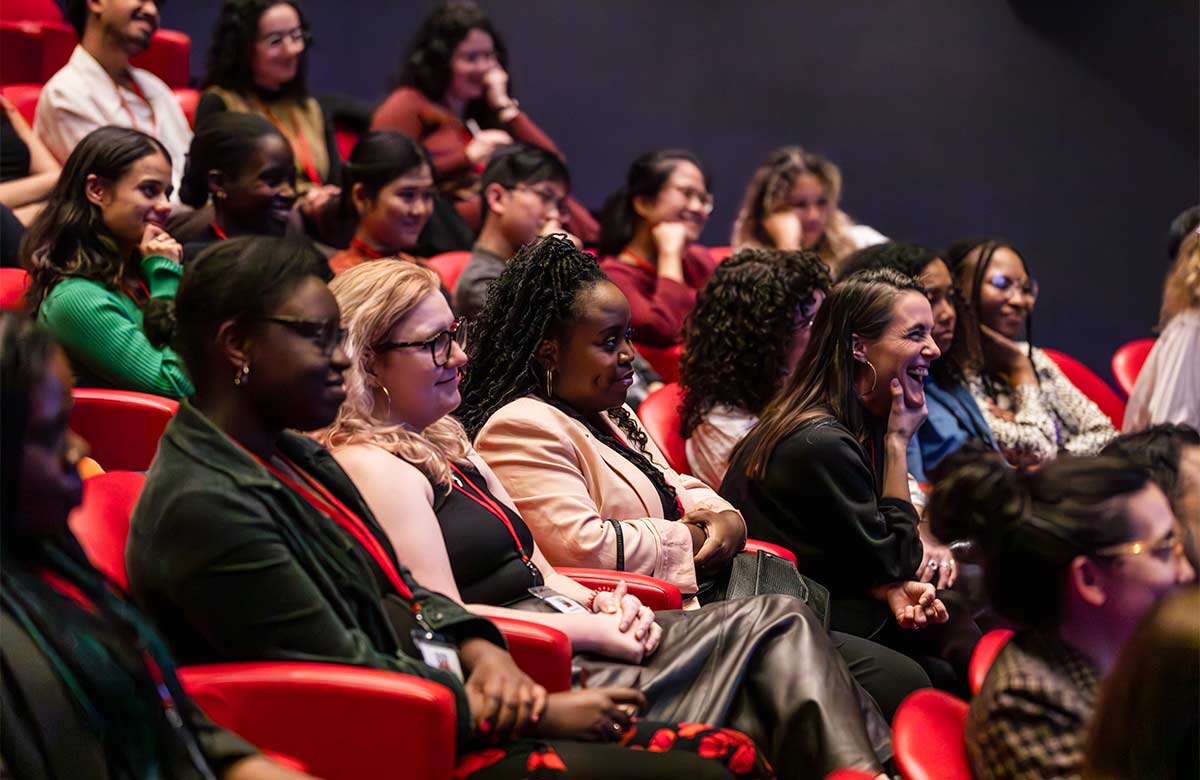
At a time when the relative costs of making work in New York versus London are increasingly a talking point within the industry, a new generation of producers has been getting an inside track on theatre’s own version of the special relationship.
Producer training charity Stage One, which marks its 50th anniversary this year, has been running an exchange programme – called Bridge the Gap – with Columbia University for the past five years. The scheme offers 12 UK and 12 US-based producers the chance to gain experience on the opposite side of the Atlantic via workshops, lectures and networking events.
“Over the past five years, our partnership has only grown more bountiful,” says Stage One chief executive Joseph Smith. “Producers in the US and the UK have a great history of collaboration, and we’re proud that this programme continues to inspire connection and collaboration on the commercial projects of the future.”
But what is it like for those taking part? Four participants – three from the UK, one from the US – on the most recent exchange, which took place in May and September of last year, shared their experiences.
Continues...
Read More

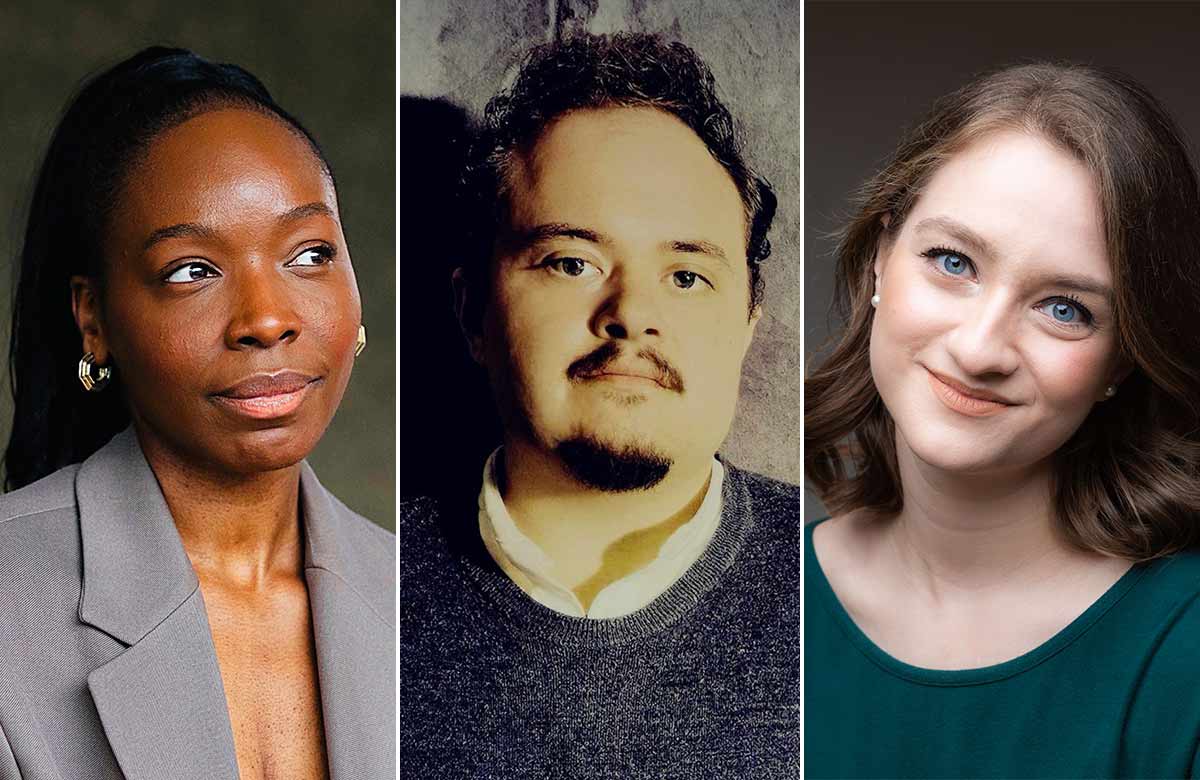
Bethany Cooper runs her own production company, with recent credits including a musical adaptation of The Book Thief. She was previously a recipient of the MGCfutures Nicole Kidman Bursary, designed to support emerging female producers, and says Stage One’s Columbia Exchange felt like “a logical next step”.
“We got what I would describe as a top-line, one-week version of Columbia’s MFA course [in Theatre Management and Producing],” she explains. “It covered everything from US tax and law, to looking at non-profit versus commercial models, fundraising, the ticketing landscape, marketing and copyright. We also met the Broadway League and spoke with many other producers and different people involved in making theatre.”
On top of this, there was also a networking evening at Columbia, a reception at famed Broadway restaurant Sardi’s and the opportunity to take in some shows, a schedule Cooper understatedly summarises as “quite intense”. And, she adds, it was particularly interesting going last autumn during a “heightened political climate”. “It was apparent that a real change is coming from politics into theatre [in the US], so something I took away from the experience was that, now more than ever, it’s important to cut through with stories that go beyond headlines.”
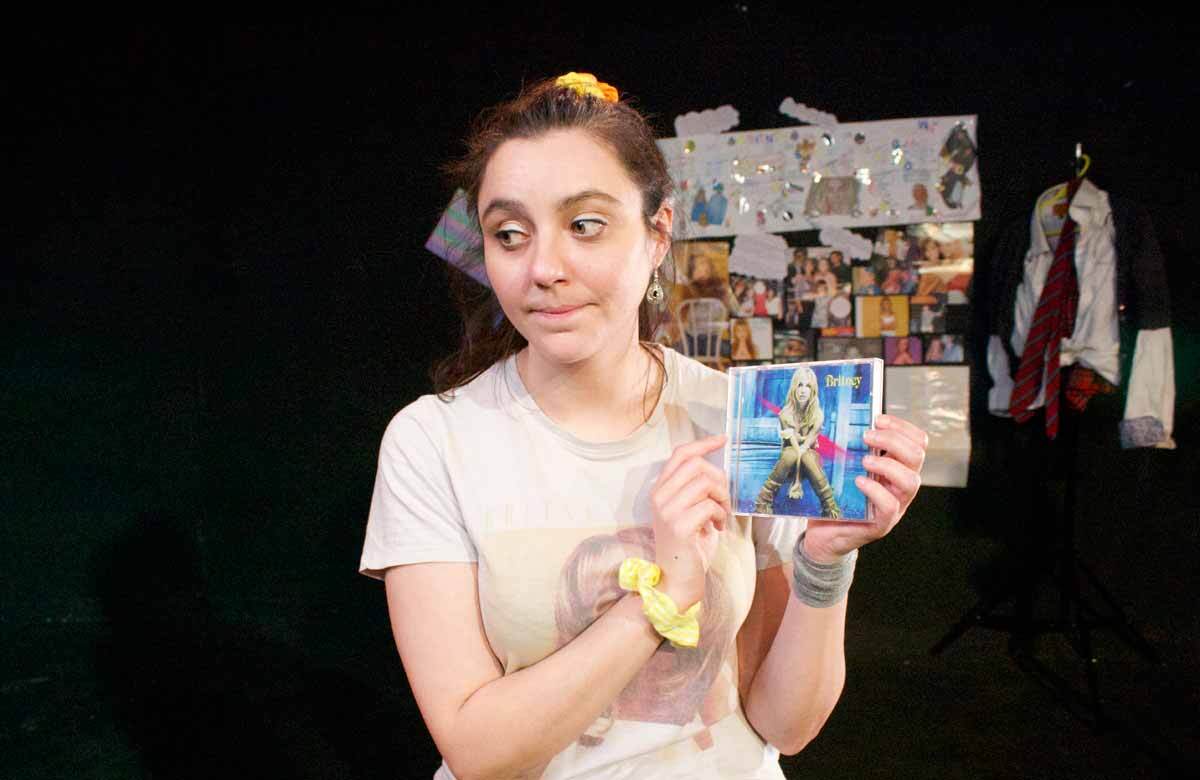
Producer David Shopland first encountered Stage One before the pandemic, but did not apply for a bursary until 2023, by which time his show, Saving Britney, had become a hit on both the London and New York fringe. He got a place the following year, which he describes as transformational, as it finally enabled him to focus on theatre full-time, despite having been in the industry for more than a decade. It also whet his appetite to apply for the New York exchange.
“It was like being back at drama school, in terms of it being a highly scheduled week with an incredible variety of experiences,” he says of his time stateside. “It felt like they’d really looked at every aspect of what’s involved with producing a show there and worked out what would be most beneficial for us to know. They also looked at a lot of Off-Broadway work too, which was fascinating.”
Despite already having worked internationally and taken a show to New York, he says it was illuminating to discover “all the pitfalls I could have avoided”. And what significant differences did he notice between the two sides? “A major thing is the strength of the unions,” he says. “They play a huge role in terms of your budgeting and your finances – it was really eye-opening for us to discover the level of detail and sheer number of unions that are involved. It’s a whole different ball game logistically.”
Cooper summarises it as “everything is bigger” in New York, at least when it comes to money. “It feels like the average capitalisation you’re looking at over there is vastly different,” she adds. “Also the taxes and the way their law works is different. Another thing I noticed is that producers and general managers are more separate in the US. Over here, particularly early on in your career, you have to be both.”
The US-UK relationship has always been symbiotic, but increasingly these financial pressures are leading US producers to look to the other side of the pond in order to get projects off the ground.
Columbia MA student Tatum G Ludlam was among the dozen who came to study in London last May, during which time she met industry leaders including Smith, president of the Society of London Theatre Kash Bennett and chief executive of Delfont Mackintosh Theatres William Village. She also visited London venues including the National Theatre, the Old Vic, the Young Vic and the Park Theatre.
What conclusions did she draw? “Producing in London is considerably cheaper than in the US, with lower capitalisation and running costs, making it easier to take creative risks,” she says. “The UK system is also simpler to navigate, with fewer unions and less administrative and contractual burden and a prevailing assumption of good faith among collaborators.”
In addition, Ludlam highlights the UK’s “substantial” government subsidies in comparison with the US, as well as the fact that the Olivier Awards also recognise Off-West End work (unlike the Tonys, which are Broadway only), as being indicative of a “less rigid divide between commercial and non-profit work”.
Her time on the exchange programme encouraged her to work here, she adds, to the point that she ended up staying an extra week. The production company for which she works in the US is also now developing “several projects in London over the coming years,” she reveals.
‘Suddenly it became realistic, hearing about the journey of a show all the way from first workshops through to Broadway’ – David Shopland, producer
But what about the other way around? Have the UK cohort been inspired to work on Broadway? UK emerging producer Winnie Imara, whose credits include last year’s West End transfer of Ryan Calais Cameron’s play Retrograde, says that although the finances involved are “daunting”, her experience on the programme did open her eyes to the possibility of taking work to the US.
“Even though the numbers are massive, people are still doing work [in New York], so it helped me gain knowledge and understand how I could gain access in order to do the things I want to do. It shouldn’t feel impossible for someone like myself, from a working-class background, to do those things, and doing this made it feel possible.”
Imara, who founded the TV, film and theatre company Seven Black Women, says she got into producing to “see myself represented in leading positions” within the industry. She discovered Stage One when she was contacted by Bridge the Gap programme leader Siobhan Walsh, who encouraged her to apply. “Immediately, it felt like something I should be doing,” she says. “And from there, it’s honestly been the best thing ever for my producing career. They’ve supported me in so many ways.”
She describes herself as “super-proactive”, and when she got accepted onto the exchange she reached out to people she knew with New York connections and made a number of contacts during her time there. “Commercial producing can be hard,” she says. “But people are really generous and kind, and if you’re interested in learning more, they are generally so welcoming and will bring you in with open arms. I saw that as much in the US as I see it in the UK.”
Shopland, whose company Fake Escape marks its 10th anniversary of taking work to the Edinburgh Fringe this year, echoes her when he says that meeting such a range of people on the exchange made the idea of producing in New York feel “achievable”. He cites a particular encounter with Sue Frost from Junkyard Dog, producers of Come from Away. “Suddenly it became realistic, hearing about the journey of a show all the way from first workshops through to Broadway.”
He also points out how rare it is to come across an opportunity like this, particularly one that’s not only free to participate in, but also includes travel and accommodation expenses (the exchange is supported by the John Gore Organisation).
“There is no one else that is allowing this level of accessibility to the commercial theatre world,” he says. “We were able to build up such an amazing network – at the end we were even given a spreadsheet of everyone we had met and spoken to. We also made great contacts among the cohort that went out there, and I’m already talking to several of them about working on projects together.”
The prospect of transatlantic productions that began with conversations on the Columbia Exchange is now a very real possibility, with more than 100 alumni and five years’ worth of networking under its belt (applications for the 2026 programme will open next month). And that can only be a positive for the future health of the industry on both sides of the pond.


Most Read
Across The Stage this weekYour subscription helps ensure our journalism can continue
Invest in The Stage today with a subscription starting at just £7.99

© Copyright The Stage Media Company Limited 2026


