


Boris Godunov review


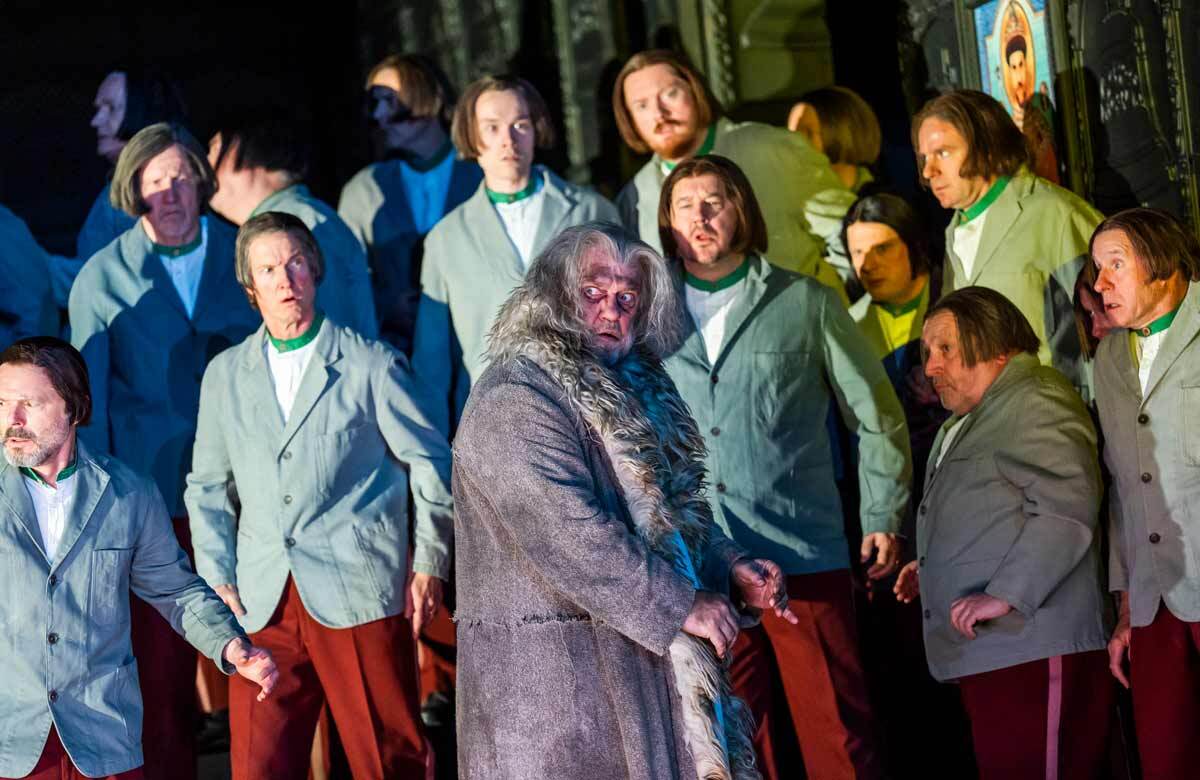
Revival of Richard Jones’ staging of Mussorgsky’s historical epic offers fine ensemble work


After revolutionary Russian composer Modest Mussorgsky’s epic about a 17th-century Tsar’s reign was turned down by the committee of the Imperial Theatres in 1870, he made substantial revisions that, until quite recently, were generally accepted as improvements.
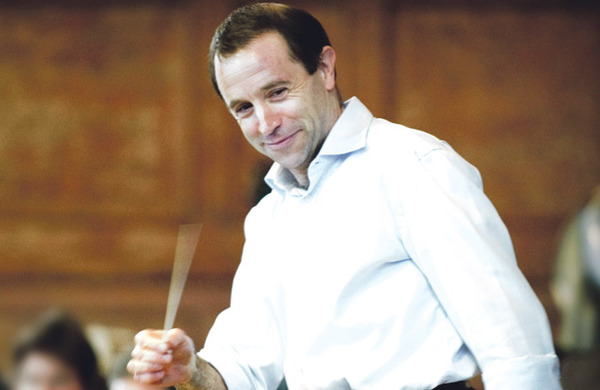
But the Royal Opera, like many companies, reverts to the shorter, in some senses simpler, original. Its production runs without interval to some 2 hours and 20 minutes. There are virtues in this purer, less decorative edition directed by Richard Jones, most of which register positively, notably in terms of the composer’s own stark orchestration, again often replaced formerly by more glamorous versions by Rimsky-Korsakov or Shostakovich. Conductor Mark Wigglesworth emphasises its plainness, though his overall approach could do with greater dynamism.
The expanded chorus is in impressive voice, even if Jones’ stage pictures often see them in more static mode than usual. The production itself mixes visuals from the period setting and modern times, perhaps suggesting that little really changes in Russia, whoever the Tsar or his successor in power happens to be. Repetition is also crucial: we see the murder of the child Tsarevich Dmitry instigated by Boris again and again. After the latter’s death, we witness his son Fyodor (Robert Berry-Roe) about to receive the same treatment from the fake Pretender, who has somehow succeeded in reaching the throne.
Continues...
Read More
Bryn Terfel once again assumes the role of the anti-heroic Tsar, destroyed from within by guilt even as the political cards stacked against him make his fall and simultaneous death seem a double punishment. Avoiding melodramatics, he offers a more inwardly troubled individual, though some will miss the sheer theatrical fire other performers have brought to the part. Ultimately, a true bass rather than Terfel’s weathered bass-baritone is probably a better vocal fit.
But this is generally a strong cast, from John Daszak’s creepy, conniving Shuisky, undermining Boris with his fake support; Adam Palka’s thoughtful Pimen, patiently destroying Boris’ future reputation by writing his unforgiving historical chronicle; and Jamez McCorkle’s ambitious False Dmitry, who views Boris’ downfall – rightly, as it turns out – as a viable path to his own advancement to the top position.
In fact, this is very much an ensemble show, with smaller roles all fitting neatly into the overall perspective: Andrii Kymach’s business-like Schelkalov; Alexander Roslavets and Alasdair Elliot’s expert comic double act as drunken renegade monks Varlaam and Missail; Hannah Edmunds’ lyrical Xenia; Susan Bickley’s down-to-earth Hostess; and Mingjie Jei’s pitiable Holy Fool all adding to the wide-ranging dramatic panorama.
Nowadays, Boris’ guilt is no longer unquestioningly accepted as historically correct. But, fictional or not, the complex situation at the period Russians still refer to as the “time of troubles” is imaginatively realised.
For all the latest theatre reviews, sign up to The Stage’s weekly reviews newsletter
Most Read
Across The Stage this weekYour subscription helps ensure our journalism can continue
Invest in The Stage today with a subscription starting at just £7.99

© Copyright The Stage Media Company Limited 2026


