


Citizens Theatre: 'No one gets the scale of the new building until they see it'
Glasgow’s Citizens Theatre has reopened after seven years of redevelopment but with its identity firmly intact. Artistic director Dominic Hill tells Fergus Morgan about his vision of putting the Citz at the heart of the community and the Scottish theatre industry


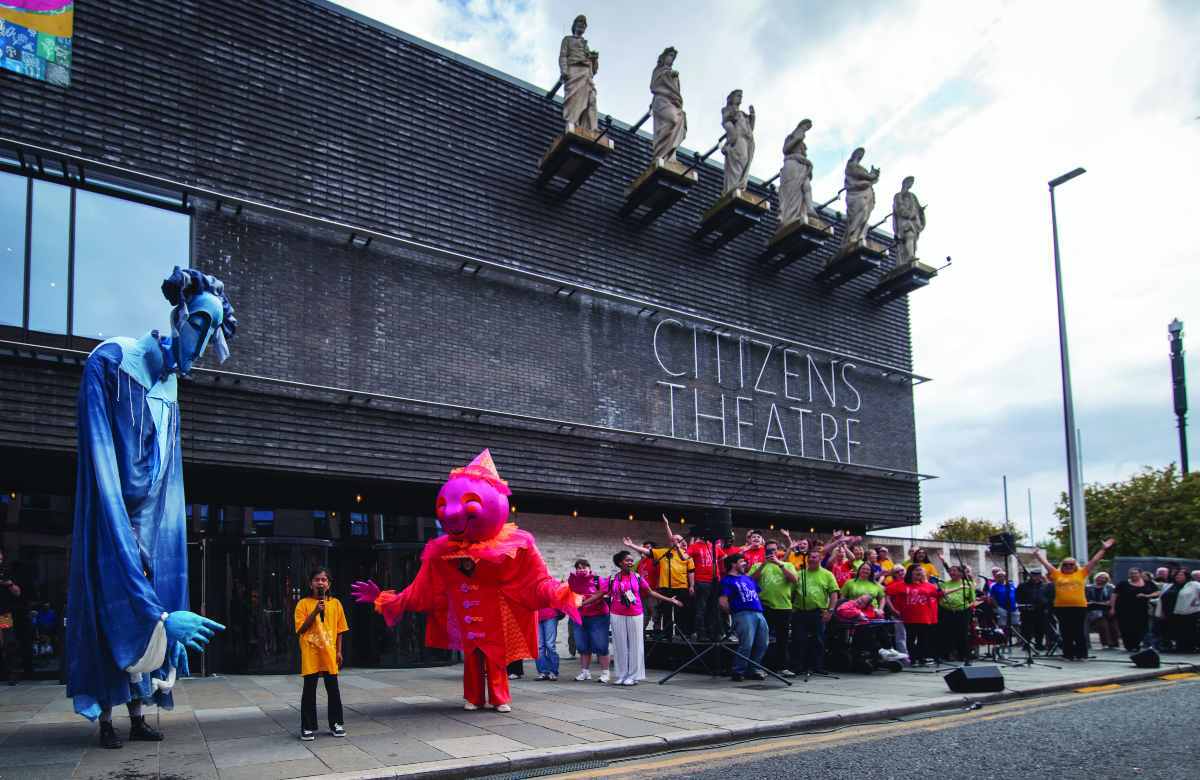
On August 23, Glasgow’s Citizens Theatre finally reopened following a significant, seven-year redevelopment. A community procession led by two large puppets snaked through the Gorbals, the neighbourhood in which the theatre sits, and arrived at the venue, where a local seven-year-old girl ceremonially declared the building open and walked inside.
“It was really moving,” says artistic director Dominic Hill. “It was great for the theatre to feel part of the community, and to feel that the community was invested. There were no speeches. There were no celebrities. It was for the community.”
The reopening has been a long time coming. When the Citizens closed for redevelopment in 2018 – quite possibly before that seven-year-old girl was even born – the project was supposed to take two years. It ran into unexpected problems, though, which resulted in multiple delays and the cost spiralling from a £20 million initial estimate to £40 million.
“We actually started working on it in 2012 or 2013, so there were five years of design, fundraising, all that sort of stuff first,” says Hill, who took over at the Citizens in 2011. “Then we got going, and then Covid happened. A lot gets blamed on Covid now, but it did upend everything. It caused so many ripples all the way through the supply chain.”
There were other issues. A lot more asbestos was discovered than anticipated. The pillars holding up the dress circle were not built on solid foundations. The roof was in a worse condition than expected. A shipment of steel even got stuck in a container aboard the Ever Given when it ran aground in the Suez Canal in March 2021.
The delays were frustrating, says Hill, but he is also oddly grateful for them as they meant that the Citizens dodged the difficulties of operating under Covid restrictions and in the challenging environment that followed. Instead, it reopens in a new era for Scottish theatre, one buoyed by most large organisations receiving new long-term funding settlements from Creative Scotland. The Citizens will get £4.7 million over three years.
“I’m glad we didn’t open immediately post-Covid because things were really tough then for the industry,” Hill says. “In some ways, it was a relief not to be open then, and it feels good that we are part of the re-energising happening in Scottish theatre.”
Continues...
Related to this article
Paying homage to the theatre’s history
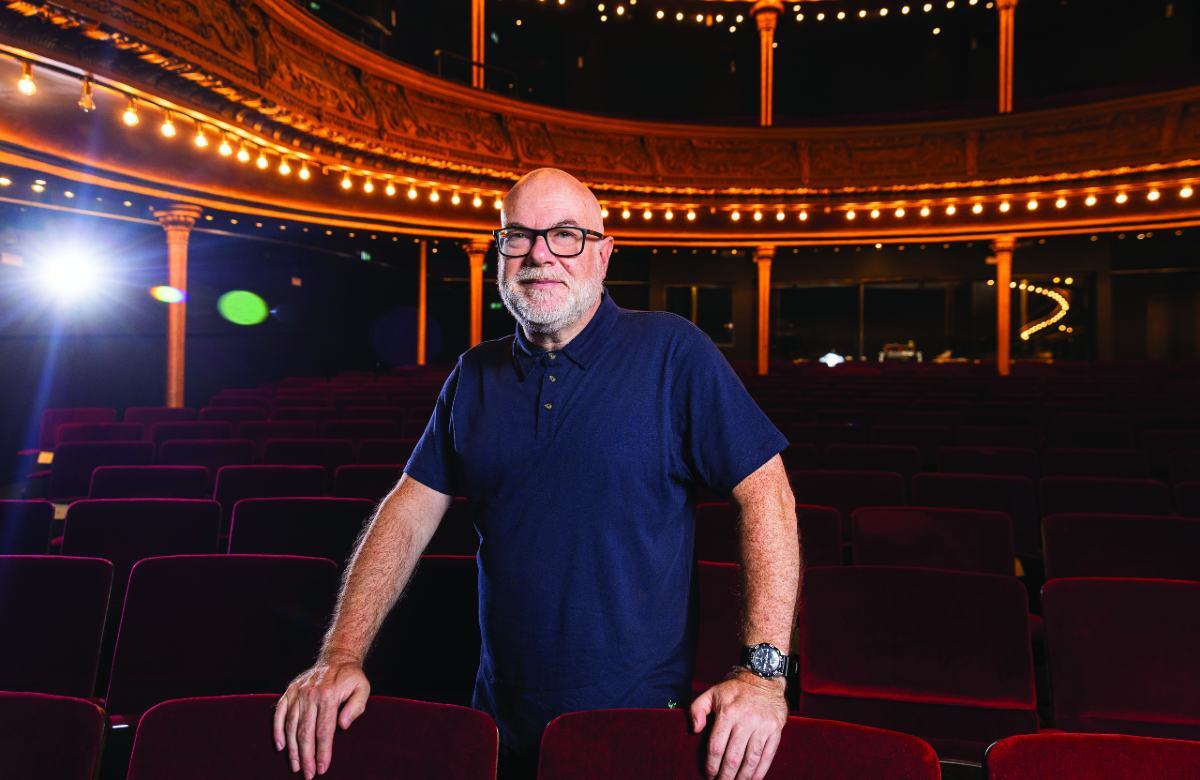
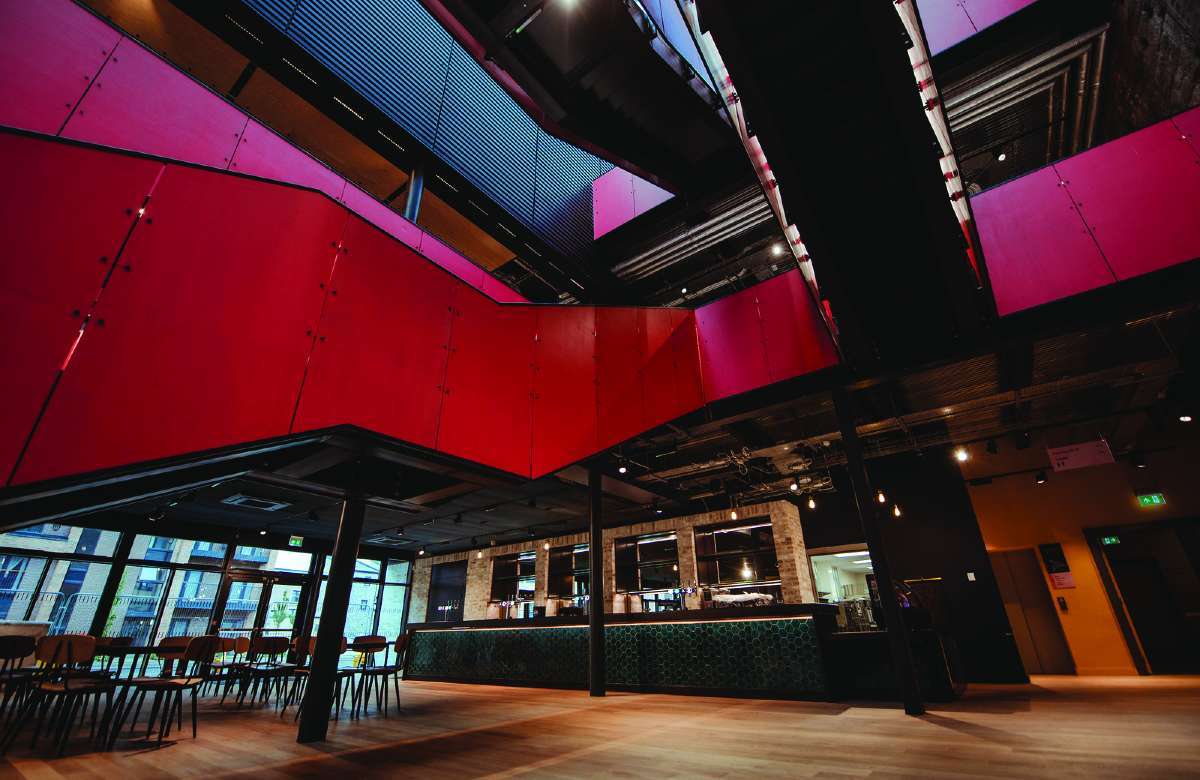
The redevelopment – designed by Bennetts Associates and funded by a range of backers, including the Scottish government and Glasgow City Council – is stunning. The sandstone Victorian auditorium, which first opened in 1878, has been retained with extra seats added, a new fly tower installed and the ventilation improved. It has been wrapped in an entirely new three-storey building that incorporates a spacious foyer and bar, a flexible studio theatre, remodelled workshops and offices, new dressing and rehearsal rooms and more. The old Citizens, although charming, was cramped, dark and inaccessible. The new Citizens is open, bright and welcoming.
“I don’t think anyone gets the scale of it until they come in and see it,” says Hill. “People are really wowed by it. They also love the fact that the auditorium itself feels familiar. That was always the aim. I think we have achieved the original vision, which was about revealing the old building and sitting it within something that felt very modern.”
The new Citizens is full of fascinating features, too. The statues of the Greek muses that topped its roof have been retained, as have elephant columns that adorned its interior. Victorian stage machinery has been preserved beneath the stage and can even be inspected via a viewing gallery. Handsome arches into the auditorium were discovered and incorporated. There is even a new beer – Citz Craft Lager – at the bar.
“I love the big pink staircase in the middle of the foyer,” says Hill. “I love the exposed brickwork. I love the stairs that go up the side of the auditorium. I think it’s great.”
Continues...
Small Acts of Love
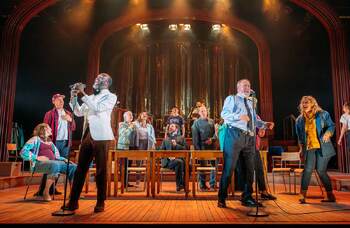
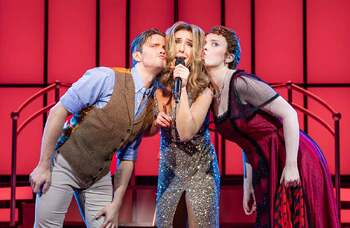
A redevelopment such as this requires a big reopening show, and that is just what Hill has programmed. Small Acts of Love is a ‘play with songs’ by playwright Frances Poet and Deacon Blue frontman Ricky Ross, focusing on the aftermath of the bombing of Pan Am Flight 103, which crashed over Lockerbie in December 1988, killing 243 passengers, 35 of whom were students at New York’s Syracuse University, plus 16 crew and 11 residents.
The show, which is directed by Hill and began performances on September 9, explores the remarkable transatlantic relationships that came about as a result of the tragedy.
“It’s about what you do when you are confronted with the most horrific event,” says Hill. “The people of the town – some of them – took their grief and upset and anger and hopelessness and turned it into action, and their small actions created these extraordinary bonds between two very different societies. It tells those stories. It’s about community and healing and altruism. It’s about hope and endurance and resilience.”
Previous attempts to dramatise the disaster have proved controversial – recent Sky and BBC series both prompted backlashes – but Hill says Small Acts of Love will not.
‘The people of the town took their grief and upset and anger and hopelessness and turned it into action, and their small actions created these extraordinary bonds’ – Dominic Hill
“We’ve been incredibly respectful and careful,” he says. “We’re only telling the stories of people who want their stories told. It has very much been in collaboration with them. They’ve all given their permission. They’ve all read the script. A lot of them are coming.”
There will be someone important missing on opening night, though. In a resonant coincidence, Giles Havergal, the director who led the Citizens for 34 years between 1969 and 2003, died in London on August 23, the same day the theatre reopened to the public. Together with writer Robert David MacDonald and designer Philip Prowse, Havergal turned the Citizens into one of the most respected theatres in Europe.
“Giles was hugely important in terms of making the Citz what it is today,” says Hill. “Personally, he was always incredibly supportive, too. When I started, we used to meet up and have dinner. We were in contact by email this summer, too. He was trying to come up to the opening night of Small Acts. That would have been lovely.”
Classics, new work and Glasgow stories
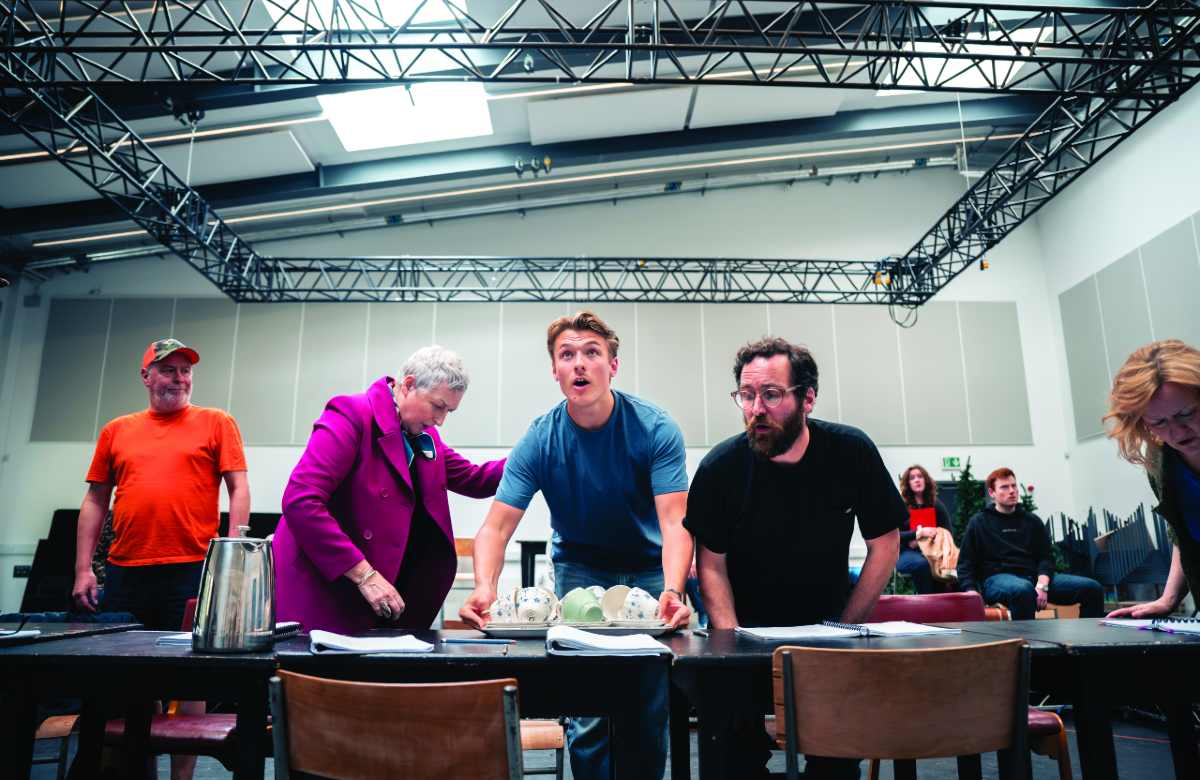
After Small Acts of Love, the Citizens will host Dundee Rep’s revival of The Glass Menagerie and a remount of Douglas Maxwell’s award-winning 2024 play So Young before Hill directs a new version of Beauty and the Beast over Christmas. Then, in 2026, come fresh productions of Waiting for Godot and Sweat, followed by an adaptation of Denise Mina’s Glasgow-set true-crime novel The Long Drop by Linda McLean. The studio space, meanwhile, will host a range of scratch nights, touring shows and in-house productions, including a new version of Saint Joan by director Stewart Laing in February.
“That mix of classics, new work and Glasgow stories feels like the general vibe,” says Hill. “They will be the cornerstones. Breadth is important if we are going to live up to our name. We can’t be narrow in our programming. We can unashamedly put a Glasgow comedy alongside a Greek tragedy because that is who we are.”
The landscape for making theatre is vastly different now compared with when the Citizens closed in 2018, says Hill, and that means the theatre will have to operate differently.
“The big difference is the financial situation,” he explains. “The cost of making work has gone up hugely. That means more co-production and collaboration. Gone are the days when we could just do six Citz shows a year. We have to turn that into a positive, though. Collaboration is good. Partnerships are good. They offer exciting new opportunities.”
‘We can unashamedly put a Glasgow comedy alongside a Greek tragedy because that is who we are’ – Dominic Hill
The cost of running the new building also requires the box office to perform, he adds, but that does not mean compromising on offering affordable tickets, a principle of the Citizens that was introduced and maintained by Havergal during his tenure at the venue.
“If you live in the Gorbals, you can still see anything for five quid,” Hill says. “There are tickets for people on low incomes and students. The top price has gone up, but we’ve absolutely made sure that there are plenty of opportunities for people to get in at a reasonable price. It helps that we now have 200 more seats than we used to.”
Hill does not just want to keep his venue full during performances, though. He wants the new Citizens to be busy throughout the day. His vision – a thrilling one for Scottish theatre – is of a thriving building at the heart of both its local community and the Scottish theatre industry.
“In the evenings, we will have two shows, one in the main house and one in the studio,” Hill explains. “During the day, anyone can come here for a glass of wine or a cup of coffee and chat or work. There will be a sense of the main house and the studio working side by side, and the foyers and bars occupied, and all our participation work going on around that. It will be busy with a whole range of professional and non-professional artists and audiences.
“That would be, to me, the image of success for this building.”

Opinion


Recommended for you


Opinion
Recommended for you
Most Read
Across The Stage this weekYour subscription helps ensure our journalism can continue
Invest in The Stage today with a subscription starting at just £7.99

© Copyright The Stage Media Company Limited 2026


