A frank, informative dive into the process of nuclear disarmament and international policy-making
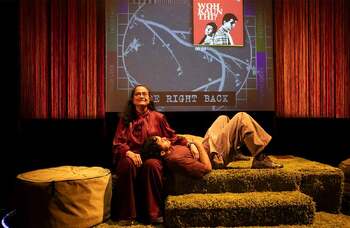
Chris Thorpe is showing us Bristol on a map, blown up large on a projector screen. Audience members have told him about places that mean something to them – a cafe they like to go to, a peaceful park, a building they find beautiful. Look, there is the theatre we are in at the moment. Then he drops a nuclear bomb on it. Not literally, of course, but with an online simulation tool that illustrates the effects that a "medium-to-small" nuclear weapon would have on the city and its population.
This, plainly, is not a show that shies away from talking directly and informatively about its topic: the proliferation of nuclear weapons, and how we might create a future in which they cease to exist. That is because nuclear weapons are intentionally shrouded in secrecy. To get rid of them, we must first be able to acknowledge them and look at their threat head-on. According to experts, Thorpe explains, it is not a question of if they will be used, but when.
Continues...
The show is inspired by a chance encounter Thorpe had in a hotel bar with one particular expert; Véronique Christory, the Senior Arms Control Adviser for the International Committee of the Red Cross, and one of the architects of the Treaty on the Prohibition of Nuclear Weapons. The treaty aims to wrest control of the conversation on nuclear proliferation from those states with nuclear arsenals and give diplomatic power to those who do not.
Thorpe illustrates the journey of the treaty with three characters; fictional diplomats from the US (Greg Barnett) and an unnamed African country (Efé Agwele), as well as Christory herself (Andrea Quirbach). These characters bring the high-powered world of international diplomacy down to a human scale – people who get drunk and have mums, and whose personal beliefs sometimes contradict the political agendas they serve. They are embroiled in a battle between idealism and pragmatism, between the leap of faith to act in the common good and siloed national self-interest.
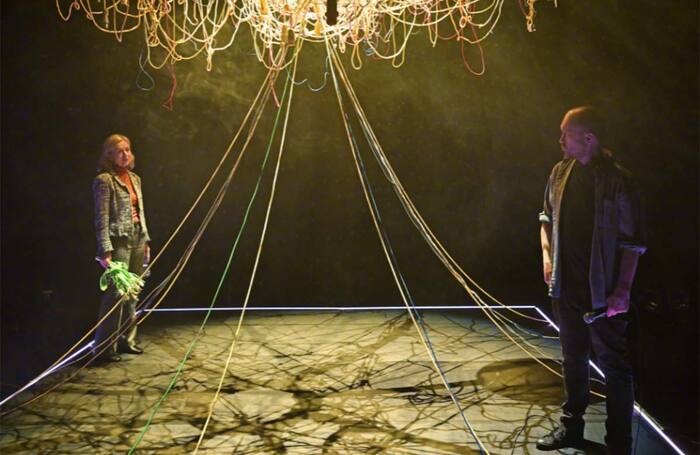
These dramas and Thorpe’s lecture segments commingle on an elegant set by Eleanor Field, a messy tangle of yellow wires that comes to resemble a mushroom cloud and also suggests that we are, on scales personal, national and global, interconnected and interdependent. Thorpe drives this home by involving the audience in the conversation, gently and reassuringly, at every step of the way.
This is, despite its gloomy obsession with the existential threat nuclear weapons pose, a utopian, activist piece of theatre at heart. Thorpe points out that though international decision-making might feel as though a distant and obscure field, it is only "rooms with people in them", as is this theatre. Change is a complex process that happens at all scales, and in the theatre we begin by talking.
Invest in The Stage today with a subscription starting at just £7.99