


A Doll’s House starring Romola Garai - review round-up



Henrik Ibsen’s classic 1879 play, about a woman named Nora who finds herself in a desperate situation after securing a loan to help her husband, is continually restaged and reinvented – but it can be tricky to modernise, with a plot hinging on the fact that a woman isn’t legally allowed to sign a cheque in 19th century Norway. Anya Reiss is a playwright who knows her way around a sharp new version of a classic; while we’ve not had a new play from her in a while, in the 2010s she had a successful stint translating several Chekhovs.
An impressive cast has assembled at the Almeida to bring her new version to life: Romola Garai plays Nora, Tom Mothersdale her husband Torvald, Thalissa Teixeira her old friend Christine, James Corrigan a blackmailing employee of Torvald’s and Olivier Huband their dying friend. Joe Hill-Gibbins, who last directed Garai in an outré Measure for Measure, takes a more naturalistic approach here.
Can Reiss find a coherent and convincing update for the play? Does Garai live up to previous barnstorming performances at the Almeida in The Years and The Writer? And what’s happened to that infamous door-slam ending?
Continues...
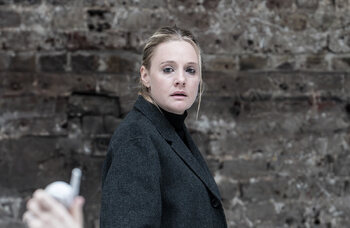
A Doll’s House – or a gilded cage?
How do you make Nora make sense in the present day? For Reiss, the answer is for the play to be less about a trapped woman’s journey toward self-actualisation, and more about “the corrupting effects of capitalism, how it is money and the lust for comfort and wealth that ultimately warps the morality both of society and the home”, as Sarah Crompton (What’sOnStage ★★★★) succinctly summarises it. “The decision to drag Ibsen’s play into the 21st-century world of investment banking shifts its focus,” writes Alice Saville (Independent, ★★★). “It’s less a critique of patriarchal constructs that made women into powerless dolls, and more a hammer blow to the capitalist system that makes us all act like petulant, entitled babies.”
Quite a lot of critics are into this update. For Nick Curtis (Standard, ★★★★), it recalls the hit TV series Industry, and he suggests that Reiss’ take feels “both faithful to Ibsen and thrillingly new”, while Rachel Halliburton (Times, ★★★★) considers it “exhilarating to see this update sharpen the text’s incisors with cuttingly contemporary moral dilemmas”. For Andrzej Lukowski (Time Out, ★★★★), Reiss’ updates “aren’t just a modish reskinning, but an impressively incisive, white-knuckle engagement with contemporary anxieties”. Like several critics, he emphasises just how tense the evening is, as Reiss turns Ibsen’s screws: it is a “panic attack in textual form, that smartly amplifies the debt-related anxieties that underpin the 1879 original into something extremely modern and extremely nerve-wracking”.
For Tom Wicker (The Stage, ★★★★), “one of the most compelling aspects of this play is how nearly everyone, including Torvald, is corrupted by status, while engaging in the mental gymnastics of viewing themselves as the victim of the story”. But not everyone is so captivated. For both Arifa Akbar (Guardian, ★★★) and Dominic Cavendish (Telegraph, ★★★) Reiss only half pulls it off, with a wilting second half leading to an ending that prompts murmurs of doubt.
Continues...

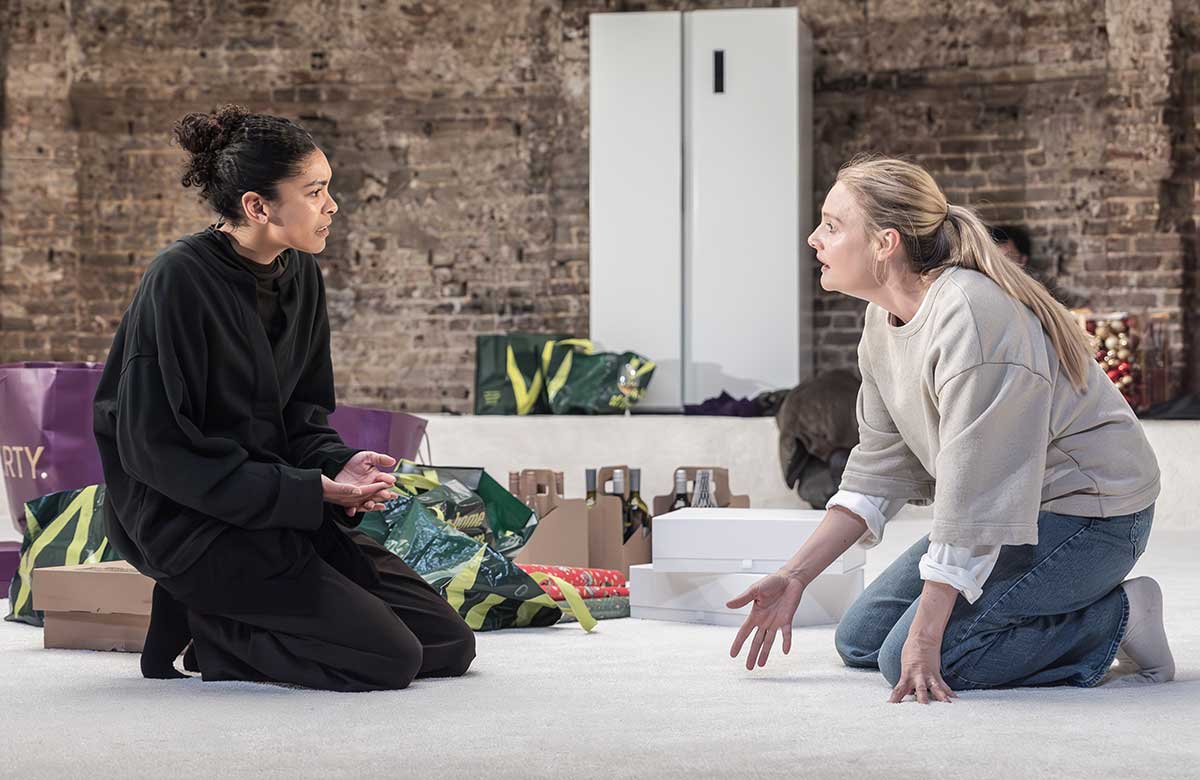
A Doll’s House – in search of an ending?
Beware: spoilers to follow. In Ibsen’s initially controversial original, Nora walks out on her patronising husband and her children with a genuinely iconic final door slam. Here, we end on a moment of ambiguous indecision, with a blackout on Nora still considering her choices – to walk, or not to walk?
“Reiss suggests that a more complicated version of Ibsen’s dream of female autonomy is needed for our age than a simple, shutting door,” writes Akbar. “You can – just about – imagine a future in which Nora and Torvald agree to go to couples therapy to hash it all out.” But it proves a divisive intervention. Wicker appreciates the “unsettling ambiguity of the final seconds”, and Curtis finds this last image a “devastatingly powerful one”. Anya Ryan (London Theatre, ★★★) thinks that while it is a “reimagining that might have Ibsen turning in his grave” it still feels like “a powerful, conflicting closing image”, and Tim Bano (FT, ★★★★) considers it “one final, thrilling, complicating flourish”.
But other critics feel robbed, with Crompton pointing out that today, the controversial choice is not to have Nora leave. She finds it a “rare false note in a clever and absorbing rethinking”, while for Halliburton the “ambiguous ending proves slightly dissatisfying”, and for Cavendish, it’s a “disappointing cop out that robs Garai of her big moment”.
Reiss’ script also achieves a presumably eerily prophetic quality, when the deus ex machina wheeled out to save Torvald from ruin arrives with the news that the US is suddenly bombing Syria, a global catastrophe with an effect on oil prices that happens to benefit his clients hugely. This, too, splits the room: for Bano, Reiss manages to “smartly connect the play to the global political situation”, and for Halliburton, the “killer punch is to reveal a political dimension that questions the connection of his company’s profit to death and suffering”. But for Cavendish it is a “crudely topical allusion” and for Curtis it “feels awkward and phoney”. Lukowski agrees, calling it a “distracting final plot twist” that feels like “a slightly crass critique of capitalism”.
Continues...
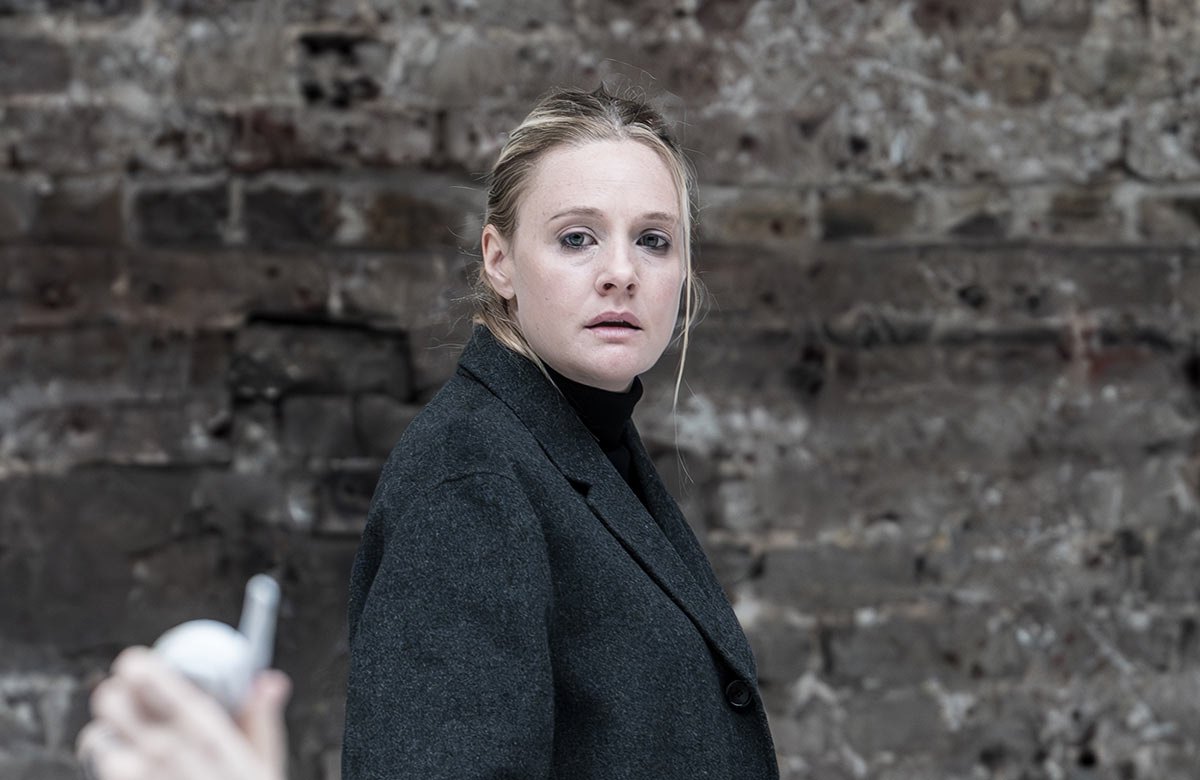

A Doll’s House – a full house
It’s unanimous: Garai is a sensational Nora. “Garai proves herself again to be one of the greats”, writes Bano. She is “magnetically good” for Wicker, gives a “wonderfully deep, layered performance” for Curtis, and “transfixes beautifully” for Cavendish. “She’s known for playing fierce, charismatic women, but her Nora is something like a masterclass in the opposite, a woman so scared of the world that she has consciously reframed her role and limited her horizons,” writes Lukowski. “Garai marinates every line delivery, every gesture in compelling neuroticism.”
There’s praise, too, for her co-stars. Mothersdale’s Torvald, initially “just smug, annoying and work-driven”, according to Crompton, eventually strips away a mask “to reveal the contempt and entitlement beneath. His amorality and possessiveness are terrifying”. Cavendish singles out Corrigan’s “reptilian” performance, while for Curtis, Teixeira, Huband and Corrigan “all underplay beautifully, which only ratchets up the tension more. Huband, in particular, has a woozy, handsy physicality, always teetering on the brink of something”.
Most admire Hill-Gibbins’ direction, too, with Bano one of several to note that his usually “wild style” has been toned down, as he “finely hones the interactions between characters”. Curtis agrees: “He’s matured from a shock-tactic showman into a director of great perception, with a particular flair for awkward atmospheres.”
A Doll’s House – the verdict
Most critics appreciate how Reiss has wrenched Ibsen into a late-stage capitalist world of Instagram and yummy mummies, asset management and oil price crashes – and praise Hill-Gibbins’ tense production and the fine performances, with Garai universally acclaimed. Granted, there are quibbles and reservations about certain choices – but the production still nets four stars from most critics, even if the Guardian, the Independent and the Telegraph only stretch to a three.






Most Read
Across The Stage this weekYour subscription helps ensure our journalism can continue
Invest in The Stage today with a subscription starting at just £7.99


© Copyright The Stage Media Company Limited 2026


