


Ten years and still going strong: how Preevue became a quiet industry force
Starting out creating VR visualisations for venues, Preevue has filled a gap in the market by collating a library of digital theatre environments. Its founder Ryan Metcalfe explains how the business evolved into the must-have tool for both theatremakers and audiences


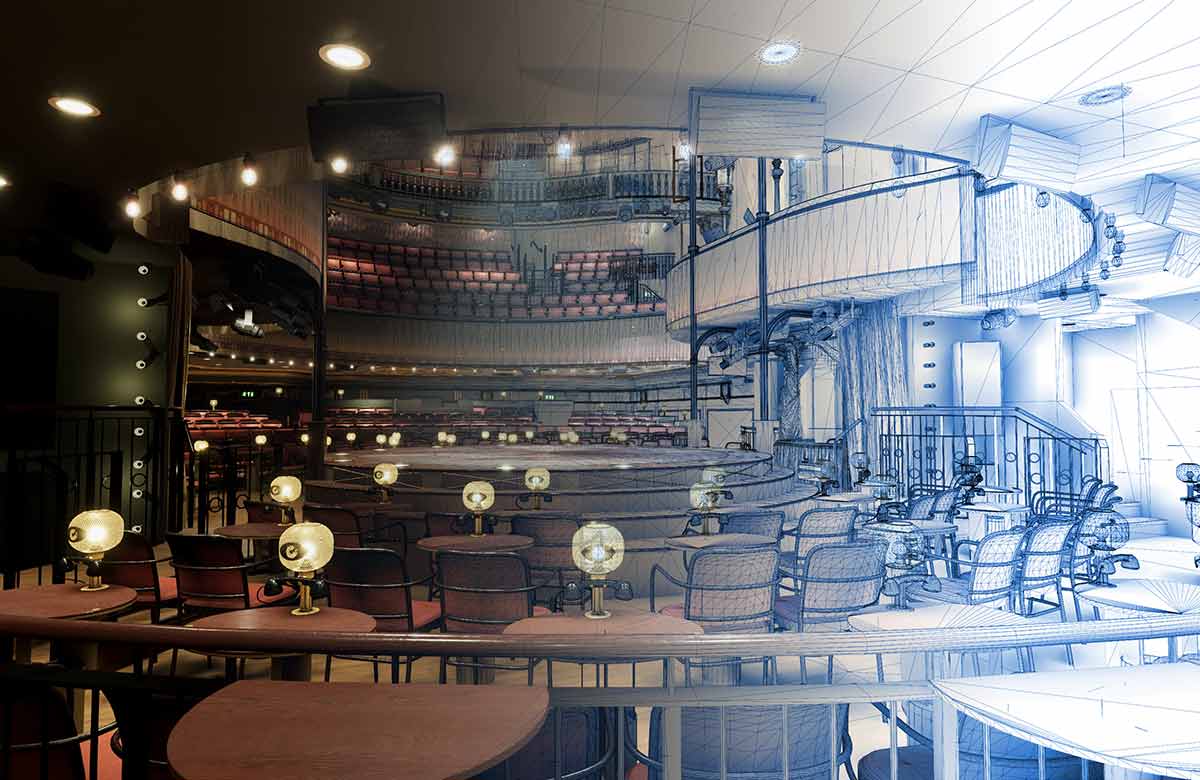
Ten years ago, in a student bedroom at Guildhall School of Music and Drama, the foundations of what would become one of theatre’s most transformative technology companies were being laid.
Ryan Metcalfe arrived at Guildhall as a “green and naive” 18-year-old. While others on his technical theatre course were focused on networking their way into the industry, he spent his first year “sitting on my own in my room, programming”, teaching himself how to adapt architectural software to rebuild theatre sets in a virtual environment.
Those long, obsessive sessions glued to his laptop were a revelation. “There weren’t really tools that bridge the gap between the construction and architecture industries and the theatre pipeline,” he explains.
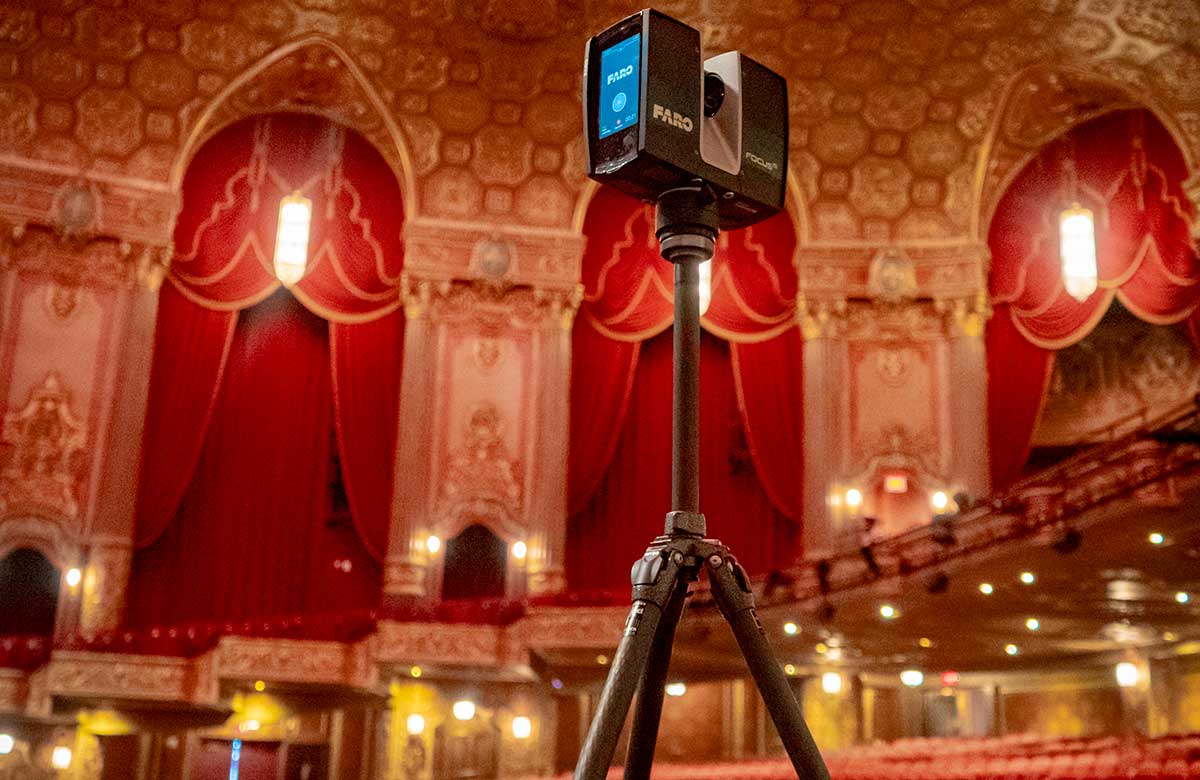
That gap would become Preevue, a company that now works across a third of productions in the West End and on Broadway. At its core, Preevue is a ‘digital twin’ and visualisation specialist for theatre. It uses LiDAR (light detection and ranging) laser scanning to create 3D models of venues in millimetre-precise detail, to build virtual replicas and to layer tools on top that allow creatives, producers and audiences to interact with those spaces before they physically exist.
Those replicas underpin everything from production planning and design visualisation to ticketing products such as the now essential ‘view-from-seat’ ability, turning physical theatres into data-rich digital environments that can be explored remotely, without the carbon-heavy cross-country or transatlantic trips that have often been necessary.
“It’s all built around these ridiculously accurate digital representations of venues. They are at the heart of everything we do,” Metcalfe says.
The original idea was simple. “Instead of waiting for a theatre set’s model box to be built physically, we could put directors and producers in it through a VR headset,” he explains.
Within days of registering the business in 2016, Metcalfe secured his first job through a chance conversation with a designer who had been chosen to design shows at the international Expo 2017 in Kazakhstan.
“He wasn’t wild about the idea of flying back and forth to Kazakhstan, so he contracted me to model those theatres so he could work on them remotely,” he says.
The second gig was transformative: scanning Broadway’s Lyric Theatre for the transfer of Harry Potter and the Cursed Child. He is still astonished that Gary Beestone, the show’s technical director, placed that level of trust in him.
“It felt like I’d won a competition. Being in those rooms with the creative team – it blows my mind,” he says.
Continues...
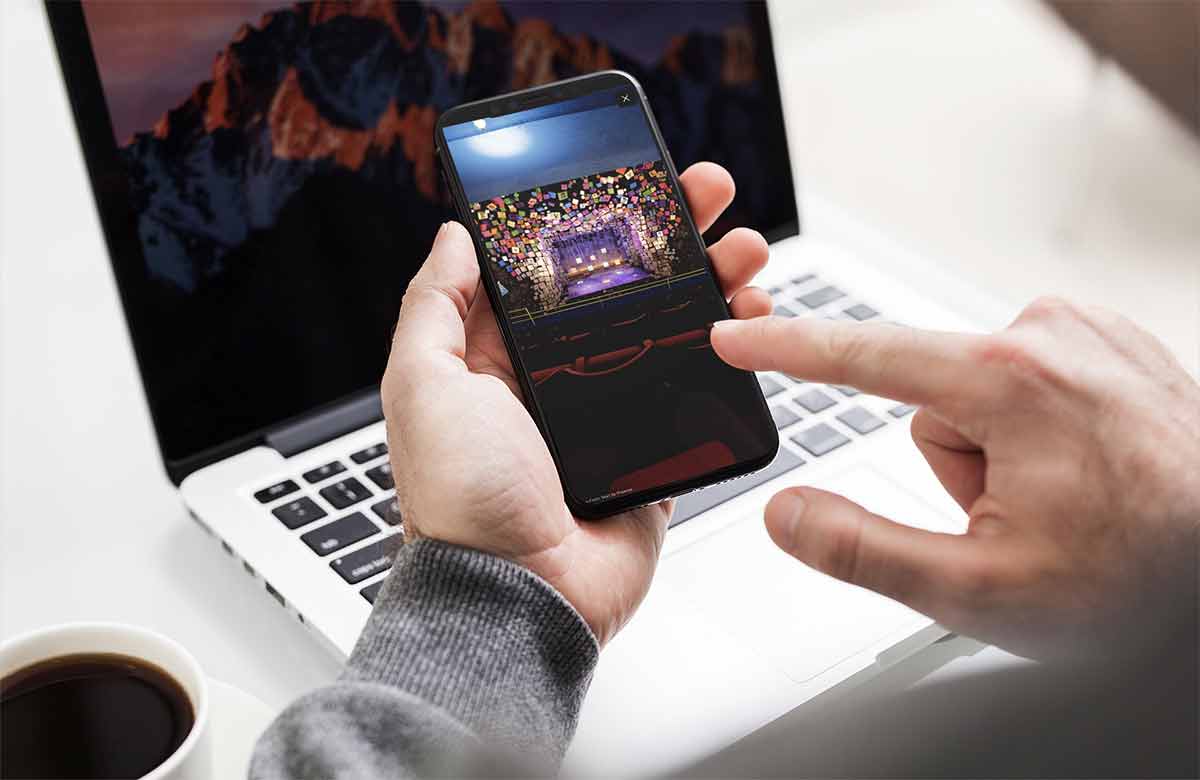
Metcalfe began experimenting with LiDAR scanning technology, more commonly used in architecture and forensics. With rented equipment and a makeshift setup at Guildhall, he taught himself how to scan an auditorium and reconstruct it digitally. That experimentation became the foundation of Preevue’s business: the creation of highly accurate digital twins of performance spaces.
As the company grew, so did the realisation that VR was not the end goal. “The penny dropped that, actually, the value in Preevue was going to be in the data that we had,” he explains. The company shifted towards building a comprehensive library of digital theatre environments, a must-have for any ticketing, accurate to the millimetre.
Metcalfe made the decision to leave Guildhall, and very quickly, Preevue’s digital twins began to be used not just for design, but across entire productions, informing everything from lighting and staging to technical planning. The business expanded into other industries, too, as Metcalfe struck deals with film studios and began to spend more time in Los Angeles.
But soon, one aspect of the incredibly detailed models of theatre buildings that Preevue had captured came into focus, and proved to be game-changing for the industry. The 3D scans were so precise that you could place yourself anywhere within the virtual space. That meant an almost magical ability to see the view of the stage from every single seat in the auditorium.
“The view is the thing that helps you understand the value you’re getting on your ticket,” Metcalfe says. That insight led to the development of Preevue’s ‘view-from-seat’ technology, allowing audiences to see exactly what they are buying. It addressed what he describes as a long-standing anomaly in theatre, where customers would often be taking a gamble on a ticket without knowing whether the price would match the experience.
It may seem like a no-brainer, but he recalls a great deal of resistance from producers across the industry, whose concerns ranged from preserving the surprise of a set to fears that transparency over limited sight lines might deter audiences.
Continues...
The data told a different story. Working with one enthusiastic producer, Preevue helped run tests across multiple venues. Half of ticket buyers were presented with the ‘view-from-seat’ capability, half were not. The results were clear. When given the ability to see the view, “people book a seat that, on average, is one tier better. Restricted view sales went up too.”
Today, that once-contested feature has become almost ubiquitous among the biggest commercial producers.
“There are now more West End venues that use our product than don’t,” Metcalfe notes, with usage reaching “something like eight million times a month.” What began as a niche experiment has reshaped how tickets are sold.
Metcalfe remains surprised at the success of his business, which now includes a skilled visualisation team, led by head of studio Jamie Osborne, who turn the LiDAR scans into detail-rich replicas of theatre spaces. “I’m not a business person,” he says. “I’m a theatre kid who ended up running a business. Once a fortnight, I wonder who put me in charge.”
And although the business has embedded itself into almost every part of the theatre ecology, it remains almost invisible to audiences and the wider public.
“Not many people know who we are, and I’m completely fine with that,” Metcalfe says.
Now, as the company marks its 10th anniversary, Preevue is entering another phase. Increasingly, it is moving from a service model to a product-led one, with tools such as seat-upgrade auctions that can integrate with existing ticketing platforms.
And Metcalfe is excited about the future: “It does feel a little bit like we’re just getting started.”



Most Read
Across The Stage this weekYour subscription helps ensure our journalism can continue
Invest in The Stage today with a subscription starting at just £7.99

© Copyright The Stage Media Company Limited 2026


