


A visit to the past is a reminder that theatre's future depends on its grassroots
 Richard Jordan



“In the summer of 1959, when I was 13, I was placed at the very bottom of the bottom class in my school, but I was very good at English. I never dreamed that I could make a career simply out of being very good at English, but I did. And if I can do it, so can you.”
Those are the words of legendary Liverpudlian writer Alan Bleasdale, who has recently put his name behind Lights Up on Liverpool, a project from the inspirational Liverpool-based company ArtsGroupie, which has created a free pop-up theatre museum at Liverpool Central Library.
ArtsGroupie’s creative director John Maguire and his team have long been engendering opportunities, programmes and platforms in their communities for curious minds of all ages to embrace creativity. This latest project is a response to the decreasing number of working-class professionals in the performing arts. Office of National Statistics analysis revealed that 16.4% of actors, musicians and writers born between 1953 and 1962 came from working-class backgrounds. That figure dropped to just 7.9% for artists born four decades later. And research from charity Arts Emergency published in 2024 found that fewer than one in 10 of all arts workers today come from working-class backgrounds.
Continues...
Related to this article

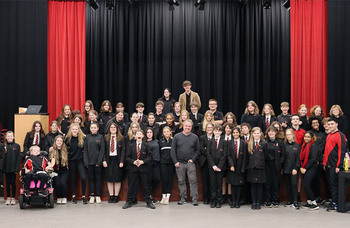
The UK is witnessing a seismic shift in the landscape of arts training – cutbacks such as those recently announced by long-established institutions such as Bristol Old Vic Theatre School indicate the situation is grave.
As a result, there’s an urgency to thinking differently about how our future generations of industry workers – wherever they live – can experience live performing arts, access arts training and other opportunities. They must be able to believe that with hard work, a career in the arts remains possible for everyone, and not just the few with a trust fund. Otherwise, what will the industry look like by 2030?
I recently returned to my old comprehensive high school, Hethersett Academy in Norfolk. I’d been invited to lead an assembly and a masterclass with its students, who will be presenting their production of Oliver! in March. I’ve never made a secret of the fact that my school days were not happy ones; I was badly bullied and liked musicals much more than maths. Working in theatre “was not something that people where I came from did” – this was the parting remark from my head of year and for a long time, it lingered. In early 2023, I wrote about being invited to go back and visit my old school – 31 years after I’d last walked out of its gates – and the vastly different place I discovered. It was the first time I’d ever really stopped to consider that to follow a dream, you must make the decision to leave things behind.
With continued cutbacks to arts training and access, more than ever, the significant work being done at grassroots level play an urgent and integral role in our industry’s future that needs to be properly funded
In this industry, the word “luck” is overused. My luck was certainly in getting that first job – as a stage hand in London – and eight years later, I was producing in the West End. It wasn’t easy and took a lot of hard work and when opportunities do come along, they can be fleeting. When you’re out there doing it and immersed in theatre, it’s easy to forget how far back the journey goes. Before this recent visit to my old school, I’d also not considered in any real depth how monumental leaving home at 16 to pursue my career must have been for those I had left behind, especially my mum. At the time, I didn’t feel as though I had any other choice; there wasn’t a drama teacher or local ArtsGroupie project to engage with, and I’ve never had a plan B.
Today, the corridors of my old school are filled with fantastic groups of students. Many of them are interested in both musicals and maths, and both are equally encouraged and respected. There’s a palpable buzz about their forthcoming production. Meanwhile, theatre trips and drama clubs happen, and artistic achievements are as valued as those that are made on the sports field.
If I’d had a group of teachers like Thomas Hilton, Lauren Knights and Tiffany Bruen-Brooks, who now run its thriving drama and music department, I may well have wanted to hang around more. It’s an important reminder that student success cannot be measured only by academic achievement, and neither should class perpetuate a stereotype, a point that Bleasdale makes so eloquently.
Hilton, Knights and Bruen-Brooks, much like ArtsGroupie’s Maguire, are not names you’ll see listed in The Stage 100. However, they’re only a handful of the many people across the UK who are under-recognised for their commitment to inspiring young people and encouraging them to discover and develop an interest in the many facets of theatre. With continued cutbacks to arts training and access, more than ever, the significant work these individuals are doing at grassroots level plays an urgent and integral role in our industry’s future that needs to be properly funded. Let’s hope Lisa Nandy and Bridget Phillipson are reading this.


Opinion
Recommended for you




Advice
Recommended for you
Most Read
Across The Stage this weekYour subscription helps ensure our journalism can continue
Invest in The Stage today with a subscription starting at just £7.99


© Copyright The Stage Media Company Limited 2025


