


Ellen Dryden
Screen actor who also appeared in repertory theatre before moving into writing and directing for stage and radio


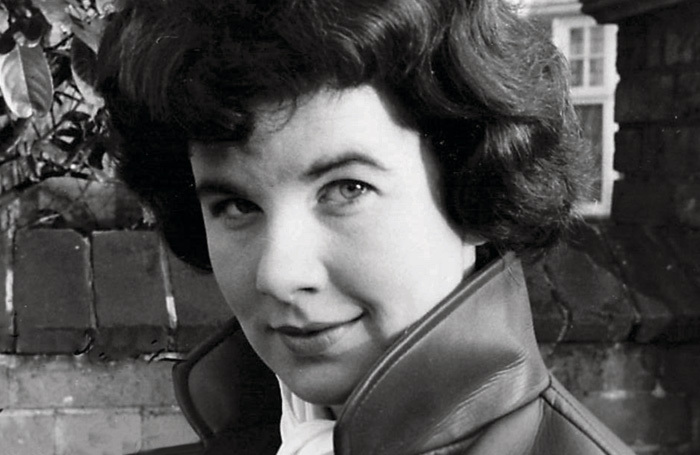
Ellen Dryden abandoned her RADA training in her final year of studies when the director – and later playwright – Don Taylor offered her the lead in David Turner’s 1961 television drama, Summer, Autumn, Winter, Spring. It launched a successful acting career that eventually gave way to Dryden’s desire to write, leading to her becoming a prolific presence on television, radio and the stage.
Born in Whitacre Heath, Warwickshire, she grew up in a working-class Midlands family and, with her father a Methodist lay preacher, had a religious upbringing. After winning scholarships to King Edward VI School in Birmingham and Lady Margaret Hall, Oxford (graduating in 1960) she enrolled at RADA.
In the same year, she married Taylor, who was soon to entice her away from RADA, where her classmates included Gemma Jones, Sarah Badel and Ian McShane.
Her performance in Turner’s drama caught the eye of another director, Bryan Forbes, who went on to cast her in his 1962 film The L-Shaped Room alongside Leslie Caron and Tom Bell. The same year she was seen in two instalments of BBC TV’s Sunday-Night Play. She continued to work as an actor throughout the 1960s, including spells in rep at Windsor and Bernard Miles’ Mermaid Theatre in London. On television she appeared as Mrs Weston in a BBC adaptation of Jane Austen’s Emma and in her husband’s Actor, I Said in 1972.
As the decade progressed, her career moved away from acting and towards writing. Her first stage play, the short Grounds for Marriage, had been staged at the Traverse in Edinburgh in 1967. Her first full-length play, the domestic drama Harvest, was premiered at Birmingham Rep in 1980, subsequently transferring to the West End at the Ambassadors in 1981, where it was nominated for best new play in that year’s Plays and Players awards.
Further plays commissioned by and performed at Birmingham Rep included It’s A Lovely Day Tomorrow (1983), Anna’s Room (1984) and Weekend Break (1985).
The Stage lauded The Power of the Dog at the Orange Tree Theatre, Richmond in 1996 as “a welcome return to the tradition of the well-made play”.
In the 1980s she and Taylor set up Chiswick Youth Theatre at their children’s school, running it on a voluntary basis for a decade, producing two or three full-length productions a year, often turning down paid work to do so. Notable work included the 1988 musical The Burston Drum, with lyrics by Taylor, music by Charles Young and Dryden providing the book.
After Taylor left television drama in 1990, together they founded the radio drama company First Writes, which Dryden continued to run successfully after his death in 2003 until her final illness, producing numerous plays and series for BBC Radios 3 and 4.
Dryden’s work for radio included Child in a Dark Wood, featuring Penelope Wilton and George Baker (1983), the broody murder mystery The Lake (1993), adaptations of Thackeray’s The Rose and the Ring and Noel Streatfeild’s Ballet Shoes (1999), and Publish and be Damn’d: The Memoirs of Harriette Wilson (2012). In her 60s, she became a radio director for the first time, going on to direct more than 20 productions including her own original serials, plays and adaptations of novels by Josephine Tey and Irene Nemirovsky and, in 2004, Taylor’s last play, A Nice Little Trip to Spain.
Diagnosed with dementia in 2017, Dryden lived in residential care for the last 18 months of her life. Born on October 28, 1938, she died, aged 84, on July 28 and is survived by her daughter Lucy Ratcliffe, a training consultant, and her son Jonathan Dryden Taylor, an actor, writer and columnist for The Stage.


Most Read
Across The Stage this weekYour subscription helps ensure our journalism can continue
Invest in The Stage today with a subscription starting at just £7.99

© Copyright The Stage Media Company Limited 2026


