


The Oyster Problem review


Historical biodrama of literary life is intellectually interesting but dramatically inert


In this debut play by historian and writer Orlando Figes, 19th-century French novelist Gustave Flaubert is plagued by the same issue that plagues countless successful authors: he can’t get out from under the shadow of his first book, Madame Bovary. A perfectionist unable to write, he rails against the “bourgeois” obsession with money, while sliding into bankruptcy and ill-health, to the worry of his friends.
This piece originates in Figes’ research for his cultural history The Europeans, which focused on Russian writer Ivan Turgenev. Figes uses letters written by Turgenev, Flaubert and other literary luminaries of his age – Emile Zola and George Sand – to put their friendship on stage (with Flaubert at the centre), while tackling enduring issues of art versus commerce.
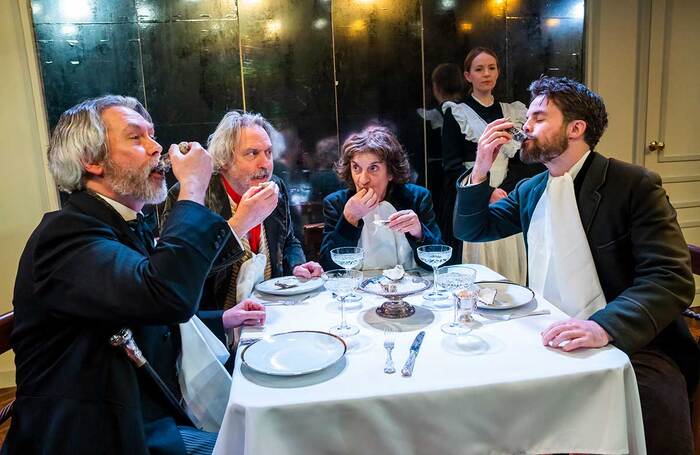
Via a series of boozy get-togethers in a restaurant and Flaubert’s homes, Figes uses the four writers as a lens on the differing cultural attitudes of their time. Flaubert insists on the purity of art. Zola argues that you have to play the publicity game if you want to reach readers. Turgenev is wistful for the romance of writing. Sand – the pen-name of female author Amantine de Francueil – calls them out for their pretentiousness and leery misogyny.
If this description sounds reductive, it’s because that is how it often comes across. Director Philip Wilson introduces some lightness, while designer Isabella van Braeckel’s versatile set convincingly conjures the private rooms in which these public figures debate their art. Nevertheless, the weight of exposition – often a problem with biographical dramas – seems to pin the characters to their chairs. Their lengthy debates, while sometimes interesting, result in a growing sense of dramatic inertia, as they stubbornly remain mouthpieces for ideas, rather than real people.
Continues...
Related to this Review

The secondary characters fare better for not being the central focus. Peter Hannah imbues Zola with a passion tempered by playfulness, while Giles Taylor brings a gentle compassion to Turgenev’s concern for Flaubert. Norma Atallah is refreshingly cutting as Sand, scoffing at the puffed-up men. Rosalind Lailey, as Flaubert’s artist niece who gets caught up in his financial woes (and warrants a play of her own), gets to take him down a few notches. But she’s often relegated to serving champagne.
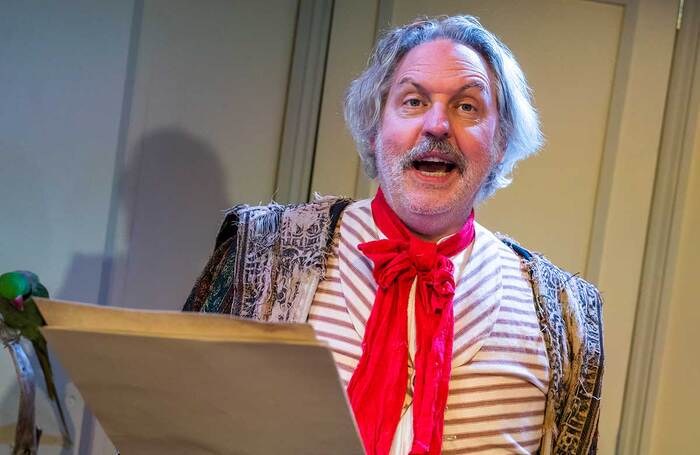
The biggest victim is Flaubert. A committed Bob Barrett does what he can with the role, but while he may change costume from shabby-chic suit to cut-price Prospero robes, his character spends most of the play complaining about how much he hates people and the invasion of his private life by newspaper Le Figaro. It’s a well-banged drum. By the end, the play (and score) wants you to feel a sense of tragedy that it hasn’t really earned along the laborious route it’s taken to get there.



More Reviews






Recommended for you
More about this organisation

More Reviews
Recommended for you
Most Read
Across The Stage this weekYour subscription helps ensure our journalism can continue
Invest in The Stage today with a subscription starting at just £7.99


© Copyright The Stage Media Company Limited 2026


